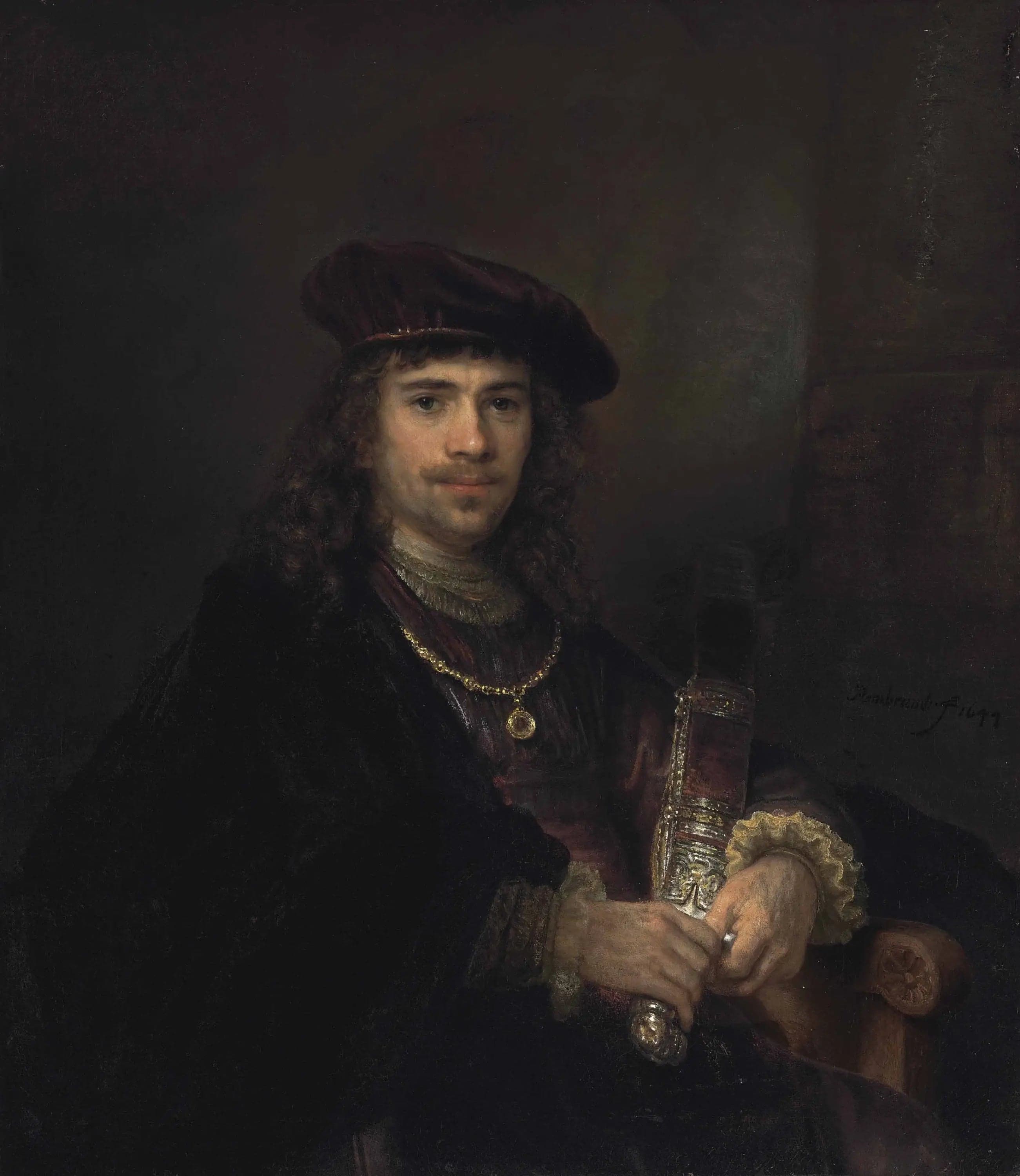
Man with a Sword and a Beret
- Original dimensions
- 88.5 x 102.23 cm
- Museum
- private collection
- Year
- 1640
Scene depicted
The painting features a man of imposing stature, dressed in a beret and carrying a sword, embodying a quiet authority and silent strength. The character's posture evokes a presence that is both charismatic and mysterious, while the contrast of light and shadow highlights the emotions emanating from this pictorial work . Rembrandt , with his mastery of light play, manages to create a decidedly captivating atmosphere.
Historical context
Created in 1640, in Amsterdam, the painting "Man with a Sword and a Beret" is the result of the genius of Rembrandt , a pioneer of the Baroque movement. This iconic painting encapsulates the cultural richness and emotional depth of a flourishing era. Today, this work is preserved in a private collection, where it continues to inspire and fascinate with its remarkable dimensions of 88.5 x 102.23 cm.
Place in the artist's career
"Man with a Sword and a Beret" is situated at a crucial turning point in Rembrandt's career, illustrating his rise as a reference artist. It parallels other masterpieces such as "The Night Watch" and "The Return of the Prodigal Son", highlighting his stylistic evolution and the growing depth of his themes.
Anecdote
Rembrandt once confessed: "Art is an emanation of the soul, a forced gaze upon the inner world." It is this quest for intimacy that drove him to immortalize a face, in a serene alley, on a gentle morning where the first light of day caressed the still damp cobblestones. It is this light that resonates deeply in "Man with a Sword and a Beret".