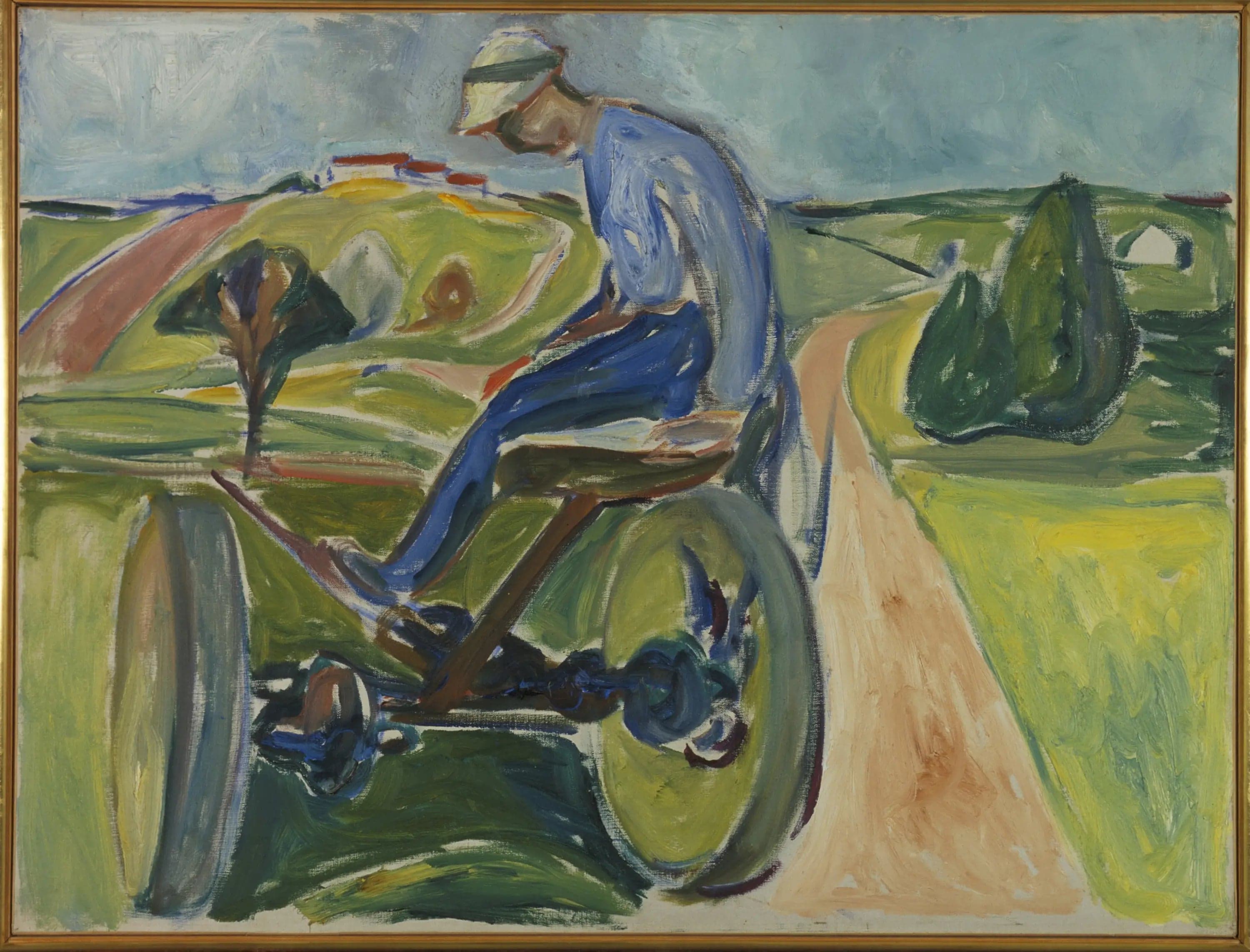
Man on the Harvester
- Original dimensions
- 90 x 68 cm
- Museum
- Munch Museum
- Year
- 1919
Scene depicted
This painting, “Man on the Reaper,” depicts a hardworking farmer, absorbed in his task amidst a rural landscape of austere beauty. The reaper, a symbol of labor and connection to the land, stands proudly in this vibrant canvas that illustrates the struggles and triumphs of agricultural life, while enveloping the viewer in an atmosphere of nostalgia.
Historical context
This painting , created in 1919, is set in the vital framework of the city of Oslo in the heart of Norway, at a time marked by an evolving artistic expression. Munch, an iconic figure of symbolism and expressionism , captures here moments of rural life with palpable intensity. Currently, this canvas is preserved at the Munch Museum, which is itself a sanctuary dedicated to the artist's work, where each dimension of 90 x 68 cm resonates like an echo of the past.
Place in the artist's career
Man on the Reaper marks a turning point in Munch's career, representing his evolution towards a more grounded approach in social reality. This canvas finds its place alongside two other significant works: “The Scream” and “The Madonna,” illustrating his transition from exploring the human psyche to poetic and social observation of everyday life.
Anecdote
“Art is a way of making emotions felt, like the song of a sparrow in the early morning.” This quote from Munch evokes the breath of creativity that sprouted at every corner of Oslo, particularly during the creation of this masterpiece . He recalls a calm summer morning, where the golden sunlight stretched over the fields, vibrating his inspiration and bringing the painting to life.
Major exhibitions
Munch og Ekely: 1916-1944