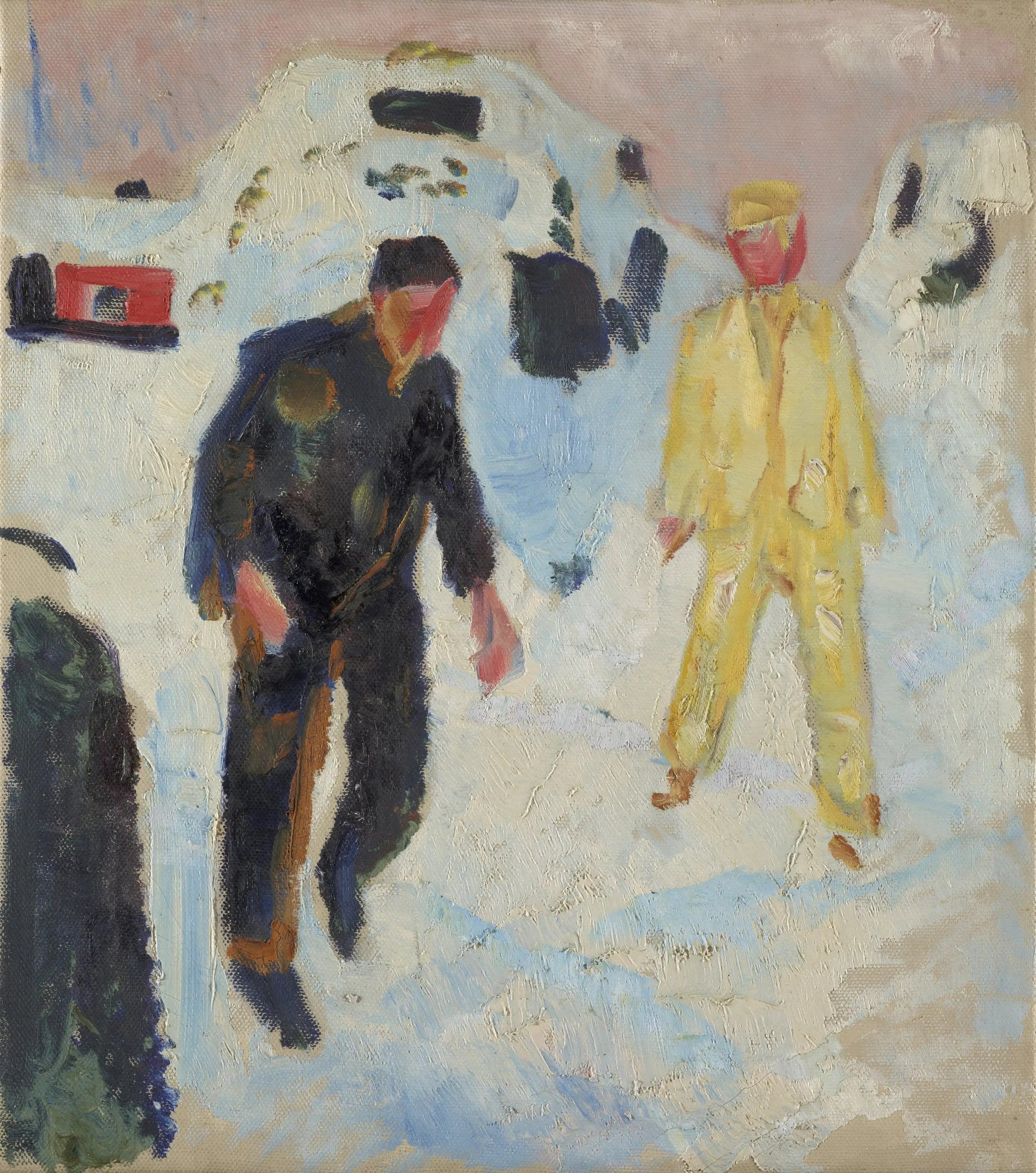
Man in Black and Yellow in the Snow
- Original dimensions
- 51 x 58 cm
- Museum
- Munch Museum
- Year
- 1910
Scene depicted
The painting “Man in Black and Yellow in the Snow” depicts a solitary, bundled figure standing still amidst a vast snowy landscape. The contrasts between the soft whiteness of the snow and the dark colors of the clothing enhance the human drama, conveying a deep sense of melancholy in the face of the vastness of nature. This pictorial work illustrates isolation and contemplation, keys to the human experience according to Munch.
Historical context
This painting emblematic was born in the vibrant city of Oslo, Norway, in 1910, a time perfectly rooted in the expressionist movement. Emerging from a rich sociocultural context, where individual emotions took precedence over realistic representations, the work today finds its place at the Munch Museum, a sanctuary dedicated to the legacy of this unparalleled artist. The canvas , measuring 51 x 58 cm, testifies to the finesse and artistic depth of its creator.
Place in the artist's career
Inscribed in a pivotal period of his career, “Man in Black and Yellow in the Snow” reveals Munch at his peak, a perfect fusion of introspection and stylistic exploration. Echoing “The Scream” and “The Madonna,” this painting presents a fascinating technical evolution from brutal expressiveness to a more nuanced human delicacy.
Anecdote
“I wanted to paint the pain of existence,” Munch might have declared, as he settled into the soothing solitude of a winter morning, dressed in the black and yellow tones of his inspiration. It is in this snowy landscape, where nature screams silence, that the idea of the canvas blossomed, manifesting an internal struggle between shadow and light.
Major exhibitions
Edvard Munch . Monumental projects