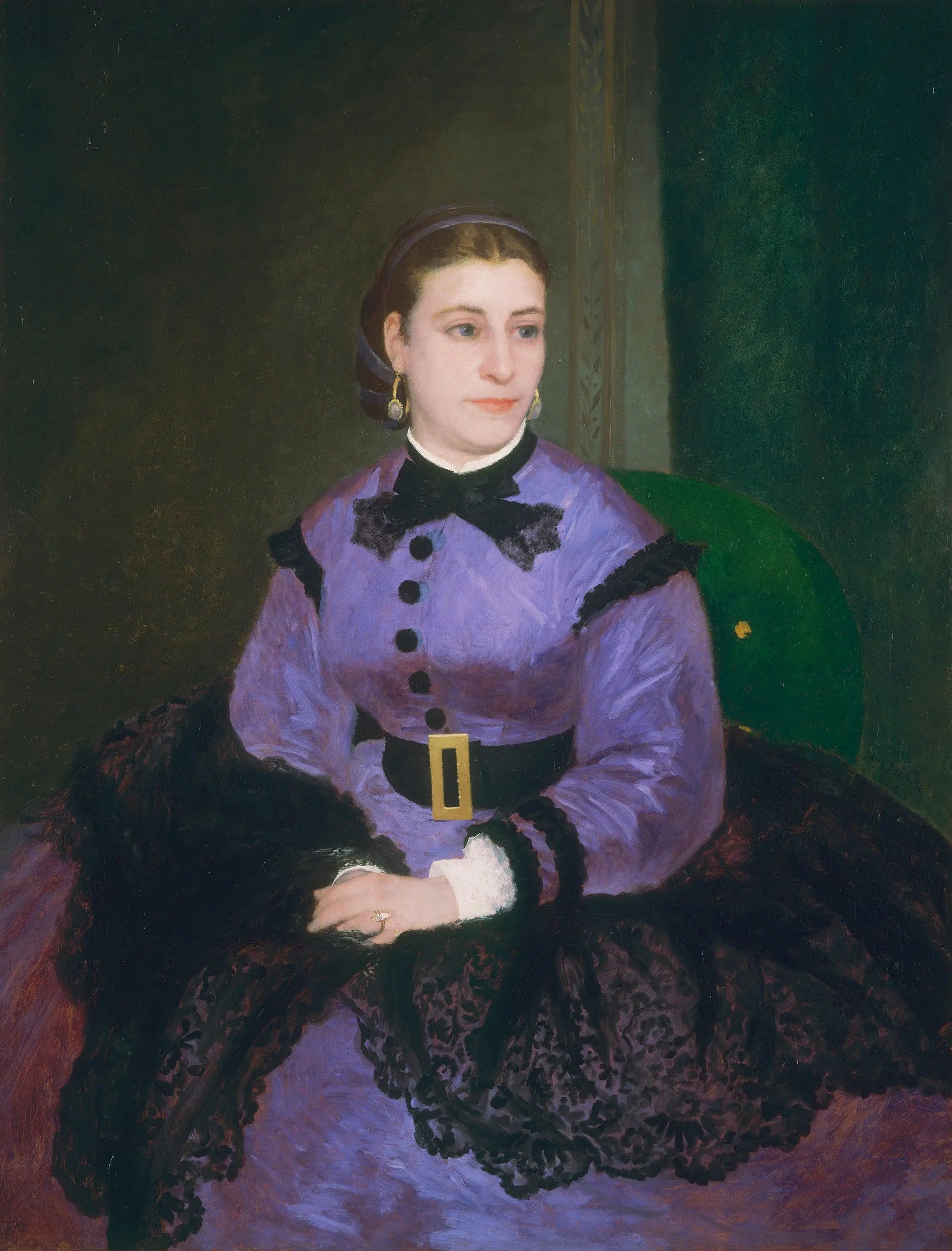
Mademoiselle Sicot - Pierre
- Original dimensions
- 89.5 x 116 cm
- Museum
- National Gallery of Art
- Year
- 1865
Scene depicted
This canvas illustrates a young woman seated, with a natural elegance, enveloped in a soft and colorful play of light. She is surrounded by an atmosphere of conviviality and sophistication, typical of mid-19th century Paris. Her pose, both relaxed and graceful, draws the eye and invites deep contemplation. The painting reveals intricate details, from the fabric of her dress to the delicate expression on her face, provoking an intimate dialogue between the artist and the viewer.
Historical context
Created in the heart of Paris in 1865, the painting "Mademoiselle Sicot" is part of the Impressionist movement, marked by a deep emotional and visual exploration. During this flourishing period, Renoir, one of the masters of the movement, captures the vibrancy and modernity of his time. Today, this canvas , a true masterpiece, finds its place at the National Gallery of Art in Washington D.C., where it fascinates visitors with its delicacy.
Place in the artist's career
"Mademoiselle Sicot" represents a turning point in the career of Auguste Renoir , marking the beginning of his most free and sensual expression. Compared to works like "Luncheon of the Boating Party" and "Dance in the Country," this canvas offers a glimpse into his artistic evolution, moving from a more traditional approach to a more vibrant and intimate component, reflecting his growing mastery of the Impressionist movement.
Anecdote
Renoir often said: "Life is a painting where one dreams with every brushstroke." In this context, the inspiration behind "Mademoiselle Sicot" may have struck him during a spring walk, when the golden morning light revealed the charm of a face that captivated him. This emotion and ephemeral beauty are beautifully transferred onto the canvas , making each glance at the painting filled with memories.