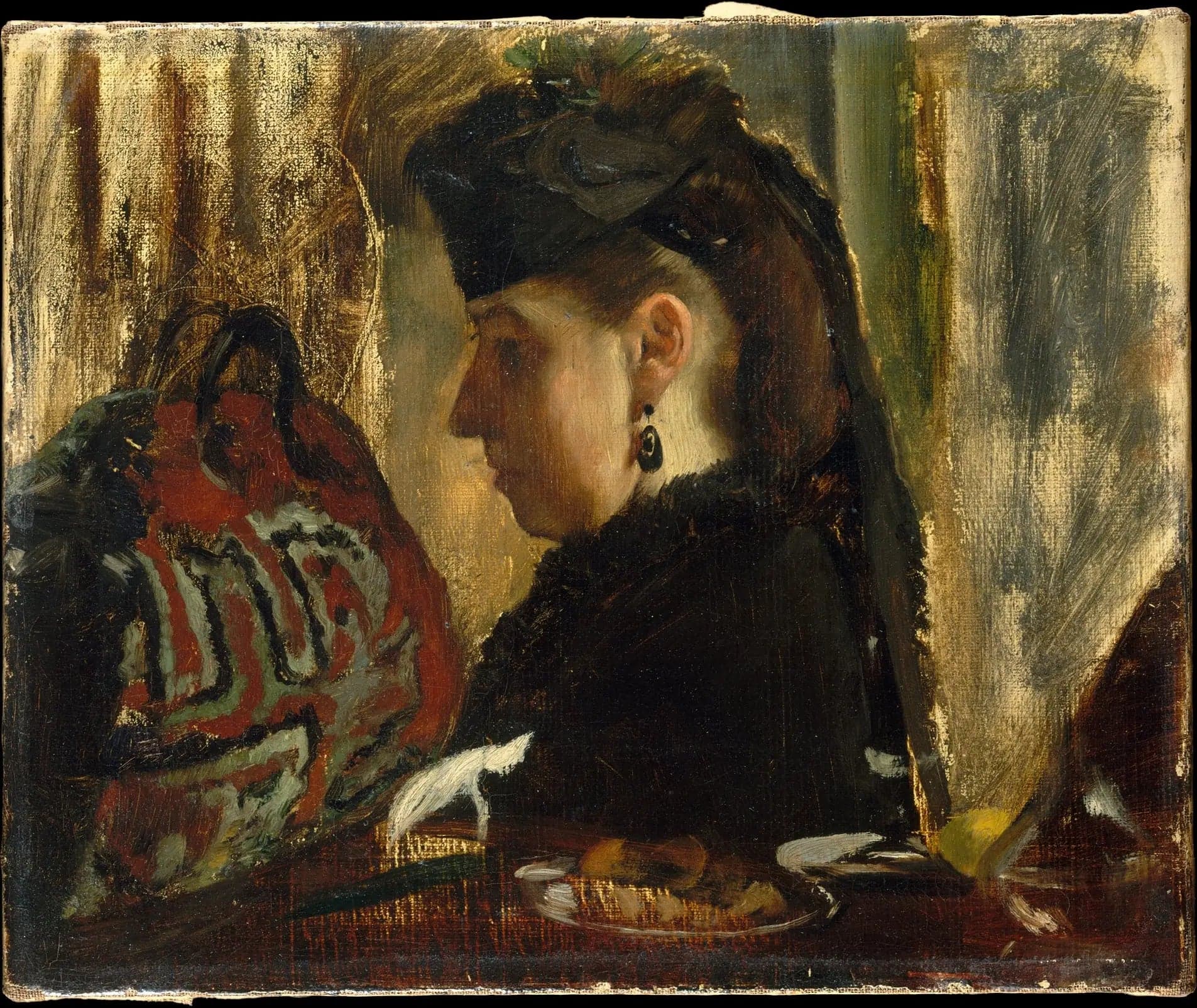
Mademoiselle Marie Dihau
- Original dimensions
- 27.3 x 22.2 cm
- Museum
- Metropolitan Museum of Art
- Year
- 1867
Scene depicted
The painting “Mademoiselle Marie Dihau” is an exquisite expression, where the softness of poses and the grace of movements capture the very essence of life within Parisian salons. Degas, with his refined technique, manages to convey the intimacy and natural light revealing itself through this canvas. Each brushstroke seems to whisper shared secrets.
Historical context
Created in 19th century Paris, at the heart of the Impressionist movement, Mademoiselle Marie Dihau encapsulates the artistic effervescence of this era. The beautiful Marie, here immortalized by Edgar Degas , embodies the elegant Parisian young ladies, iconic figures of the French art of living. Currently, this painting captivates at the Metropolitan Museum of Art , thus testifying to the importance of this work in the history of art.
Place in the artist's career
This painting , the fruit of an artist in full maturity, marks an important milestone in Degas's career. At this time, he had already created other notable paintings , such as “The Dancer of the Opera” or “The Bellelli Family,” which together trace the evolution of his reflection on light and movement.
Anecdote
“Beauty is in movement, that is where emotion resides,” Degas is said to have remarked while sketching this masterpiece one spring morning. This phrase resonates intensely when thinking of the delicacy of Marie's face, a unique moment frozen in time, where the breath of life seemed to make this painting vibrant.