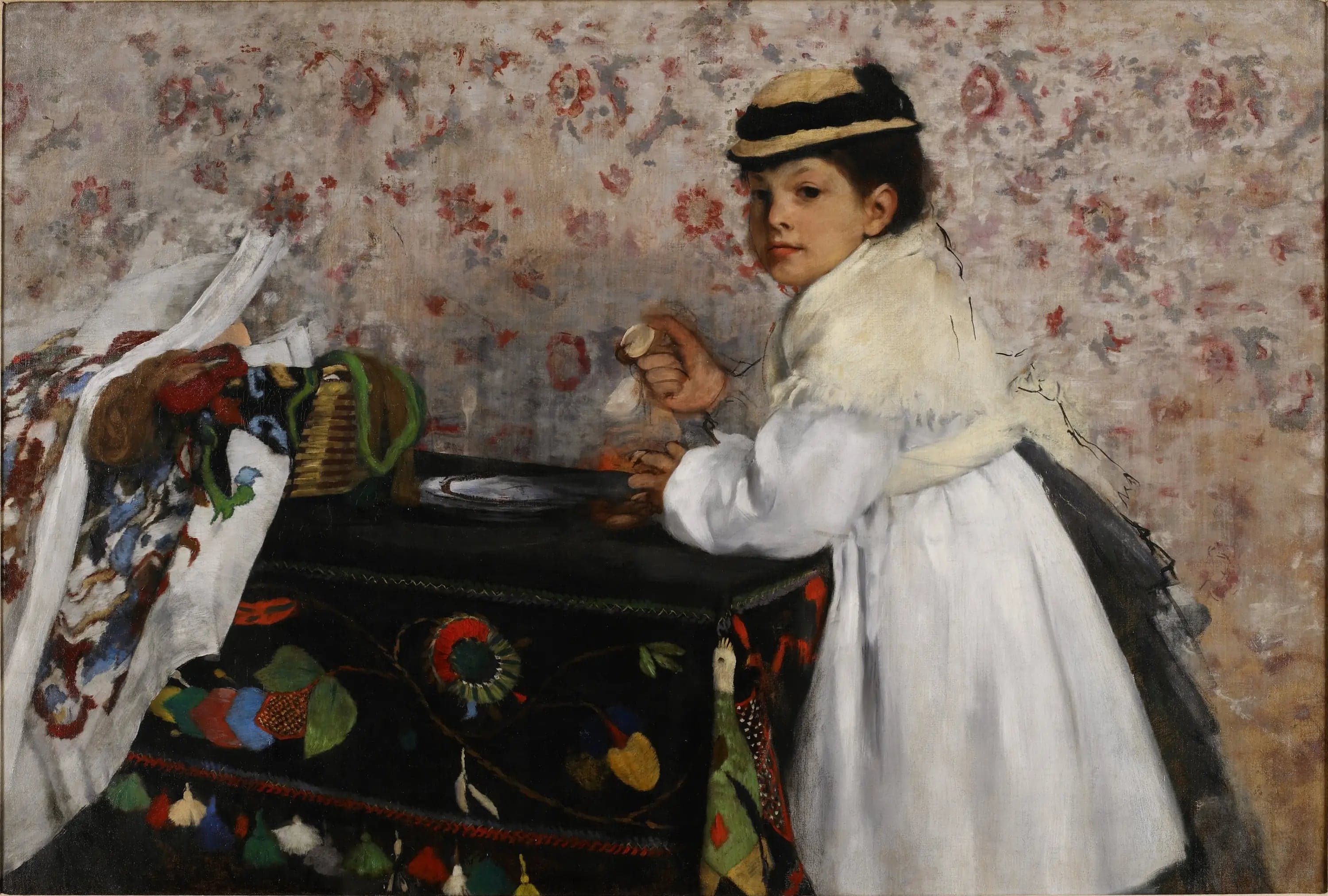
Mademoiselle Hortense Valpinçon
- Original dimensions
- 44.75 x 29.75 cm
- Museum
- Minneapolis Institute of Art
- Year
- 1866
Scene depicted
In this work, Edgar Degas immortalizes the fleeting beauty of the moment, offering a glimpse into the life of a young woman who is both gentle and pensive. The composition reveals a unique vision of feminine intimacy, an inseparable gaze from the Impressionist world that values the brightness and authenticity of everyday subjects.
Historical context
Created in 1866, this painting , emblematic of the Impressionist movement, is the result of a time when artists' gaze turned to everyday life with a new sensitivity. The painting is currently housed in the prestigious Minneapolis Institute of Art , an art sanctuary in the heart of Minnesota. The precise dimensions of the work, 44.75 x 29.75 cm, give it an intimate presence while allowing for a rich visual exploration.
Place in the artist's career
This painting marks a pivotal period in Degas's career, highlighting his transition to a bolder and more introspective style. In comparison with “The Dance Class” and “The Little Dancer of Fourteen Years,” we see his technique evolve in the treatment of light and emotion, revealing a growing mastery that makes him a pioneer of the movement.
Anecdote
“Art is the most beautiful of sensory experiences.” An inspired quote from Degas that could resonate with the genesis of this masterpiece . Imagine the artist, one spring morning in Paris, observing his muse, Hortense, gracefully settling into the filtered light of his window, a suspended moment captured on his canvas .