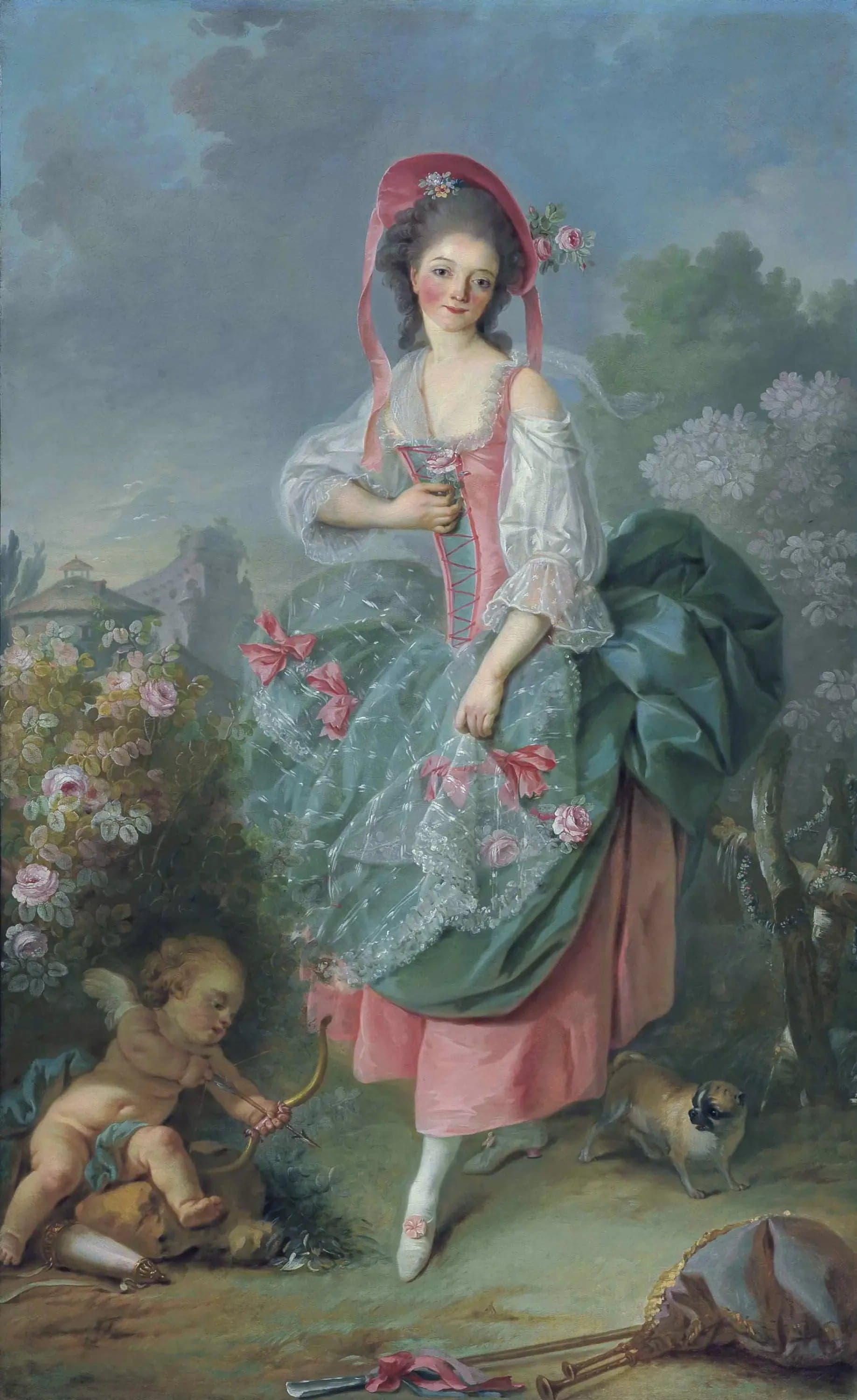
Mademoiselle Guimard as Terpsichore - Jacques
- Original dimensions
- 120.5 x 195.5 cm
- Museum
- Not specified
- Year
- 1773
Scene depicted
In this painting , Jacques-Louis David glorifies Mademoiselle Guimard by celebrating dance, embodied here by the muse Terpsichore. The dynamic posture of the dancer, draped in delicate fabrics, unfolds gracefully under the admiring gaze of the observer. Each movement is captured with astonishing precision, paying homage to the art of ballet and the harmony of bodies in motion. This work is a tribute to human beauty and creativity.
Historical context
Created in 1773, during a time marked by the brilliance of neoclassicism , this painting encapsulates the spirit of a France in full transformation. In the heart of Paris, Jacques-Louis David , the undisputed master of this period, crafts a canvas that illustrates human beauty and grace. The work is not just a painting; it is a reflection of a flamboyant era where culture and art held a prominent place in society. Although it is not housed in a well-known museum, the imposing dimensions of this composition make it a true visual focal point.
Place in the artist's career
“Mademoiselle Guimard as Terpsichore” is situated at a pivotal moment in David's career, echoing other iconic paintings such as “ The Oath of the Horatii ” and “ The Death of Socrates ”. This canvas marks an evolution in his use of light and the capture of emotion. At this stage, David is not just a painter, but a visual storyteller exploring the limits of representation.
Anecdote
“Beauty is not just what you see, but what you feel.” On a gentle primordial morning, Jacques-Louis David crosses the enchanting gaze of Anne Guimard, the talented dancer of the Opera. It is there, at the turn of a peaceful street in Paris, that the idea for this pictorial work takes shape as the sounds of music and laughter resonate in the distance, creating a vibrant atmosphere of creativity and inspiration.