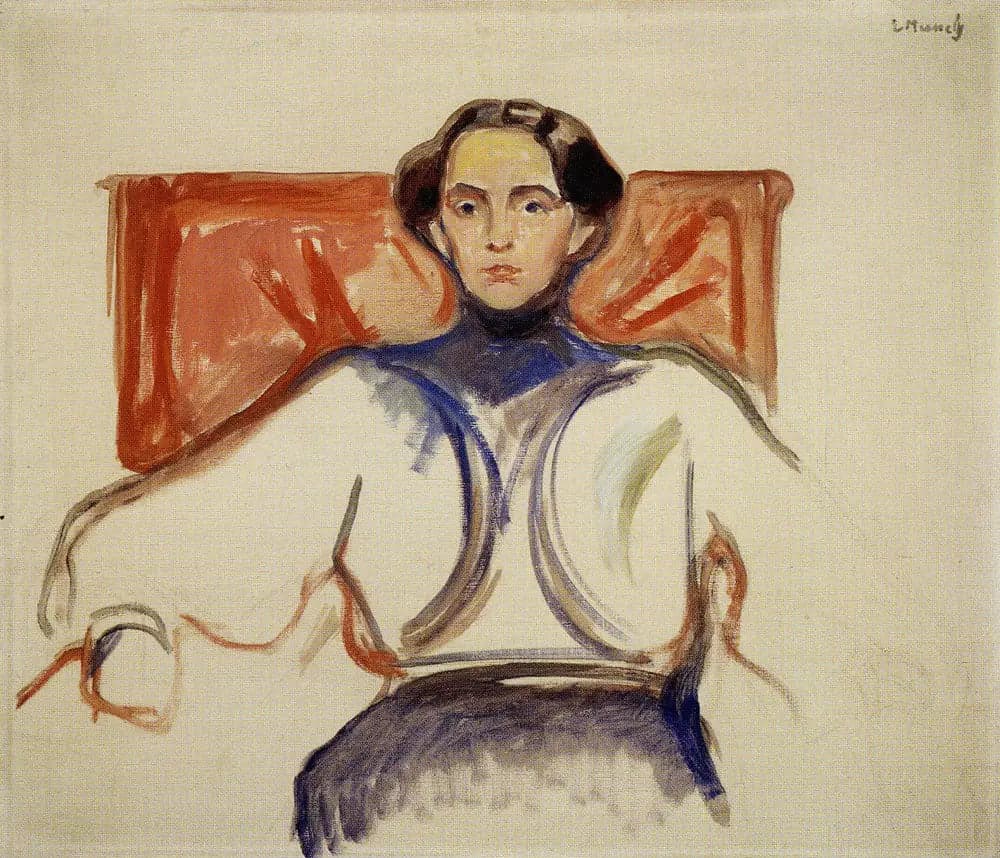
Madame Schwarz
- Original dimensions
- 60.5 x 99.5 cm
- Museum
- National Museum
- Year
- 1906
Scene depicted
The canvas “Madame Schwarz” features a woman, with a thoughtful gaze, whose expression evokes contemplation and introspection. Munch depicts this female figure with striking psychological depth, a subtle blend of emerging feelings and melancholy. The composition, imbued with intimacy, echoes the fragility of human relationships, making this masterpiece timeless.
Historical context
Created in 1906 in Oslo, this painting is emblematic of the expressionist movement, reflecting the emotional turmoil of early 20th-century society. Through this canvas , Edvard Munch captures the essence of a time when personal expression was at the heart of artistic creation. Currently housed in the National Museum of Oslo, this large canvas invites reflection on human sensitivity.
Place in the artist's career
This painting is situated at a pivotal moment in Edvard Munch 's career, oscillating between anxiety and fascination with human emotions. It is part of the continuity of works such as “The Scream” and “The Madonna,” where the artist explores themes of human warmth and despair, revealing a unique visual universe.
Anecdote
“Art is a way to free the soul,” might have said Edvard Munch when discussing the genesis of his masterpiece . One spring morning in his studio, the gentle whisper of a light breeze through the windows inspired him to immortalize the face of Madame Schwarz, bringing to this painting an unparalleled emotional depth, a vibrant memory of fleeting beauty.