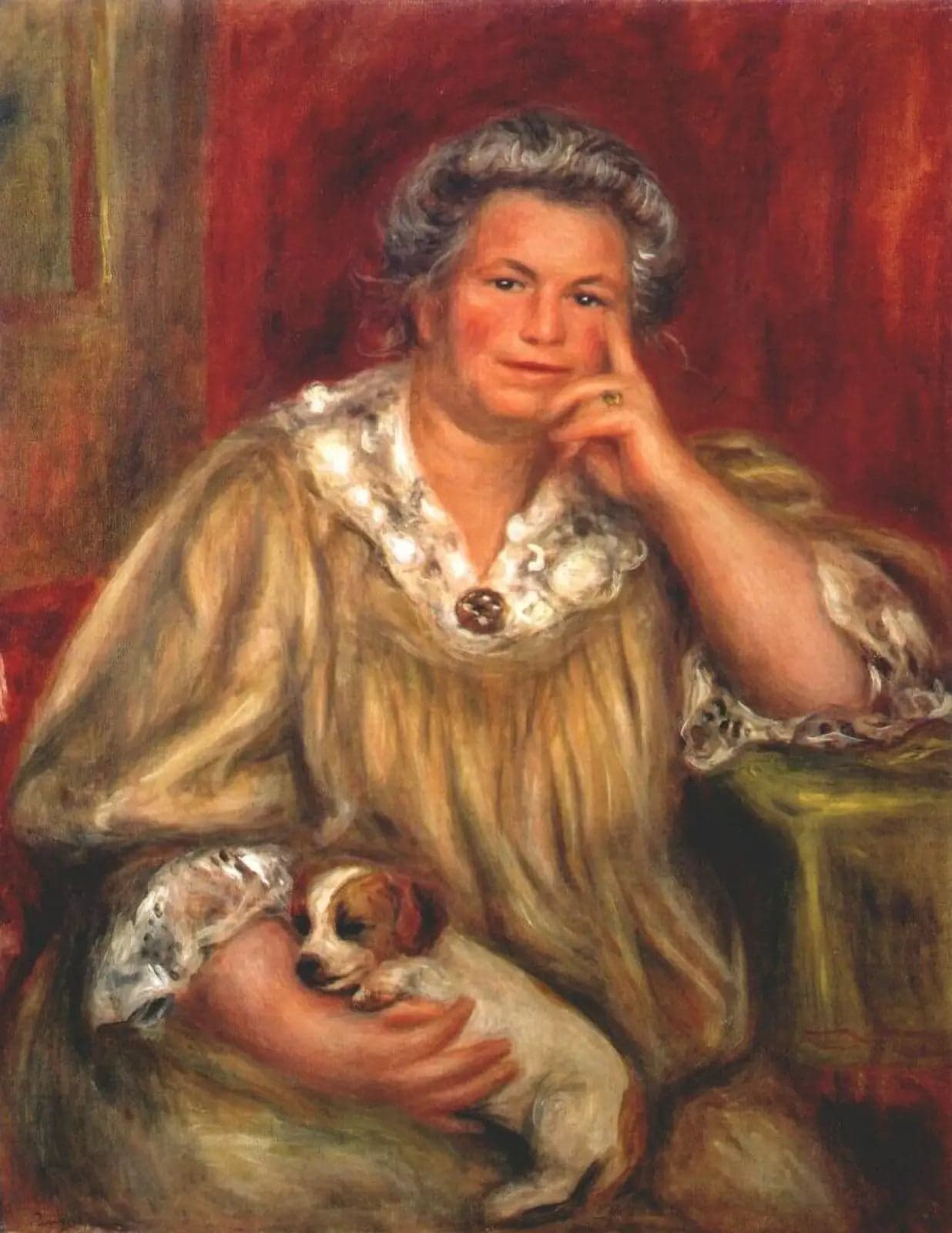
Madame Renoir - Pierre
- Original dimensions
- 64 x 80 cm
- Museum
- Wadsworth Atheneum
- Year
- 1910
Scene depicted
In this painting , Renoir presents his muse, Aline Charigot, amidst vibrant colors and sparkling light. She becomes the embodiment of femininity and beauty, surrounded by many flowers that dance the waltz of the seasons. Every detail, from the pleating of her dress to the sparkle of her smile, captures an essence of serenity and joy, transcending the simple artistic fact to become an ode to life.
Historical context
This painting , created in 1910, emerges from a time when Impressionism asserts itself in all its splendor in Paris, the capital of art. Madame Renoir is set in a rich historical context, between innovation and tradition. The painting, currently exhibited at the Wadsworth Atheneum in Hartford, Connecticut, is a true flagbearer of an artistic movement that redefined the codes of the canvas .
Place in the artist's career
Established in his maturity period, this painting celebrates the technological and emotional peak of Renoir. It echoes other major works such as Le Déjeuner des canotiers and Les Grandes Baigneuses , marking a continuity in his quest for happiness in the present moment. Here, the canvas bears witness to an evolution in the manipulation of light and forms.
Anecdote
“Light is the life of painting,” said Renoir. It is on a sunny morning, as he observes his wife posing in their flourishing garden, that he depicts on his canvas a scene of infinite tenderness. This fleeting moment, captured with exquisite precision, makes this masterpiece much more than a simple representation: it conveys the emotion that emanated from that beautiful morning.