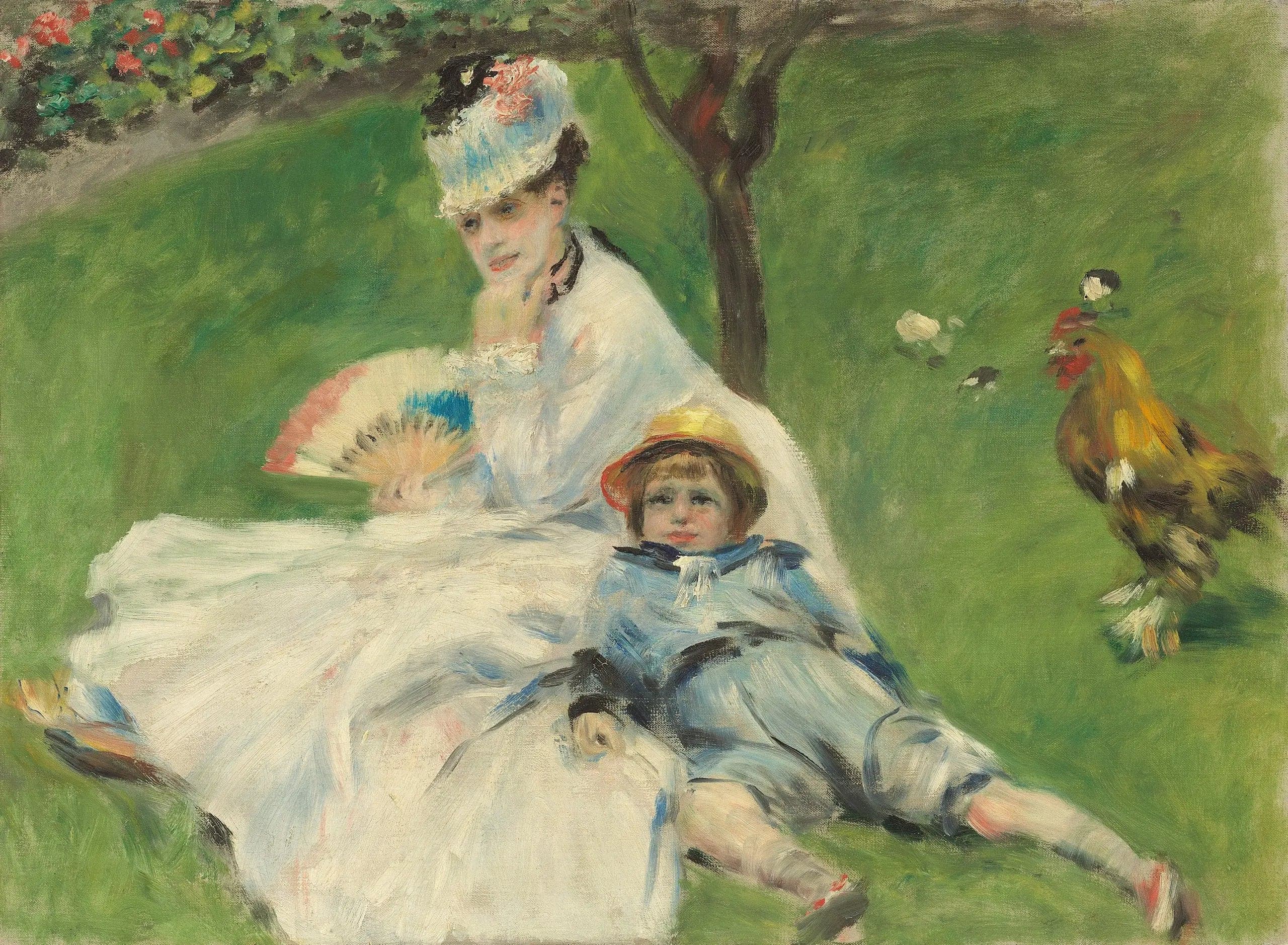
Madame Monet and Her Son - Pierre
- Original dimensions
- 68 x 50.4 cm
- Museum
- National Gallery of Art
- Year
- 1874
Scene depicted
The painting depicts the tender moment where Madame Monet shares a moment of complicity with her son, Pierre. In this canvas , Renoir manages to convey maternal love through the delicate play of light on their faces. The two characters, bathed in soft clarity, evoke the carefree nature of childhood and the warmth of family bonds. Every detail, from the lush grass to the blurred background, plays a role in this representation of a common natural serenity.
Historical context
Created in Paris during the vibrant spirit of the second half of the 19th century, Madame Monet and Her Son is part of the Impressionist movement, which revolutionized the way light and movement were perceived. The canvas captures a moment of intimacy between Claude Monet and his son, symbolizing a flourishing era where artists sought to capture the ephemeral. This painting is now proudly displayed at the National Gallery of Art in Washington, D.C., offering visitors a window into a time and style that continue to inspire.
Place in the artist's career
Madame Monet and Her Son is a significant milestone in Renoir's career, illustrating both his mastery of color and his commitment to capturing the reflections of light. At this time, Renoir is already recognized for his paintings that are vibrant, such as Le Bal du Moulin de la Galette and La Loge , each testifying to a continuous evolution towards an increasingly lyrical and atmospheric composition.
Anecdote
“I have always found that painting the happiness of a fleeting moment is the very essence of our art.” This quote resonates deeply with the spirit that drove Renoir during the creation of his masterpiece in 1874. One summer morning, cradled by the sweet song of birds, he picked up his brush to immortalize this tender moment between a mother and her son, a gesture filled with life and light.
Major exhibitions
Monet Collector