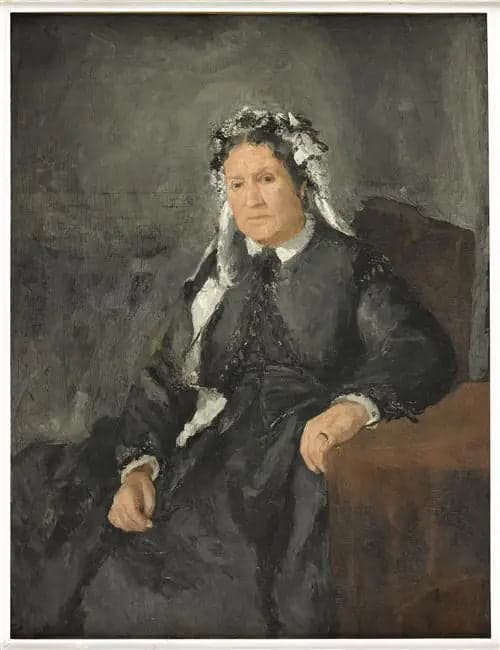
Madame Joseph Le Cœur - Pierre
- Original dimensions
- 89.5 x 116 cm
- Museum
- Orsay Museum
- Year
- 1866
Scene depicted
This painting represents the artist's wife, Joseph Le Cœur, immersed in a sweetness of life imbued with serenity. Her graceful demeanor, melancholic gaze, and light smile compose an intimate scene, where light delicately plays on the fabrics, creating an almost palpable atmosphere of tenderness and delicacy. This pictorial work invites contemplation, evoking a deep connection between the observer and the subject.
Historical context
Created in the heart of Paris in 1866, this painting is emblematic of the Impressionist movement, marking an era when light and color were redefined. Renowned for its vibrant artistic atmosphere, the city today houses this work in the prestigious Orsay Museum , enriching its history with an artistic dimension that resonates through the ages.
Place in the artist's career
Emerging as a symbol of Renoir's artistic maturity, Madame Joseph Le Cœur reflects a turning point in his career, stylized by earlier compositions like The Bathers and later followed by works such as Lunch of the Boating Party . These paintings illustrate the transition to greater mastery and heightened sensitivity, marking his recognition within the Impressionist movement.
Anecdote
Renoir once said: "Painting is poetry that is seen." This phrase reflects the genesis of Madame Joseph Le Cœur , created on a beautiful spring morning, inspired by the soft light that bathed the delicate face of his model. The emotion of this moment was captured in every brushstroke, making this masterpiece timeless.