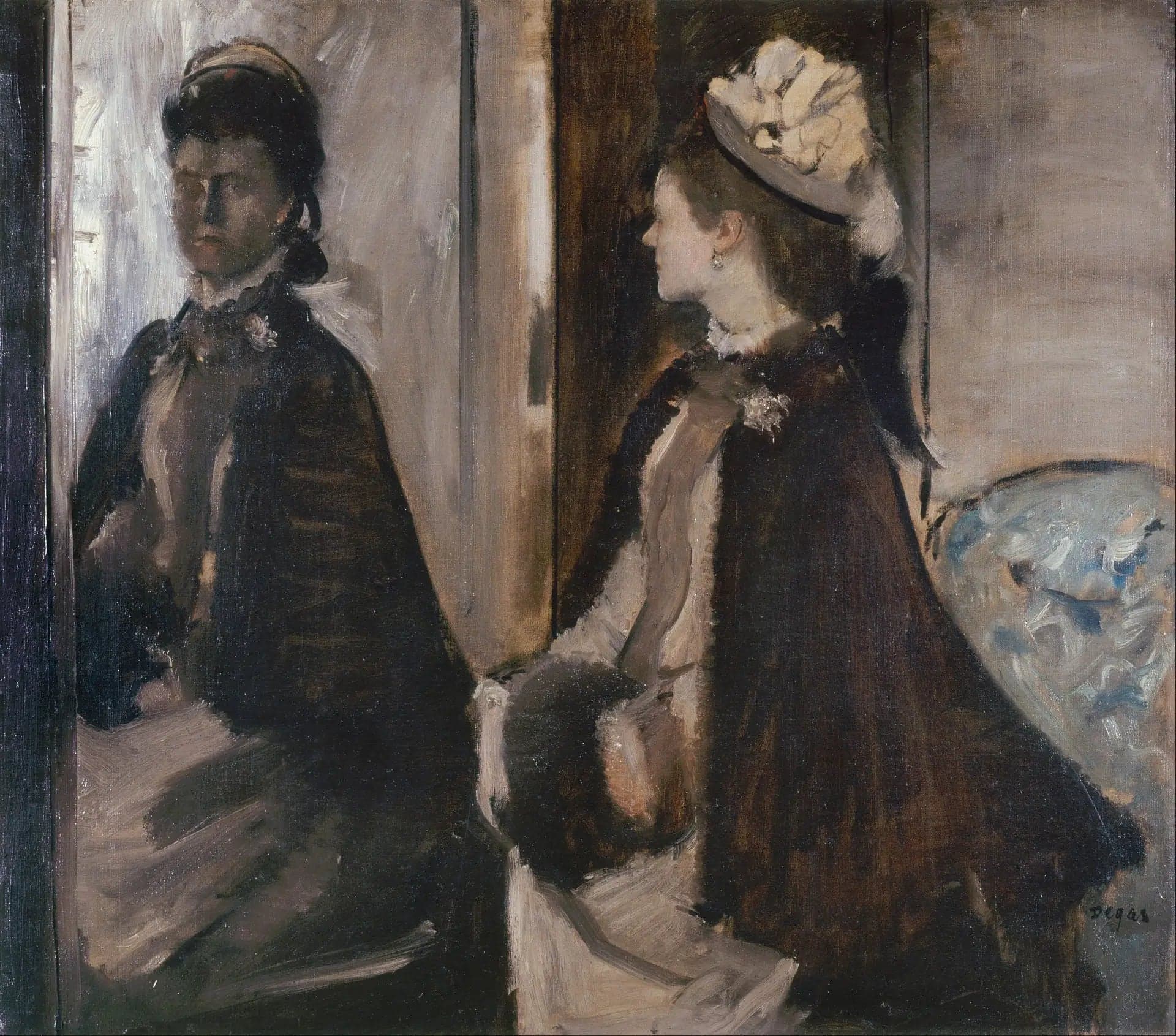
Madame Jeantaud at the Mirror
- Original dimensions
- 840 x 700 cm
- Museum
- musée d'Orsay
- Year
- 1875
Scene depicted
This painting reveals an intimate scene where Madame Jeantaud discovers herself in the mirror, symbolizing a quest for self through the gaze of others. The fragile posture and soft lights evoke an atmosphere of contemplation, a shared introspection between the subject and the viewer. Every detail is carefully painted to convey the magic of a moment suspended in time.
Historical context
Created in Paris in 1875, this painting is emblematic of the Impressionist movement, an artistic current that celebrates light and movement. In the prestigious musée d'Orsay , the canvas finds its current residence, a meeting place between past and present, where this pictorial work is displayed to amaze visitors.
Place in the artist's career
Situated at a key moment in the career of Edgar Degas , this canvas represents a stylistic turning point. It precedes his major works such as "The Dance Class" and "The Dancer at Rest," which also delve into the feminine world and intimacy. With "Madame Jeantaud au miroir," Degas hints at his genius in exploring the subtleties of light and movement.
Anecdote
“Every brushstroke is a dialogue between shadow and light,” Degas reportedly said while contemplating his masterpiece . The inspiration for this painting came to him one sunny day when he encountered Madame Jeantaud, a familiar figure, absorbed in her reflection. This fleeting moment captured the essence of delicate femininity, echoing the emotions of the canvas.