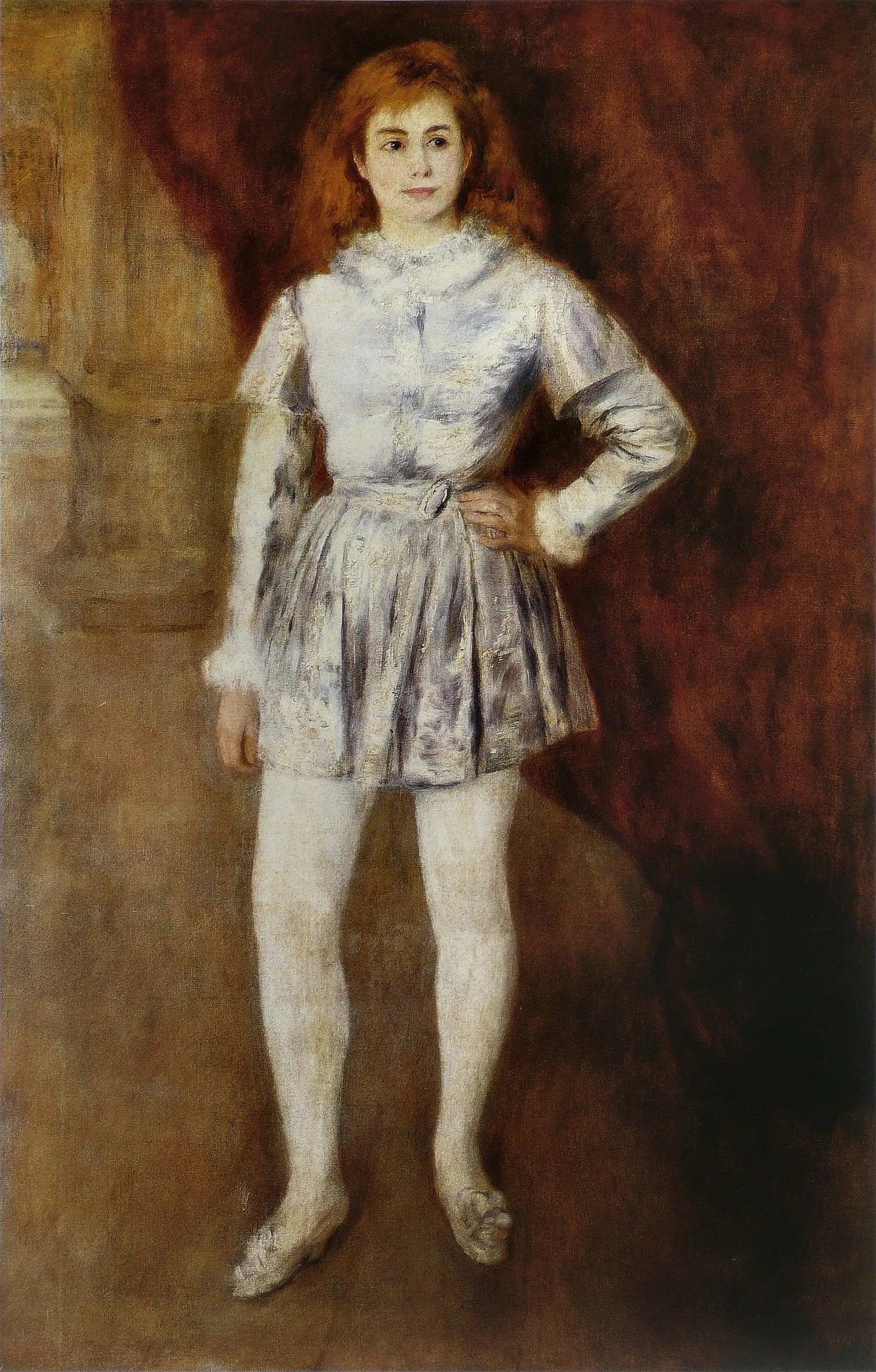
Madame Henriot in Disguise - Pierre
- Original dimensions
- 105 x 161.5 cm
- Museum
- Columbus Museum of Art
- Year
- 1876
Scene depicted
The canvas “Madame Henriot en travesti” depicts a character in a sumptuous costume, playing with the codes of gender and society. This painting, both playful and provocative, questions established norms while celebrating the beauty of life. The textures and vibrant colors bring to life a scene where pleasure, art, and cross-dressing intersect, offering the viewer an immersion into the artistic experimentation of the time.
Historical context
Created in 1876, in the heart of Paris, this painting belongs to the Impressionist period, which was in full swing. It is a bold movement that seeks to capture light and everyday life with unprecedented intensity. Today, this canvas finds refuge at the Columbus Museum of Art , where it continues to move and inspire visitors with its imposing dimensions of 105 x 161.5 cm.
Place in the artist's career
This canvas is part of a pivotal period in Renoir's career, marking an essential evolution. After works like “Luncheon of the Boating Party” and “Dance in the City,” we see how his mastery of light and composition matures. The work on the sensuality of form asserts itself here, showing a Renoir who is both bold and aware of the limits to challenge.
Anecdote
“Each masterpiece is a flame of life that we offer to eternity.” On a cool spring morning, Renoir was inspired to create this work in a lively café, enchanting with its warm lights and the laughter of friends surrounding him. The face of Madame Henriot, captured in her exuberant disguise, delights with all its brilliance, resonating like a story whispered by an inner breath.