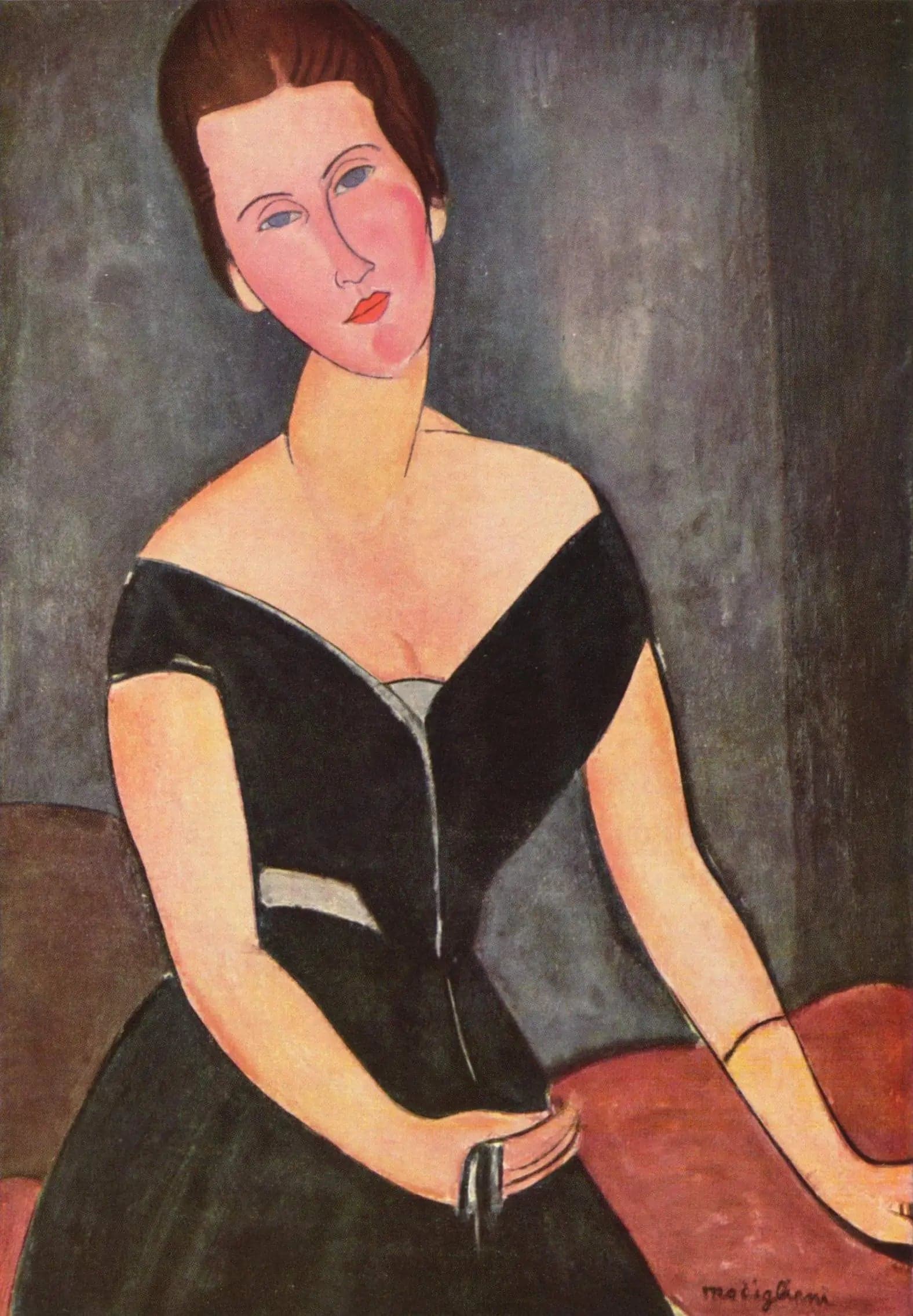
Madame Georges van Muyden
- Original dimensions
- 65 x 92 cm
- Museum
- São Paulo Museum of Art
- Year
- 1916
Scene depicted
In this composition, Madame Georges van Muyden is depicted in a way that is both simple and captivating. Her elongated features and melancholy eyes evoke a rare psychological depth. Modigliani, known for his stylized forms, succeeds in revealing a beautiful harmony in his way of creating the portrait, transforming his model into a symbol of timeless beauty.
Historical context
Created in 1916, this painting is emblematic, emerging in the vibrant setting of Paris, then the epicenter of the modern artistic movement. The art scene was intense and full of creativity, blending influences from Impressionism and Cubism . The painting, now preserved at the São Paulo Museum of Art , testifies to a time when Amedeo Modigliani resided in the French capital, imbued with its atmosphere filled with light and inspiration.
Place in the artist's career
This canvas is at the heart of Modigliani's career, marking a phase of artistic maturity. Alongside other masterpieces like *Nu couché* and *Portrait of Jeanne Hébuterne*, the painting of Madame Georges appears as a turning point where the artist's techniques refine, exploring ever more fluid lines and a subtle color palette.
Anecdote
“I do not paint portraits, I paint souls,” Modigliani is said to have remarked one spring morning, as he sought the very essence of his models. It was in a quiet alley of Montparnasse, bathed in soft light, that he captured the unique beauty of Madame Georges van Muyden, capturing not only her face but also her spirit in this pictorial work .