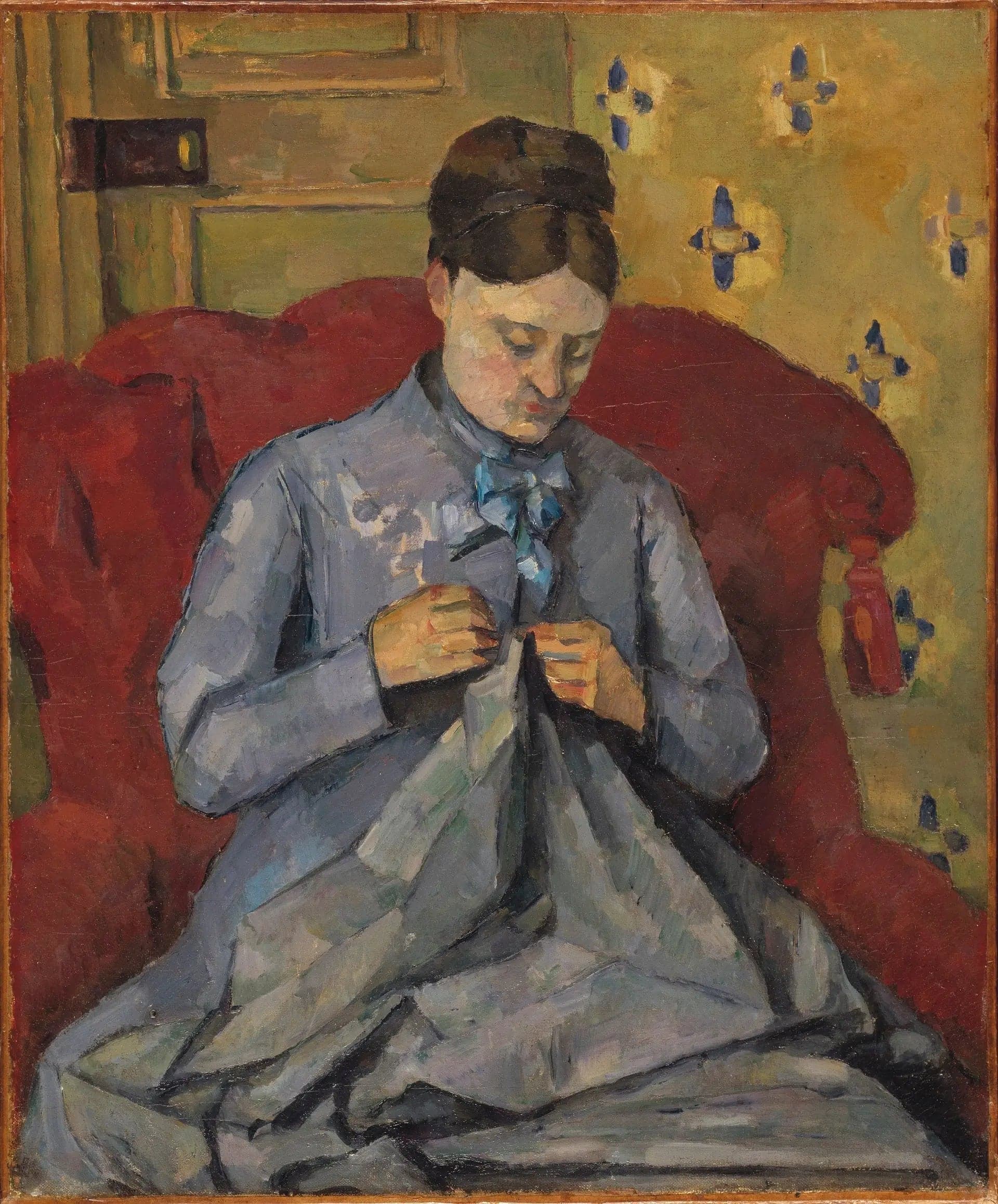
Madame Cézanne Sewing
- Original dimensions
- 49.5 x 59.5 cm
- Museum
- Nationalmuseum
- Year
- 1877
Scene depicted
This painting depicts a woman, her gaze focused, surrounded by everyday objects, thus revealing an atmosphere of serenity and domestic devotion. Cézanne's brushes highlight the textures of the clothing and the silent drama of daily gestures, inviting the viewer to share this peaceful moment. The composition testifies to an unparalleled talent for capturing the essence of practical life, transformed into a pictorial work .
Historical context
Created in the gentle light of spring 1877, this painting is part of the Impressionist movement, an emblematic period in the history of art. Based in Paris, Cézanne explores new perceptions of reality in his paintings . The work is now preserved at the Nationalmuseum in Sweden, thus preserving the memory of a strong artistic moment, while achieving remarkable dimensions that captivate the eye.
Place in the artist's career
The painting “Madame Cézanne sewing” marks a decisive period in Cézanne's career, where he skillfully combines tradition and modernity. Like his famous “Still Life with Flower Pot” and “The Card Players,” this canvas illustrates an evolution towards a more personal and distinctive pictorial language, seeking to transcend mere visual rendering to express infinite emotional depth.
Anecdote
“I wanted to capture what I see in every gesture, every bulge of fabric, every cast shadow,” said Cézanne. One quiet morning, he chose to paint his wife, Madame Cézanne, absorbed in her sewing. This intimate moment where time seems suspended resonates so strongly in the canvas that it reveals not only a scene of life but the very essence of Cézanne's art.