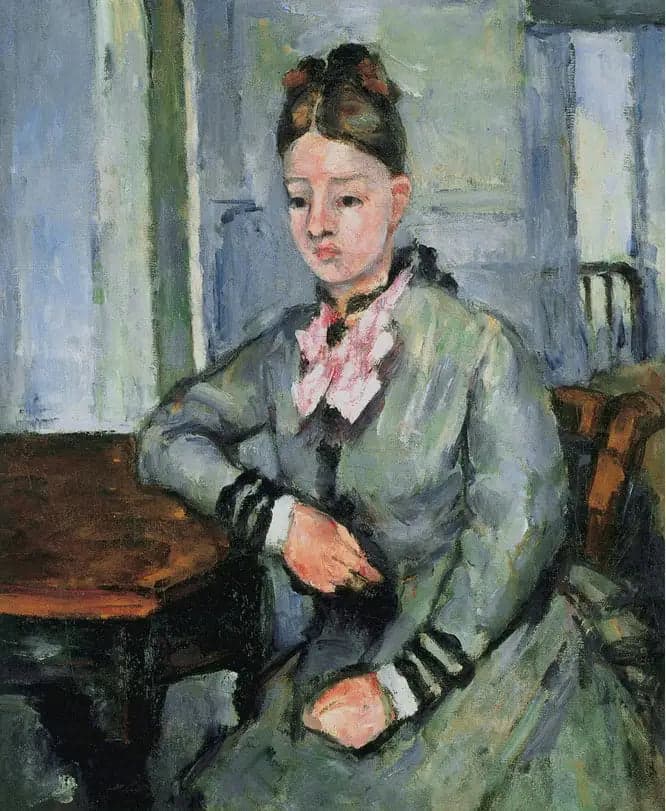
Madame Cézanne Leaning
Scene depicted
The painting “Madame Cézanne Leaning” depicts the artist's wife, Hortense Fiquet, in a contemplative posture. Evoking a rare tranquility, this pictorial work reveals the harmony of forms and colors, as well as a subtle play between shadow and light. The scene is both intimate and universal, capturing a fleeting moment in time, yet bursting with emotion.
Historical context
Created in 1875, this iconic work of Impressionist painting was born in Aix-en-Provence, the hometown of Paul Cézanne . Part of a movement that revolutionized the art of its time, this sublime painting is currently preserved at the Orsay Museum in Paris. Measuring 74 cm in height and 60 cm in width, this canvas is a precious testament to the cultural and artistic heritage of the 19th century.
Place in the artist's career
“Madame Cézanne Leaning” is situated at a pivotal time in Cézanne's career, marking the beginning of his stylistic exploration. Alongside other paintings such as “The Card Players” and “The House of Jas de Bouffan,” this canvas illustrates the evolution of his approach, combining both rigor and emotion in his compositions.
Anecdote
Paul Cézanne , with his unique sensitivity, often stated: “Painting is a poetry that expresses itself through color and light.” This quote takes on its full meaning when considering the evocative power of his creation. In a moment of shared intimacy, Cézanne is said to have found his inspiration by observing his wife, leaning in a soft light that caresses the room, thus revealing the very essence of painting.