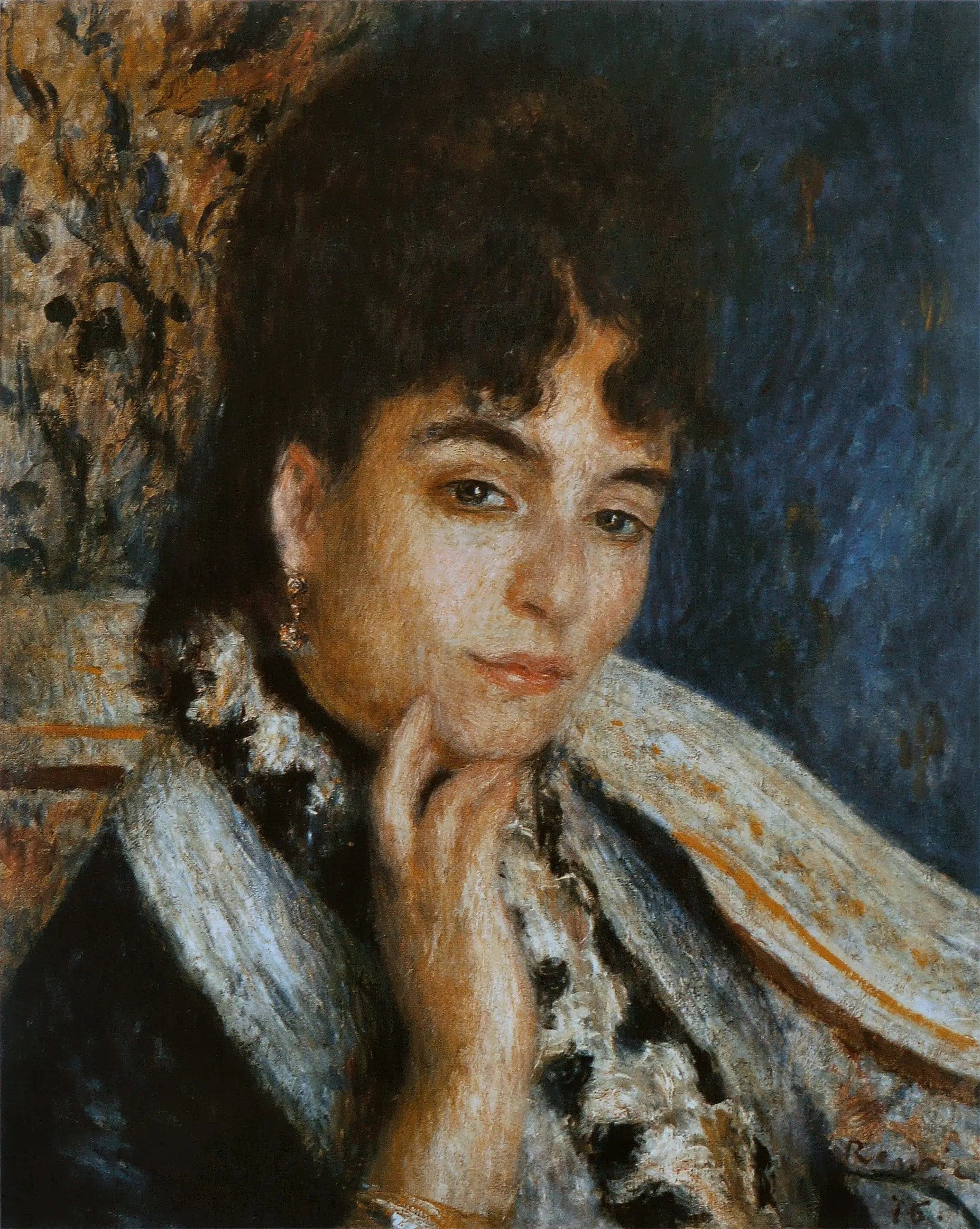
Madame Alphonse Daudet - Pierre
- Original dimensions
- 38 x 46 cm
- Museum
- Orsay Museum
- Year
- 1876
Scene depicted
In this pictorial work, Renoir captures the grace and elegance of Madame Daudet, evoking an atmosphere of tranquility and refinement. The woman is frozen in a moment of contemplation, her presence imbued with a palpable intimacy, transforming this canvas into a true portrait of the soul. The work reveals not only a face but also an emotion, echoing the tenderness of human relationships.
Historical context
Created in 1876, during a vibrant period of artistic discoveries, the painting "Madame Alphonse Daudet" is part of the Impressionist movement that was born in Paris, the emblematic city of European art. This canvas reflects the rise of a new artistic vision, capturing fleeting and intimate moments in daily life. Currently exhibited at the Orsay Museum , this canvas with soft dimensions of 38 x 46 cm evokes the mastery and innovation of an artist on the rise.
Place in the artist's career
"Madame Alphonse Daudet" represents a significant milestone in the career of Auguste Renoir , positioning his style between the bold youth of his beginnings and the maturity of a master in search of depth. In parallel with "Luncheon of the Boating Party" and "Dance in the City," this painting reveals an evolution in his approach to human interactions and the use of light, marking a pivotal period in his artistic production.
Anecdote
"Beauty lies in the light captured and the life that emanates from it," Renoir used to say. One bright morning, in his studio bathed in the first rays of sunlight, he sees Alphonse Daudet, his friend, accompanied by his charming wife, and is carried away by the emotion of a shared moment. This improbable meeting becomes the origin of this masterpiece , where each brushstroke recalls that sweet light that inspired him.
Major exhibitions
third Impressionist exhibition