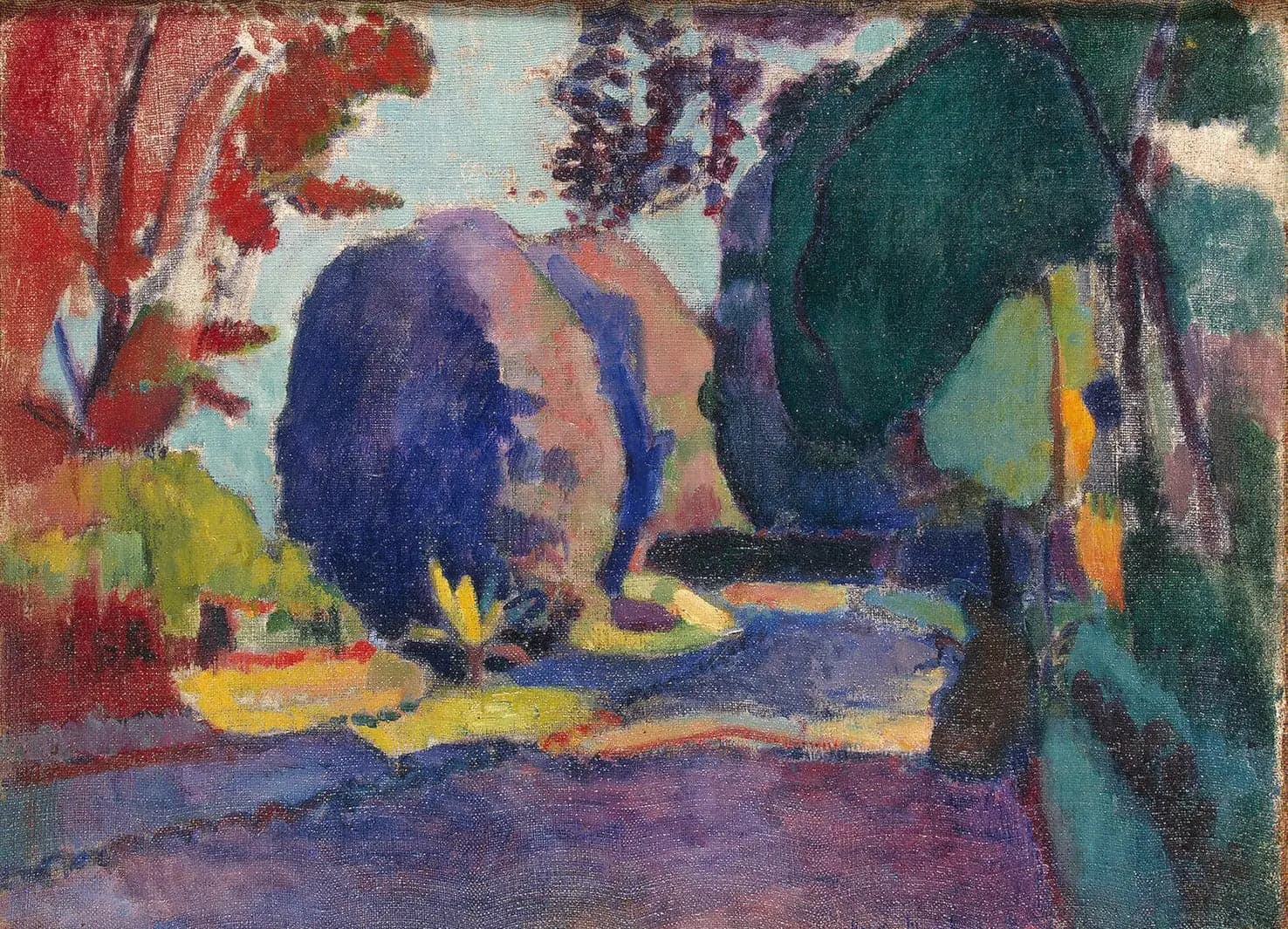
Luxembourg Gardens
- Original dimensions
- 81.5 x 59.5 cm
- Museum
- Hermitage Museum
- Year
- 1901
Scene depicted
In this composition , Matisse depicts the iconic garden, where visitors mingle with the lush nature. The majestic trees, the vibrant flower beds, and the blurred silhouettes create an intimate atmosphere. The work unfolds a harmonious dynamic, blending human figures and the environment, revealing the ephemeral beauty of each moment.
Historical context
Created in Paris at the heart of the Belle Époque, Luxembourg Gardens captures the essence of a bright spring in 1901. This masterpiece of the Fauvist movement, where color explodes on the canvas, invites you to rediscover the magic of Parisian gardens. Currently exhibited at the Hermitage Museum , this painting of a generous size testifies to Matisse's passion for light and nature.
Place in the artist's career
Luxembourg Gardens stands as a decisive milestone in Matisse's career, marking his entry into the Fauvist movement, alongside masterpieces like The Joy of Life and The Dance . These emblematic paintings reflect a bold quest for color and light, revealing the evolution of his pictorial style that finds its creative momentum here.
Anecdote
“Color is my mother tongue, each brushstroke is a cry from the heart,” Matisse might have said when recalling his inspiration for this painting . One morning, while wandering through the blooming gardens, the intoxicating scents of lilacs and the sweet song of birds propelled him towards this vibrant and colorful work.