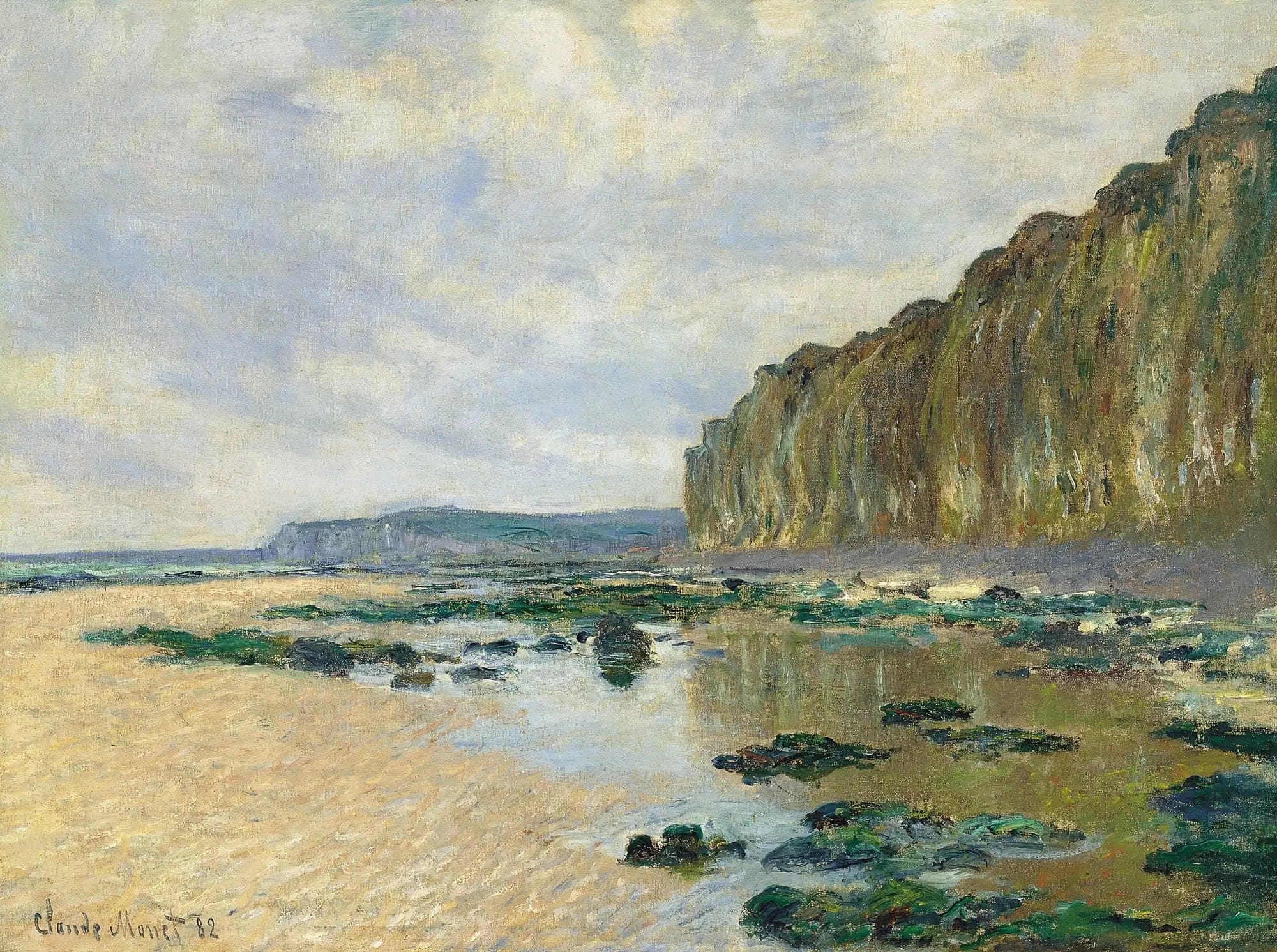
Low tide in front of Varengeville
- Original dimensions
- 81 x 60 cm
- Museum
- Thyssen-Bornemisza Museum
- Year
- 1882
Scene depicted
"Low Tide at Varengeville" depicts a striking spectacle where the sea recedes, revealing the sculptural forms of the rocks and cliffs in the background. Shades of ochre, blue, and green intertwine, creating an atmosphere that is both peaceful and dynamic, conducive to contemplation. The brilliant brightness of this painting perfectly conveys the fleeting moment of this tide, inviting the viewer to dive into the delicate ambiance of the maritime scene.
Historical context
Year: 1882 |BRK| Museum: Thyssen-Bornemisza Museum |BRK| Dimensions: 81 x 60 cm
Place in the artist's career
With "Low Tide at Varengeville," Monet marks a turning point in his artistic career, illustrating a period of maturity where he elevates the effects of light on nature. Compared to " Impression, Sunrise " and " The Water Lilies ", this canvas reflects his stylistic evolution, combining technique and emotion to capture the very essence of the Norman landscape, a true signature of his genius.
Anecdote
“Every wave is a poem that I paint in the sand of the moment.” - Claude Monet. It is on a sunny morning, when the skies reflect on the water, that the artist finds inspiration to immortalize the fleeting beauty of this moment. A light breeze, the rustling of the waves, and the salty scent of the sea nourish his imagination, bringing this pictorial work full of light and serenity to life.