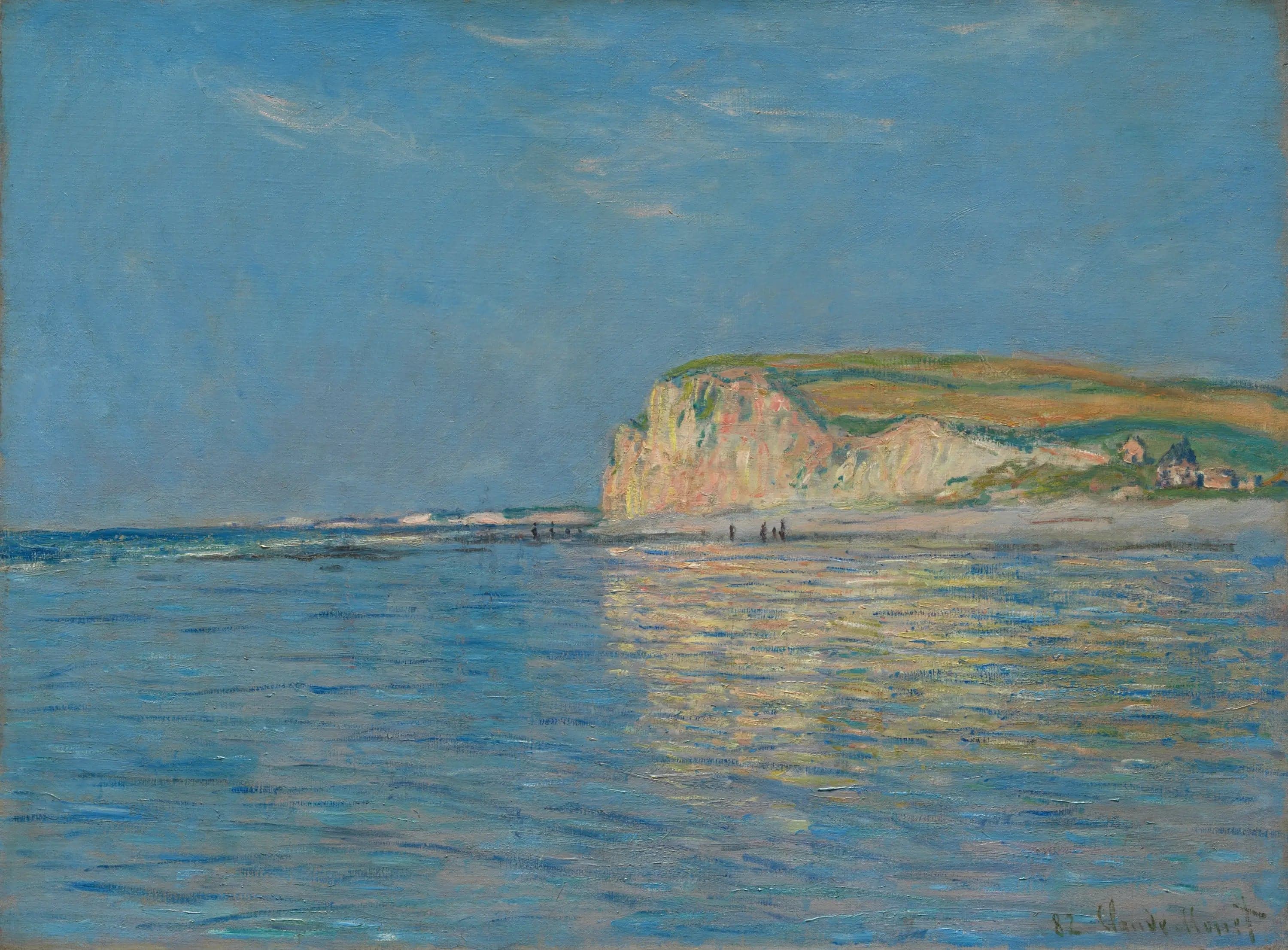
Low tide at Pourville, near Dieppe, in 1882
- Original dimensions
- 81.3 x 59.9 cm
- Museum
- Cleveland Museum of Art
- Year
- 1882
Scene depicted
This canvas reveals a tide at its peak, the shore scattered with shells under an ethereal light. The white sails of the boats in the background stand out against the bright blue of the horizon, while the shades of sand intertwine with the clarity of the sea. Monet succeeded in capturing the elegance of a fleeting moment, where the interaction between the elements creates a serene harmony. Each glance at the work transports us to the water's edge, where the sound of the waves mingles with the gentle breath of the wind.
Historical context
Year: 1882 |BRK| Museum: Cleveland Museum of Art |BRK| Dimensions: 81.3 x 59.9 cm
Place in the artist's career
“The Low Tide at Pourville , near Dieppe” is part of a flourishing period in Monet's career. Considered an emblematic milestone, this painting testifies to his exuberant English style of capturing instantaneous impressions. Compared to his works such as “ Impression, Sunrise ” and “ The Cathedral of Rouen ”, this canvas illustrates a recognized evolution towards brighter light and bolder compositions, forcing the eye to grasp the beauty of the ephemeral.
Anecdote
“Every brushstroke is like a breath of wind on the water,” Monet said. This phrase resonates like an echo of the misty mornings when the artist, a vivid inspiration, contemplated the surf, his blank canvas ready to bring to life the unique luminosity of the moment. The painting “The Low Tide at Pourville , near Dieppe” is the result of this delicate encounter between man and nature.