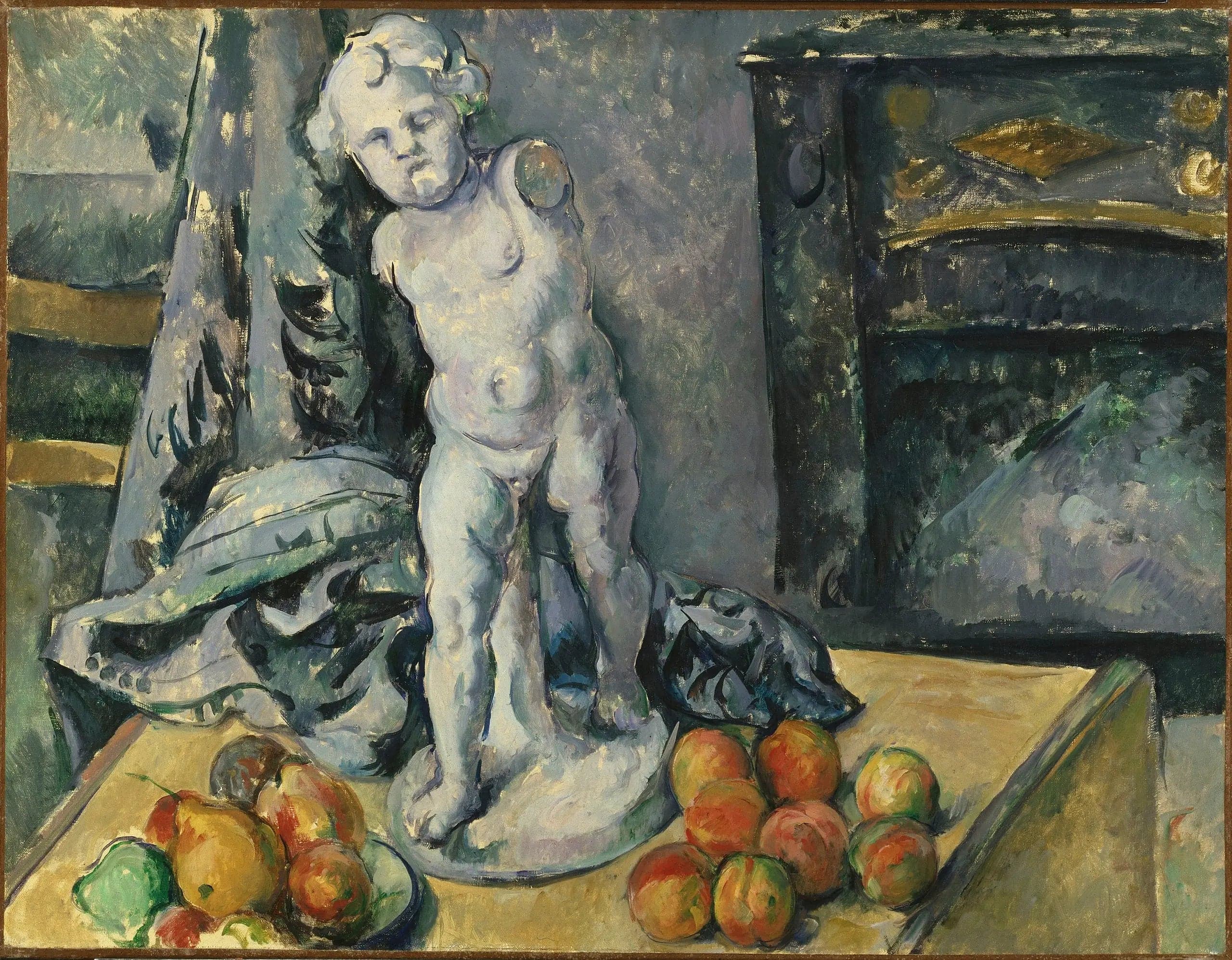
Love in Plaster
- Original dimensions
- 63 x 71 cm
- Museum
- Nationalmuseum
- Year
- 1894
Scene depicted
This painting illustrates a scene imbued with tenderness where love materializes in the form of a plaster sculpture, suggesting a duality between fragility and eternal beauty. The composition unfolds around human figures that coexist, enveloped by an almost palpable atmosphere, evoking feelings of intimacy and connection.
Historical context
Created in the heart of the late 19th century, in Paris, this painting explores the depths of Impressionism . At a time when forms and colors are being redefined, Cézanne captures the essence of an era in turmoil. The canvas is currently exhibited at the Nationalmuseum , where it continues to fascinate art lovers.
Place in the artist's career
Situated at a turning point in his career, this painting marks the culmination of his stylistic exploration, where innovative perspective and color work intertwine. Compared to works such as “The Card Players” and “The Large Bathers,” it reflects emotional maturity and superior technique.
Anecdote
“I do not paint things, I paint feelings,” said Cézanne, inspired by the wild beauty of the Provençal landscapes and human emotions. Imagine him, on a sunny morning, in his studio, observing the light playing on the forms. It was then that he realized the importance of expressing love through his masterpiece .
Major exhibitions
Mästerverk i Nationalmusei samlingar