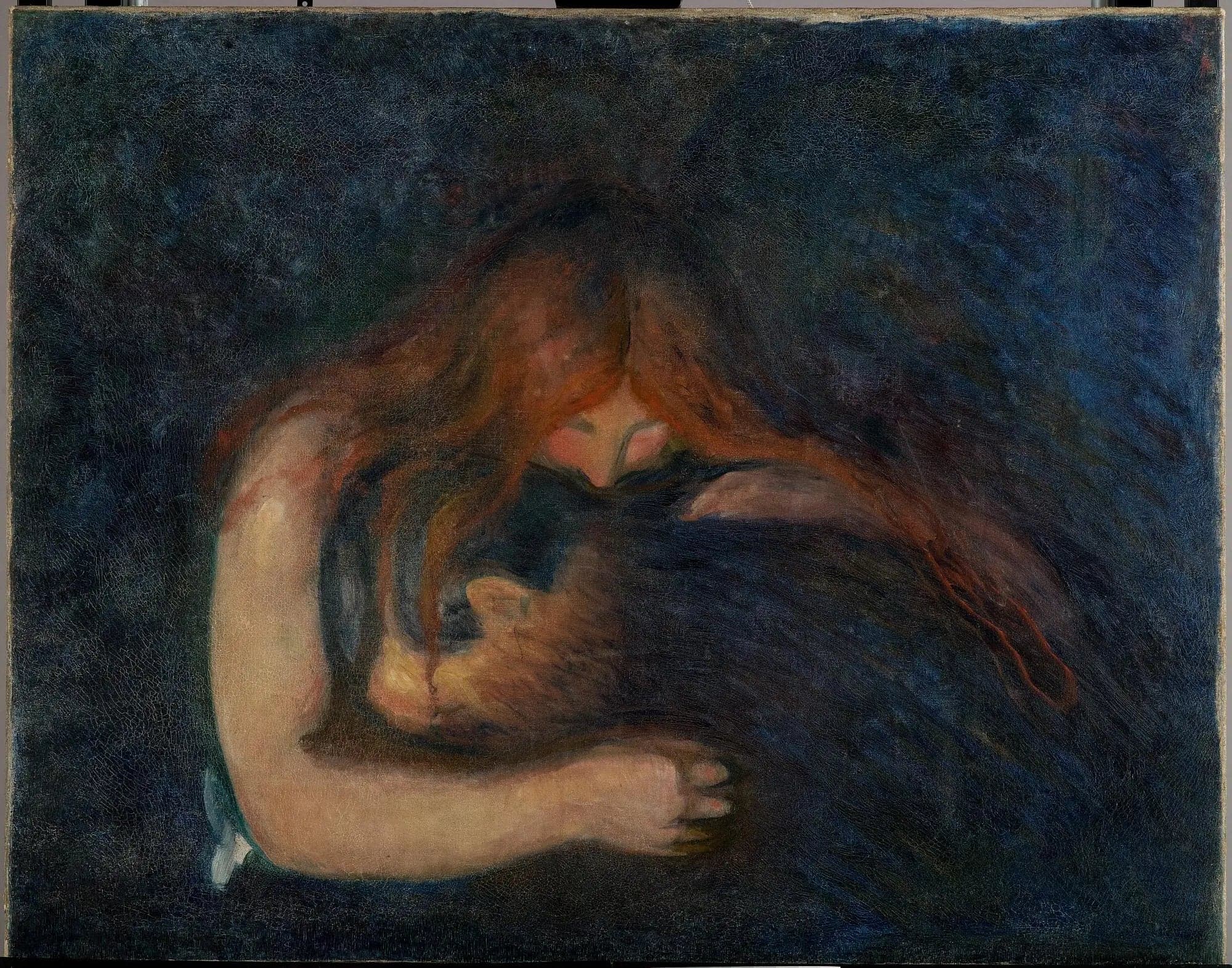
Love and Pain
- Original dimensions
- 98.5 x 77.5 cm
- Movement
- expressionism
- Museum
- Munch Museum
- Year
- 1893
Scene depicted
This masterpiece highlights the inner struggle between the pleasures of love and the suffering it brings. A palpable atmosphere settles in, illustrating the complexity of human relationships. Under the tense sky of Oslo, the silhouettes with expressive features intertwine, symbolizing the tensions and desires that inhabit us all. Every detail of this painting transports the observer to the heart of an intense emotional reality.
Historical context
Created in 1893, this iconic work is located in Oslo, Norway, in keeping with the expressionist movement that profoundly influenced Western art. The painting, which expresses the duality of human emotions, is currently housed in the Munch Museum, a true sanctuary of its creator's creativity. The legacy of this canvas is undeniable, echoing universal feelings that continue to resonate within contemporary society.
Place in the artist's career
Situated in the very heart of Edvard Munch's career, Love and Pain represents a crucial step for the artist. Following the success of paintings such as The Scream and The Madonna, this canvas reveals his evolution as a mature artist, on the brink of his deep reflections on love and death. It embodies a bolder approach, where emotion takes on an almost tangible form, propelling Munch to the heights of artistic recognition.
Anecdote
“I wanted to paint the scream of nature.” Invoking this quote, Munch was inspired by a night walk along the shores of Oslo. Imagine a vibrant twilight, where the sounds of nature blend with the cries of tormented souls. It is in this melancholic breath that Love and Pain materialized, a painting that immerses the viewer in the intimacy of human emotions.