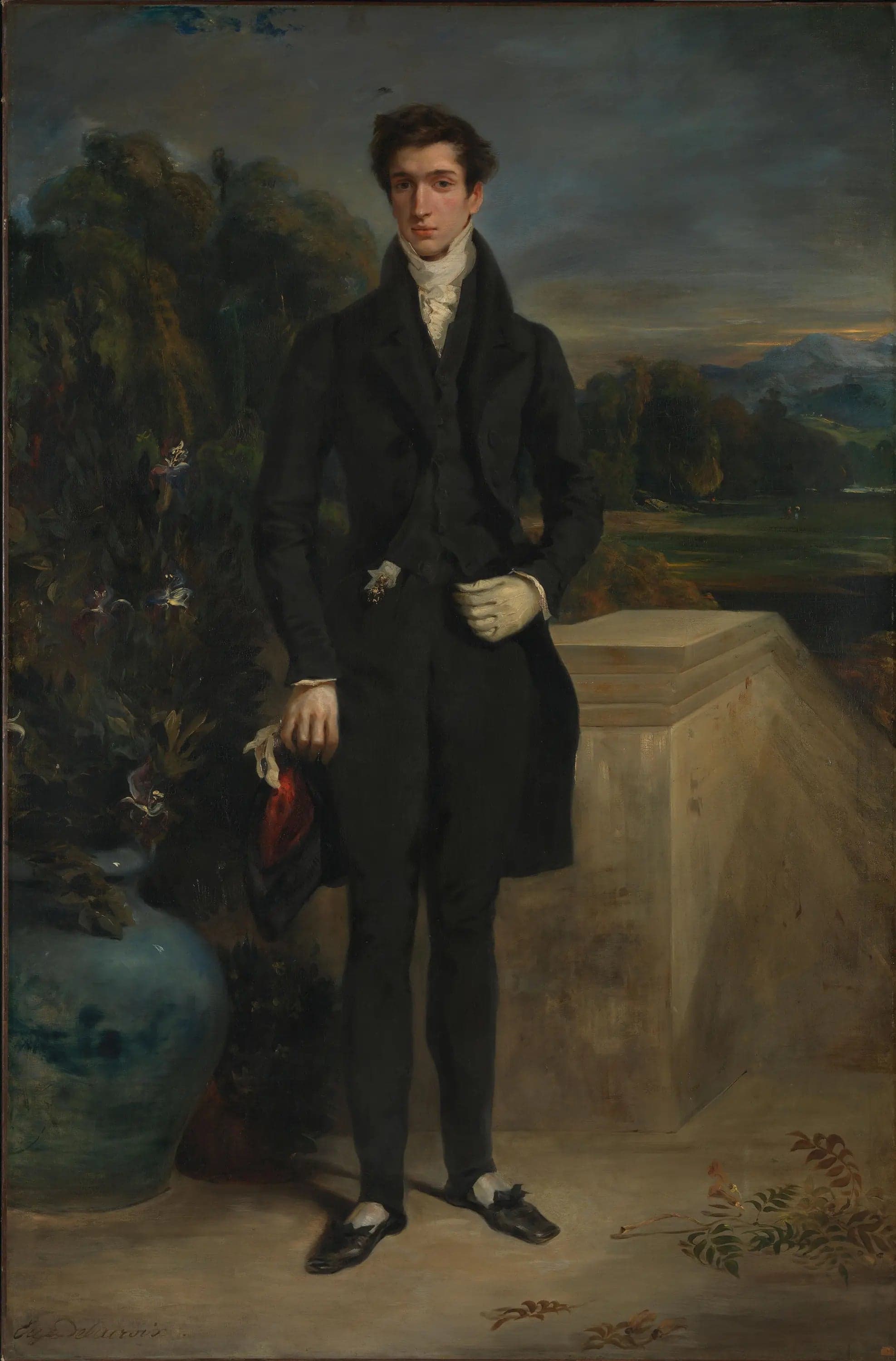
Louis-Auguste Schwiter
- Original dimensions
- 143 x 218 cm
- Museum
- National Gallery
- Year
- 1827
Scene depicted
The canvas Louis-Auguste Schwiter features an emblematic figure of French culture, inviting each observer to immerse themselves in the intimacy of the captured moments. This canvas is an open window to a world filled with vibrant emotions, where the viewer can perceive a silent yet powerful story, expressing the breath of the era.
Historical context
Created in 1827, this painting is the result of a time rich in artistic transformations, rooted in the romantic movement. It was in Paris, the beating heart of French culture, that the canvas was born, reflecting a period where emotions and color intertwined to bring pictorial works to life. The canvas , currently displayed at the National Gallery, measures 143 x 218 cm, unmissable in its scale and visual impact.
Place in the artist's career
The canvas Louis-Auguste Schwiter marks a significant transition in Delacroix's career, illustrating his technical prowess and his liberation from academic conventions. Alongside his other iconic achievements such as Liberty Leading the People and The Massacre of Chios , this painting testifies to a growing exploration of emotions, light, and color.
Anecdote
“The passion of a scene can be conveyed by a simple brushstroke,” might have said Eugène Delacroix while contemplating the vibrant movement of Parisian life. That morning, a soft light permeated the streets, inspiring the artist to capture the very essence of his subject, thus giving birth to a masterpiece filled with emotion.
Major exhibitions
Delacroix (1798-1863)