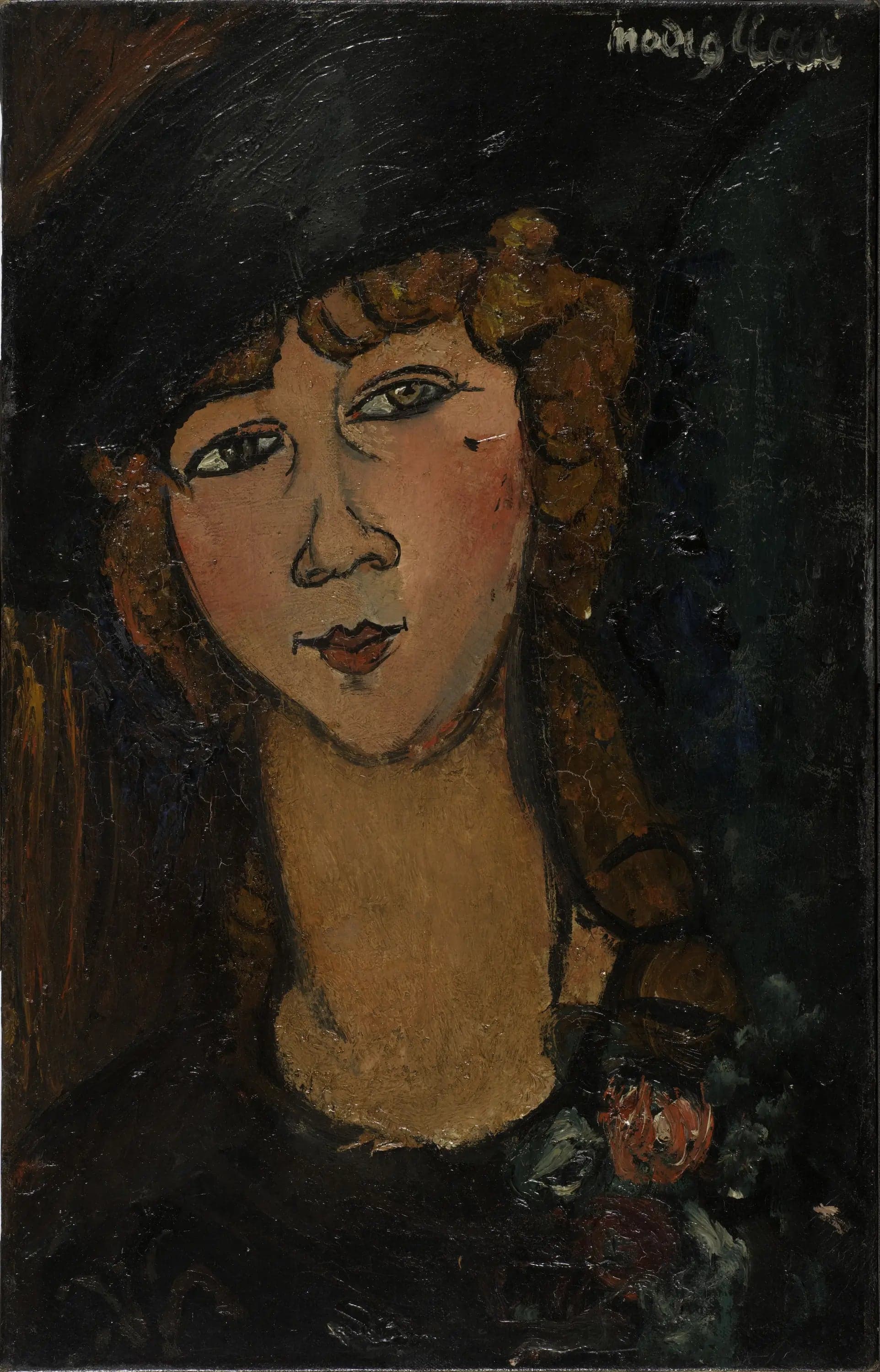
Lolotte
- Original dimensions
- 35.5 x 55 cm
- Museum
- Museum of Art and History of Judaism
- Year
- 1917
Scene depicted
In this masterpiece, Lolotte , Modigliani presents a female figure of soft and enigmatic beauty, floating in an abstract and colorful space. Her face, elongated and imbued with melancholy, aspires to a deep connection with the viewer. The stylized forms and delicate shades of the canvas enhance the poetry of her gaze, plunging the viewer into a world that is both intimate and universal.
Historical context
Created in 1917, this magnificent canvas is located in the heart of Paris, an iconic city of art and culture. The painting belongs to the artistic movement of modernism , of which Modigliani is one of the most illustrious representatives. The period of creation of Lolotte is marked by an innovative exploration of forms and features, in harmony with the avant-garde context of the Belle Époque. Currently, this fascinating work is preserved in the Museum of Art and History of Judaism, where it continues to inspire visitors with its emotional depth and unique aesthetics.
Place in the artist's career
Lolotte represents a pivotal moment in Modigliani's career, revealing his distinctive style and creative freedom. Compared to other works, such as Portrait of Jeanne Hébuterne and Reclining Nude , this canvas bears witness to an artistic maturation, juxtaposing elegance and introspection that characterize his journey.
Anecdote
“Every face I paint is a reflection of the soul I discover,” Modigliani might have said at the turn of a street in the heart of Paris. This moment captured on a spring morning, when the soft light embraced the faces of passersby, was certainly a source of inspiration for his painting . Lolotte is much more than just a portrait; it is a living embodiment of pure and authentic emotion.