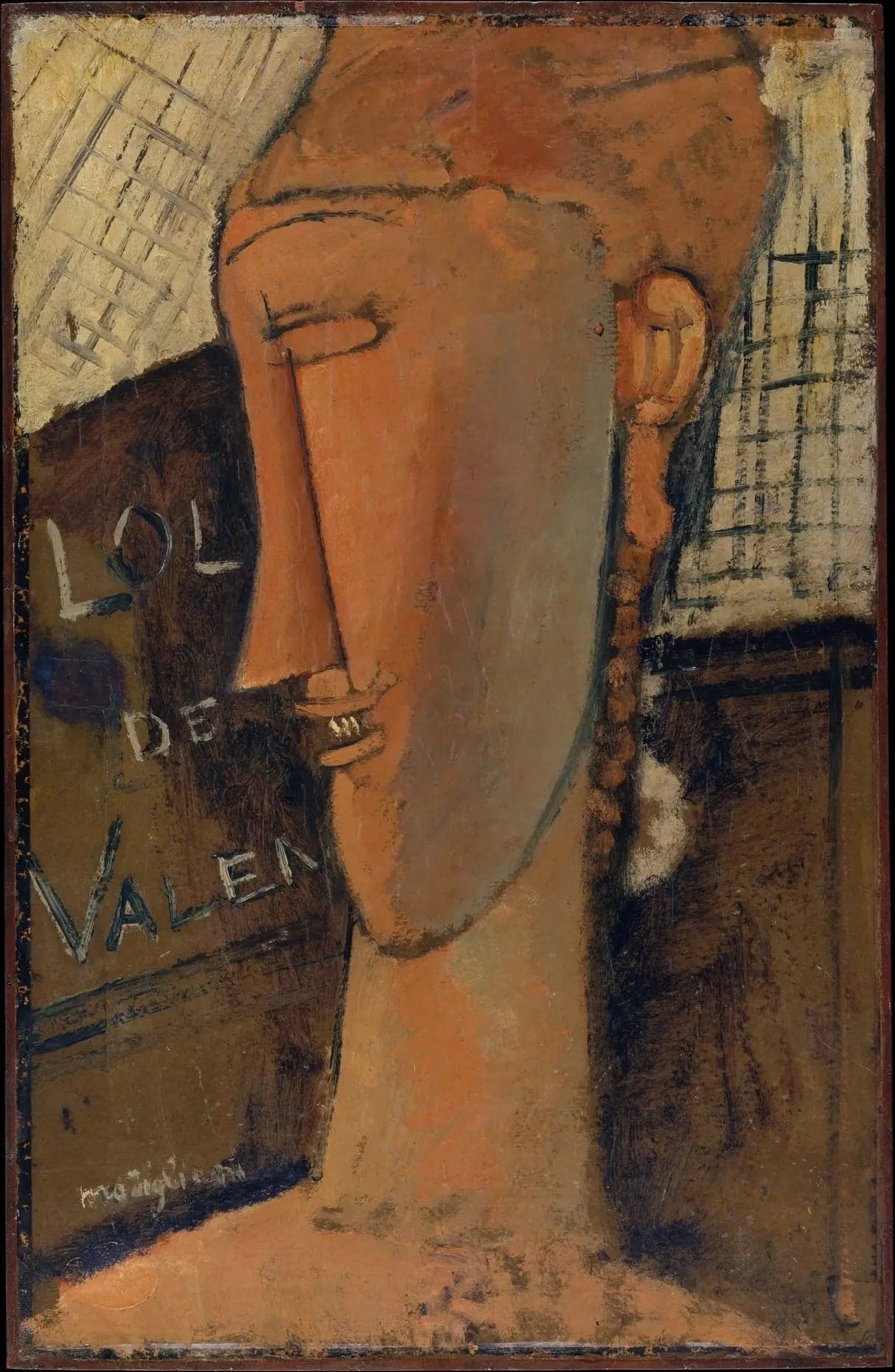
Lola of Valencia
- Original dimensions
- 33.7 x 52.1 cm
- Museum
- Metropolitan Museum of Art
- Year
- 1915
Scene depicted
Lola de Valence reveals a woman of melancholic beauty, her serene eyes sterilizing all ambient noise. This composition, imbued with elegance, magnifies the essence of feminine individuality from a pivotal era, inviting the viewer to lose themselves in her unique expression, as mysterious as it is poignant.
Historical context
Created in 1915, this painting embodies its roots in Paris, the illuminated city at the heart of artistic avant-gardes. Amidst the rise of the modernist movement, Amedeo Modigliani , influenced by Italian culture and the creative diversity of Montparnasse, managed to immortalize elegance through his unique vision. The canvas is currently housed at the Metropolitan Museum of Art , thus defending an invaluable heritage.
Place in the artist's career
This canvas is situated at a turning point in Modigliani's career where his distinctive style fully emerges. Alongside works like "Nu couché" and "Portrait de femme," "Lola de Valence" testifies to a maturation where his technique and emotional approach assert themselves, oscillating between introspection and exuberance.
Anecdote
Modigliani once stated: "Beauty is what remains after removing the superfluous." The inspiration for this masterpiece occurred at the dawn of a spring, as he crossed paths with the captivating gaze of Lola, a charismatic model, in the alleys of the artistic district. Her floating presence brought this canvas to life, marked by a palpable and timeless emotion.