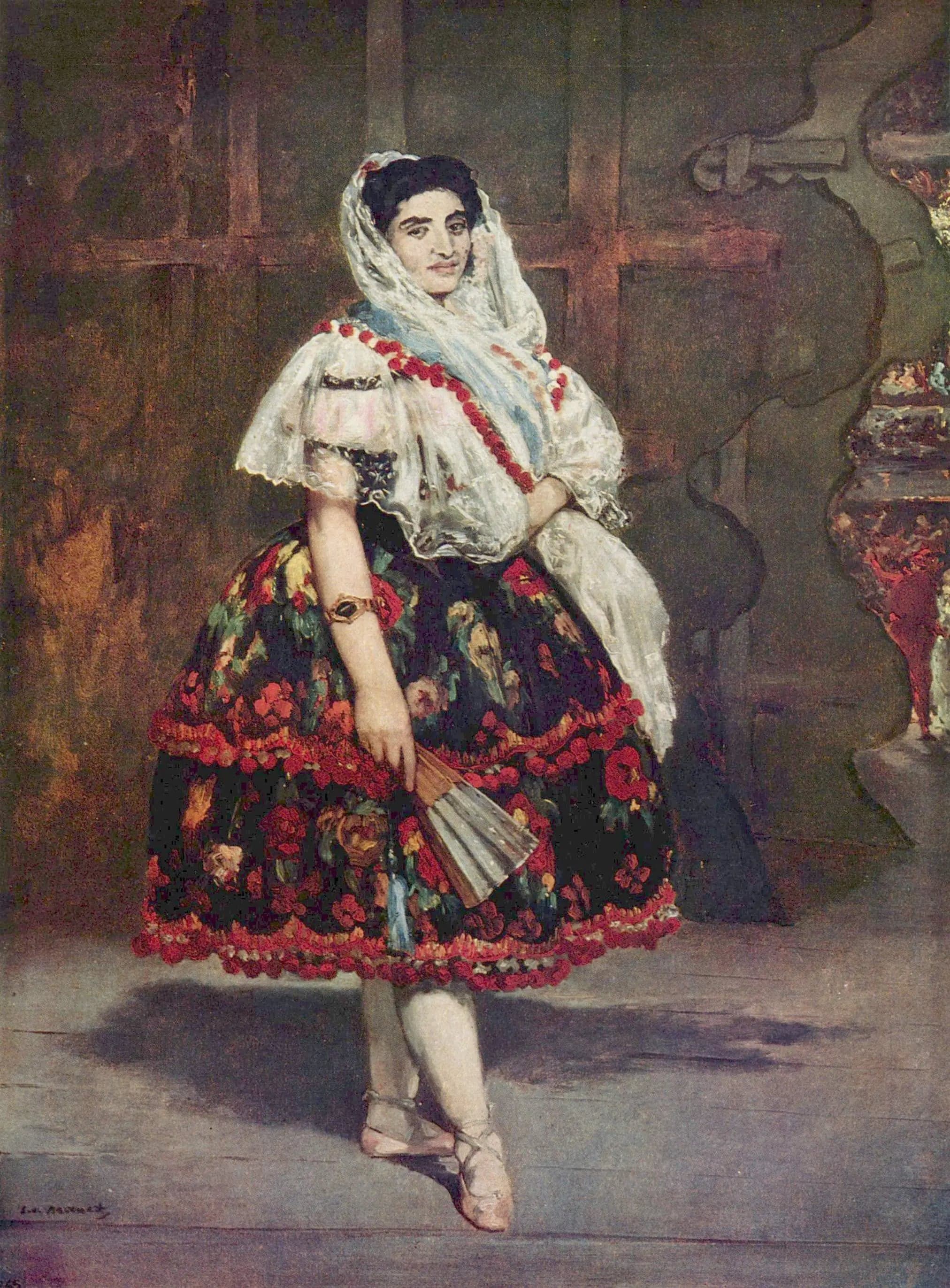
Lola de Valence
- Original dimensions
- 92 x 123 cm
- Museum
- musée d'Orsay
- Year
- 1862
Scene depicted
This pictorial work depicts a Spanish dancer, Lola, imbued with sensuality and freshness, capturing the attention of the spectators. Dressed in a striking outfit, she evokes a sweet melody that resonates in the air. Her face expresses a range of emotions, creating a subtle dialogue between her gaze and that of the admirers, thus immersing the audience in a captivating and immersive experience.
Historical context
Created in 1862 in Paris, this painting is part of the Impressionist movement, at a time when the City of Light was transforming and opening up to new artistic influences. Evoking the vibrant atmosphere of the 19th century, the canvas is currently on display at the musée d'Orsay, a precious witness to a bygone era and an art in full evolution.
Place in the artist's career
“Lola de Valence” marks a turning point in the career of Édouard Manet , consolidating his status as an avant-gardist. It follows major works such as “Le Déjeuner sur l'herbe” and precedes “Olympia,” revealing his bold journey within Impressionism . This canvas embodies a maturation of his style, blending tradition and innovation.
Anecdote
“I paint to capture the soul and reveal the hidden beauty of everyday life.” This reflection from Manet resonates particularly in connection with his iconic painting , Lola de Valence. He imagines a sunny day, at the turn of a street vibrant with life, where the gaze of a model, both mysterious and captivating, haunts his creative mind.
Major exhibitions
1889 Paris World Exposition