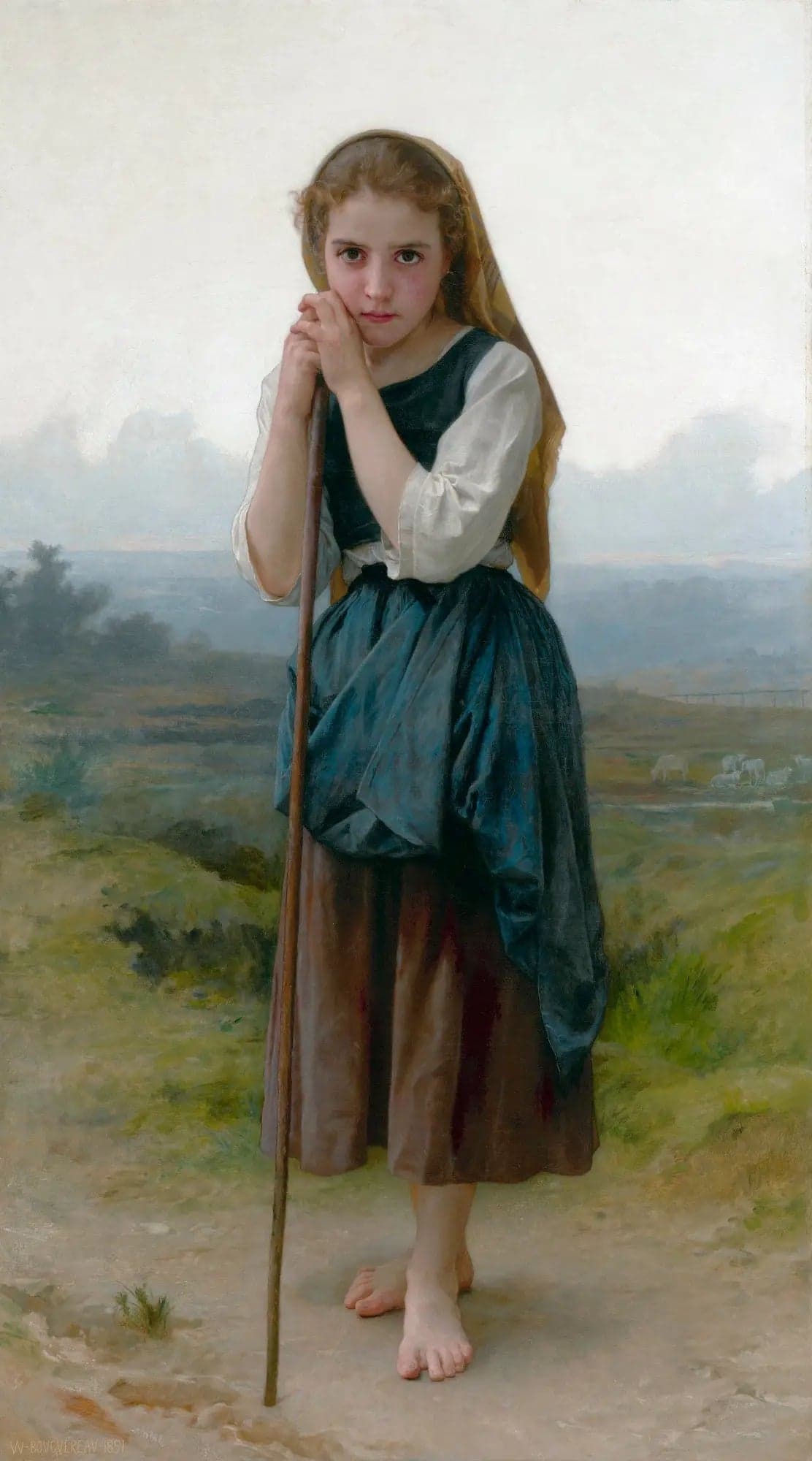
Little Shepherdess
- Original dimensions
- 89 x 158 cm
- Museum
- Not specified
- Year
- 1891
Scene depicted
At the heart of this painting lies a delicate dance between childhood and nature. The captured scene, that of a little shepherdess, evokes a timeless world where innocence and serenity reign. Her delicate posture and thoughtful gaze reflect the beauty of simple things, a moment frozen in time, a tribute to the sublime natural surroundings.
Historical context
Created in 1891, the painting "Petite Bergère" is part of the academic movement at the turn of the 19th and 20th centuries, a time when art strives to capture the beauty of everyday life, rooted in the historic city of La Rochelle, France. This canvas , still widely celebrated, evokes a childlike innocence and a deep connection with nature, embracing the rural French context of its time. Currently, the canvas shines in a private collection, its majestic dimensions giving it an unforgettable presence.
Place in the artist's career
"Petite Bergère" represents a major turning point in Bouguereau's career, positioned between his notable beginnings and his bolder later paintings . In contrast, works such as "Le Goûter" and "La Vierge à la Fleur" perfectly highlight the evolution of his style, revealing an increased sensitivity in the representation of human emotions and their connection to nature.
Anecdote
"Every masterpiece is the reflection of a soul; it must speak, without saying a word," Bouguereau might have said while contemplating the innocence of a little girl encountered in a picturesque village. In "Petite Bergère," it is this fleeting encounter, one spring morning when the sound of birds resonates in the fresh air, that ignited the creative spark, visible through the delicacy of this painting .