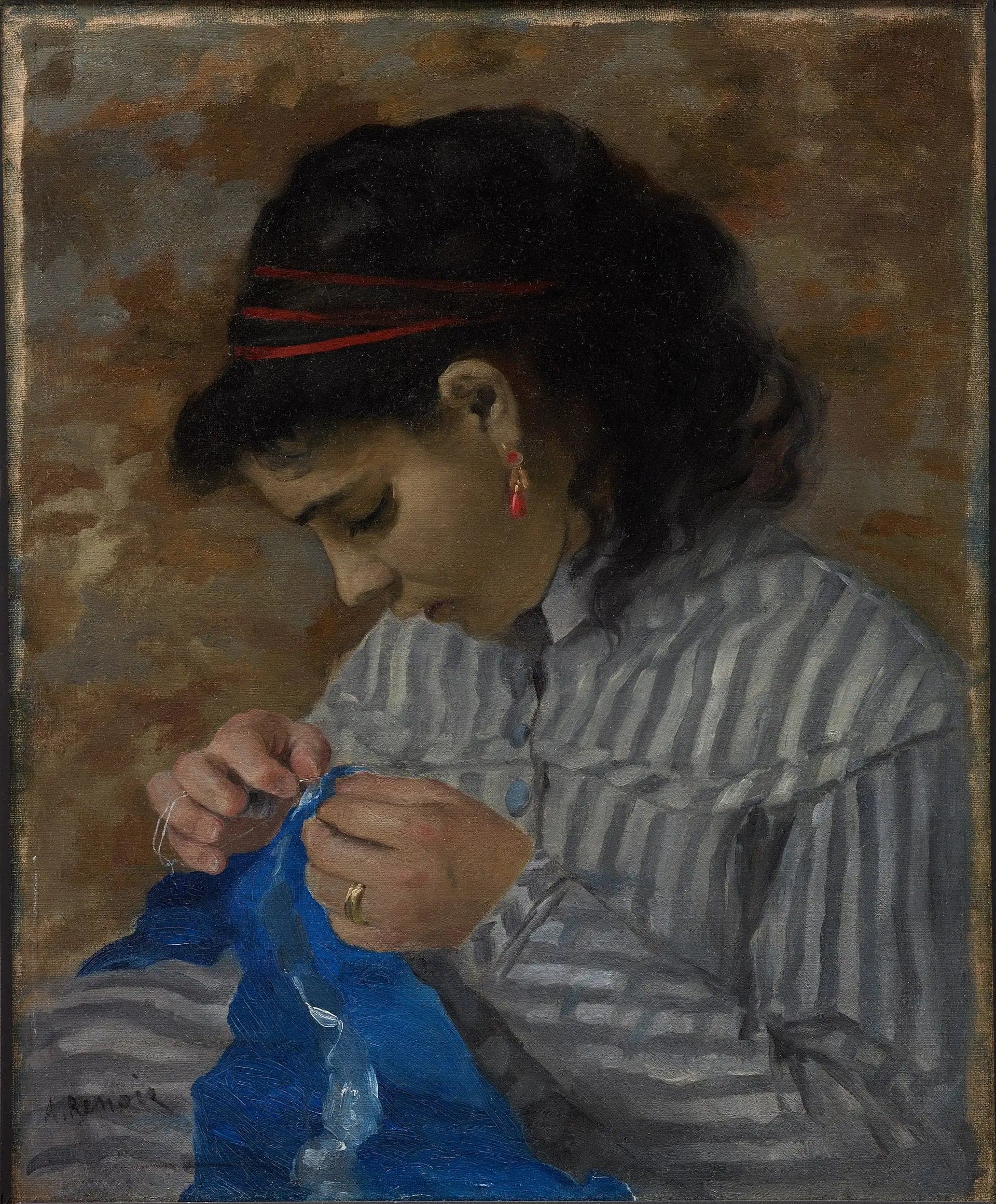
Lise Cousant - Pierre
- Original dimensions
- 46 x 56 cm
- Museum
- Dallas Museum of Art
- Year
- 1867
Scene depicted
In this canvas , Renoir depicts Lise Cousant, a radiant figure whose beauty and grace are highlighted by a soft and vibrant palette. The blurred background allows her face to emerge with clarity, imposing a dialogue between the viewer and the delicacy of her expression. The work exudes an atmosphere of intimacy, as if time has stopped to contemplate ephemeral beauty.
Historical context
Created in the heart of 19th century France, the painting "Lise Cousant" is a jewel of the Impressionist movement. Renoir, the iconic painter of this era, captures with incredible delicacy the nuances of light and color that characterize his work. This canvas is now located at the Dallas Museum of Art , a sanctuary for art that houses some of the finest productions in art history.
Place in the artist's career
"Lise Cousant" is situated at a crucial turning point in Renoir's career, where the artist fully explores the potential of color and light. This canvas can be compared to other works such as "Luncheon of the Boating Party" and "Dance in the City," marking a significant evolution in the representation of human figures in bright and joyful compositions.
Anecdote
Auguste Renoir , speaking of his creative process, said: "Painting is an emotion, captured on a canvas, forever alive." This sentiment resonates deeply in "Lise Cousant," where each brushstroke seems to tell a story. Imagine Renoir, immersed in the soft light of a spring morning, capturing the essence of a radiant face with passion and precision.