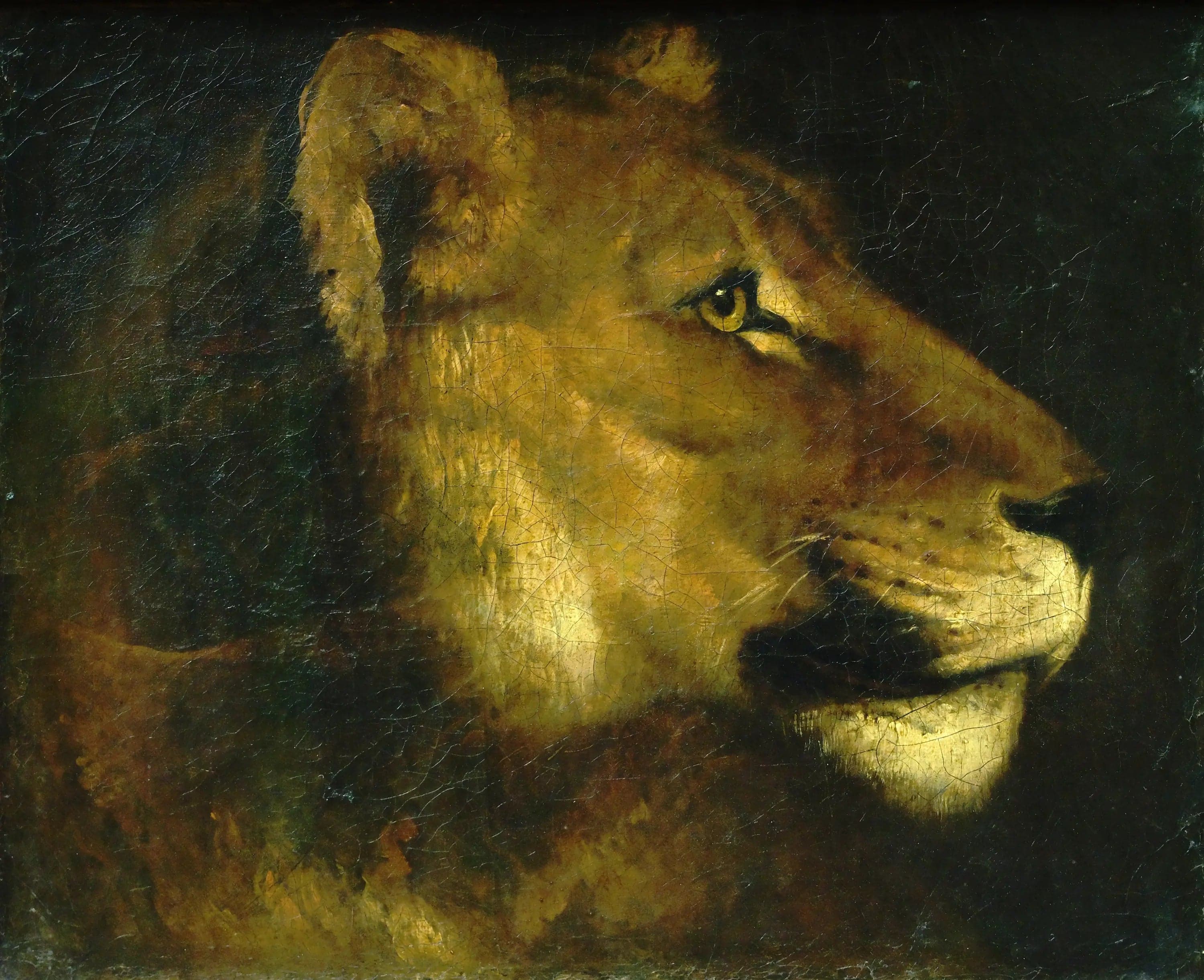
Lioness Head
- Original dimensions
- 65 x 55 cm
- Museum
- room 941
- Year
- 1819
Scene depicted
This pictorial work reveals the majesty of a lion cub, its face imbued with softness and strength. The brightness plays on its features, highlighting every detail and nuance in this painting . One can grasp the power of the animal while being touched by its fragile side, a perfect balance that testifies to Géricault's mastery.
Historical context
Created in early 19th century Paris, Lioness Head is part of the romantic movement, illustrating the raw and majestic beauty of nature. At that time, Géricault, a fervent advocate of emotional realities, explored feelings through his works. Currently, this painting is preserved in the museum in room 941, a space dedicated to iconic works. Measuring 65 x 55 cm, this canvas continues to move visitors.
Place in the artist's career
Lioness Head is an important milestone in Géricault's career, marking a period when he was perfecting his bold style. Alongside his famous compositions like The Raft of the Medusa and The Cuirassiers , this canvas illustrates how Géricault was able to evoke emotions through animal figures, a technique where he was able to bring forth more depth and tension.
Anecdote
“When nature awakens, it offers the most beautiful tenderness to the eye,” Géricault might have declared one spring morning, inspired by a soft light filtering through the branches. It is in this peaceful atmosphere that he captured the essence of Lioness Head , dressing the canvas with a quiet strength and wild beauty.