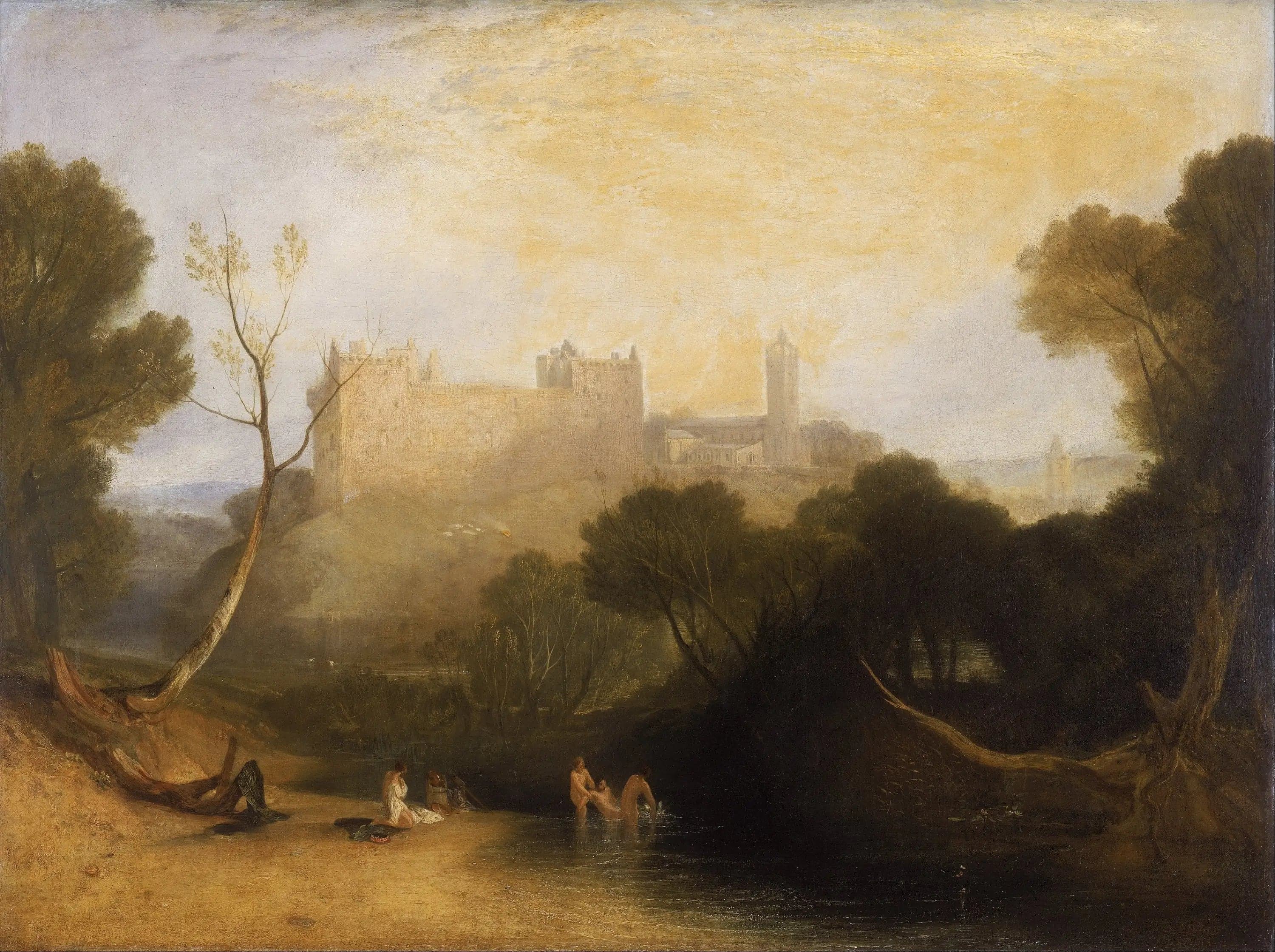
Linlithgow Palace
- Original dimensions
- 1220 x 914 cm
- Museum
- Walker Art Gallery
- Year
- 1806
Scene depicted
The painting "Linlithgow Palace" depicts a striking scene of this historic palace, revealing impressive Gothic architecture dominated by the wild beauty of the surrounding nature. Turner captures the light dancing on the ancient stones, offering a striking contrast between the grandeur of the past and the fragility of the present. The troubled skies, filled with dramatic clouds, further accentuate the majesty of this listed site.
Historical context
Created in 1806, during the romantic period of the early 19th century, the painting "Linlithgow Palace" bears witness to the indelible mark left by Scottish history. This canvas depicts the majestic ruins of Linlithgow, a symbolic town located in the region of Scotland, the cradle of Turner's art, which, through this pictorial work , stands as a spokesperson for the melancholic and striking landscapes of Great Britain. Currently on display at the Walker Art Gallery , this painting measuring 1220 x 914 cm captures the eye and transports the viewer to a time when nature and history intertwine.
Place in the artist's career
"Linlithgow Palace" is at the heart of Turner's artistic evolution, marking both a regained maturity and a unique signature within his work. This painting can be paralleled with other masterpieces such as "The Last Voyage of the Téméraire" and "The Storm," all of which testify to a growing mastery of light and color play, while continuing his exploration of human emotions in the face of landscapes.
Anecdote
Turner often expressed his consuming passion for light, once stating: "I invent nothing. I look and I honor the vision of the world." It is in the exquisite setting of Linlithgow Palace, ancient ruins bathed in the golden light of a spring morning, that the artist found inspiration for this painting . The melancholy of the place resonates through every brushstroke, offering a poetic fugue to anyone who admires this composition .