Lilacs
- Original dimensions
- 96.5 x 146.1 cm
- Museum
- Metropolitan Museum of Art
- Year
- 1914
Scene depicted
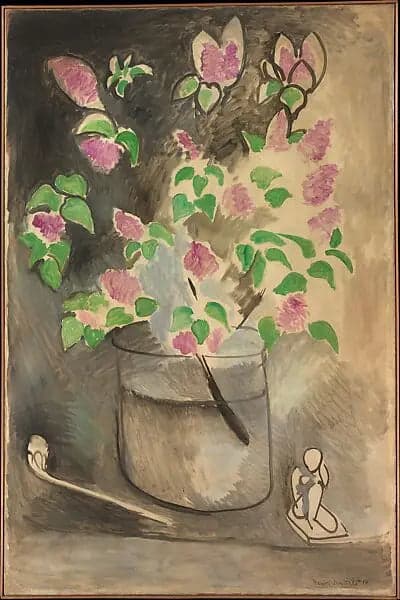
In Lilacs , Matisse captures the essence of a fragrant garden, where flowers burst with bright colors under the light of a sunny day. Each brushstroke conveys a vibrant energy, evoking the simple joy of nature. This painting is a visual symphony of shapes and colors, reflecting the artist's love for floral beauty.
Historical context
Created in 1914 in Paris, Lilacs is part of the Fauvist movement, a time when color and emotion dominated the artistic scene. This painting is now exhibited at the Metropolitan Museum of Art , thus offering a valuable insight into the creative intensity of its time.
Place in the artist's career
Lilacs stands as a milestone in Matisse's career, illustrating his transition to stylistic maturity. Alongside masterpieces such as The Dance and The Joy of Life , this painting shows the evolution of his technique and expressiveness, solidifying his place among the great masters of modern art.
Anecdote
Henri Matisse once said: "Color is a power that directly influences the soul." The birth of Lilacs took place one spring morning, as he was carried away by the softness of the sun's rays enveloping his flowers. This fleeting moment infused a creative force into this painting .