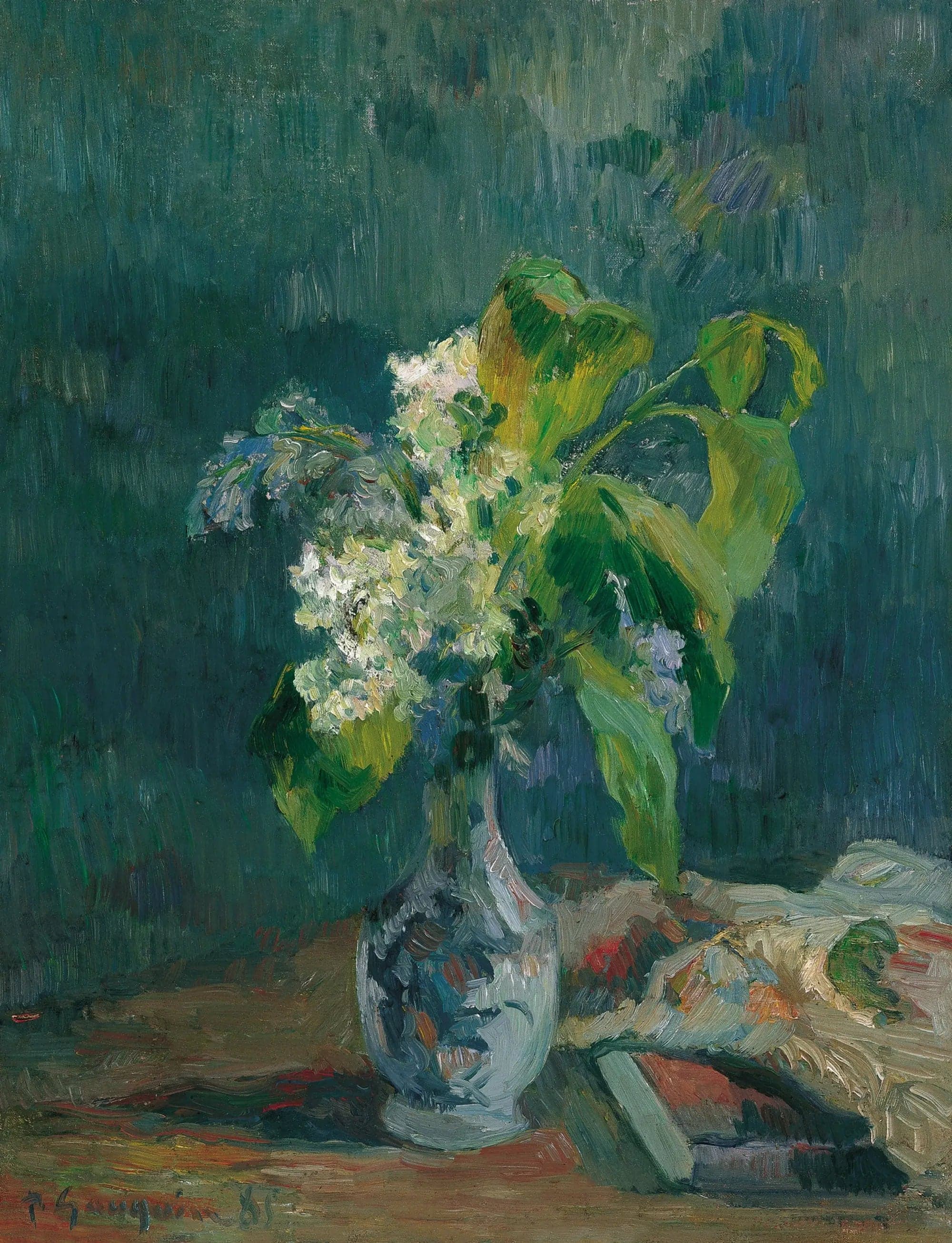
Lilac Bouquet
- Original dimensions
- 27 x 34.9 cm
- Museum
- Thyssen-Bornemisza Museum
- Year
- 1885
Scene depicted
The composition of this painting finely reveals the simple and vibrant beauty of a bouquet of lilacs. The vibrant mix of purple and blue tones depicts a spring scene, where biodiversity meets art. Each flower awakens in us a sensation of softness, like a fragrance emanating from a secret garden full of life.
Historical context
Created in 1885, at the crossroads of Post-Impressionist influences, this iconic painting by Paul Gauguin results from a fascinating dialogue with its time. Made in Paris, where light and creativity merged, the work is currently exhibited at the prestigious Thyssen-Bornemisza Museum . This canvas with delicate dimensions invites contemplation, while carrying within it the vibrant echo of flowers.
Place in the artist's career
This canvas marks a significant turning point in Gauguin's career, illustrating his shift towards bolder stylization and vibrant color. In parallel, his works such as Vision after the Sermon and The Rooms of Martinique show an emotional and technical development that will culminate during his tropical stays.
Anecdote
“I seek to capture pure emotion, the one that the gaze brings to the simple,” said Gauguin. It was on a spring morning that the artist was struck by the ephemeral beauty of a bouquet of lilacs, a fleeting encounter with nature. This inspiration, tinged with light and enchanted aromas, crystallized in the masterpiece that is this painting .