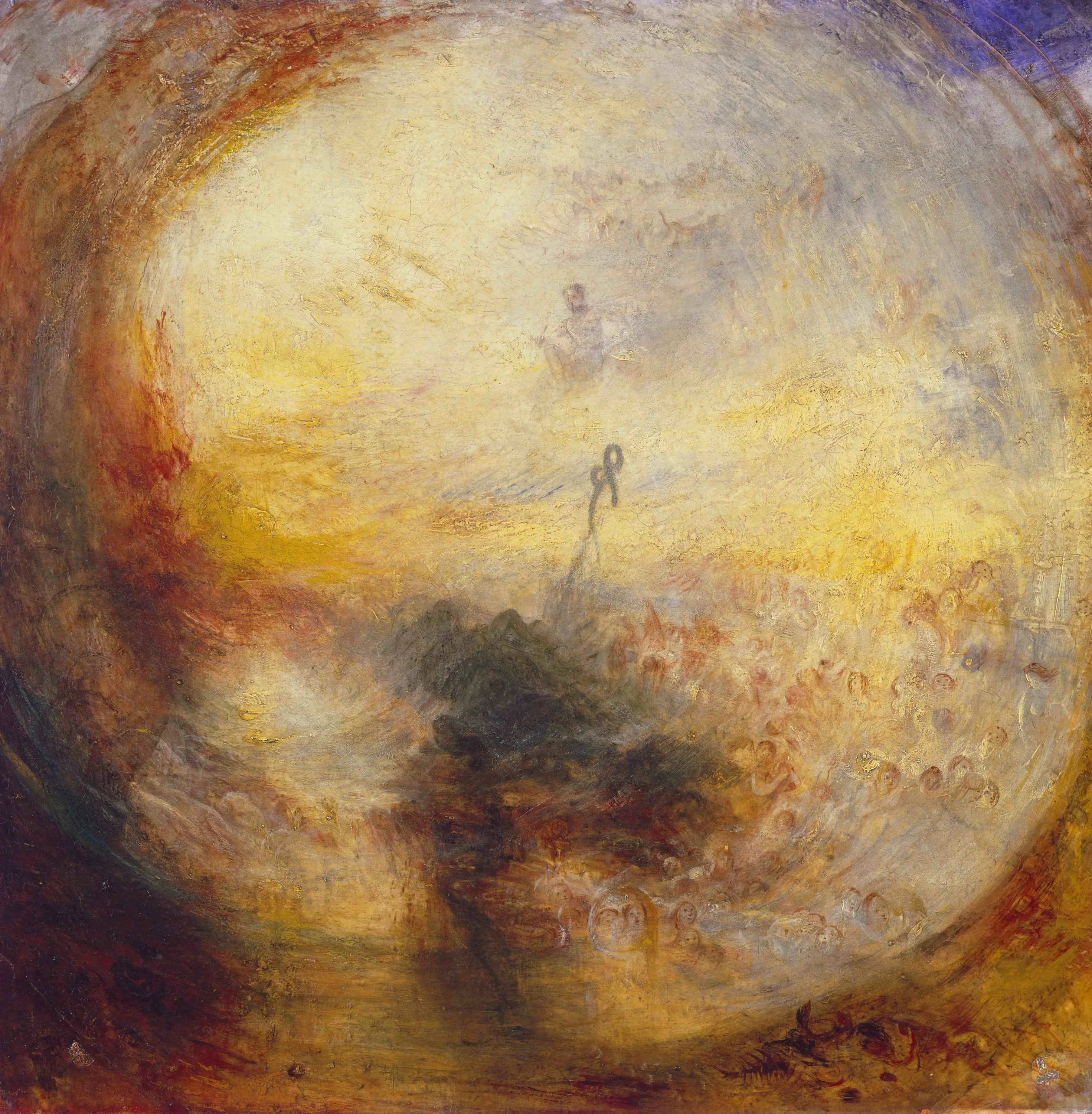
Light and Color
- Original dimensions
- 78.7 x 78.7 cm
- Movement
- romanticism
- Museum
- Tate
- Year
- 1843
Scene depicted
The painting Light and Color evokes a majestic landscape, bathed in an atmosphere where sky and earth intertwine gracefully. Vivid shades of yellow and orange unite to create the illusion of a rising sun, vibrant with promise. The sea seems to vibrate in unison, as if singing the glory of this fleeting beauty.
Historical context
Created in 1843 in London, Light and Color is part of the romantic movement. In an era where art breaks free from strict conventions, Turner captures the dynamic essence of light. Currently, this painting is located at the Tate , a true sanctuary of modern artistic heritage.
Place in the artist's career
Light and Color represents a significant turning point in Turner's career. This canvas embodies the transition to bolder abstraction. In parallel with his earlier works like The Last Voyage of the Téméraire and Rain, Steam and Speed , the artist reveals himself here, in full maturity, blending technique and emotion with unprecedented mastery.
Anecdote
Joseph Mallord William Turner once declared: "Light is the master of shadows." This noble thought fueled his creativity during a walk along the Thames, one clear morning when golden reflections danced on the water. This is how the unique painting , Light and Color , came to life.
Major exhibitions
New York