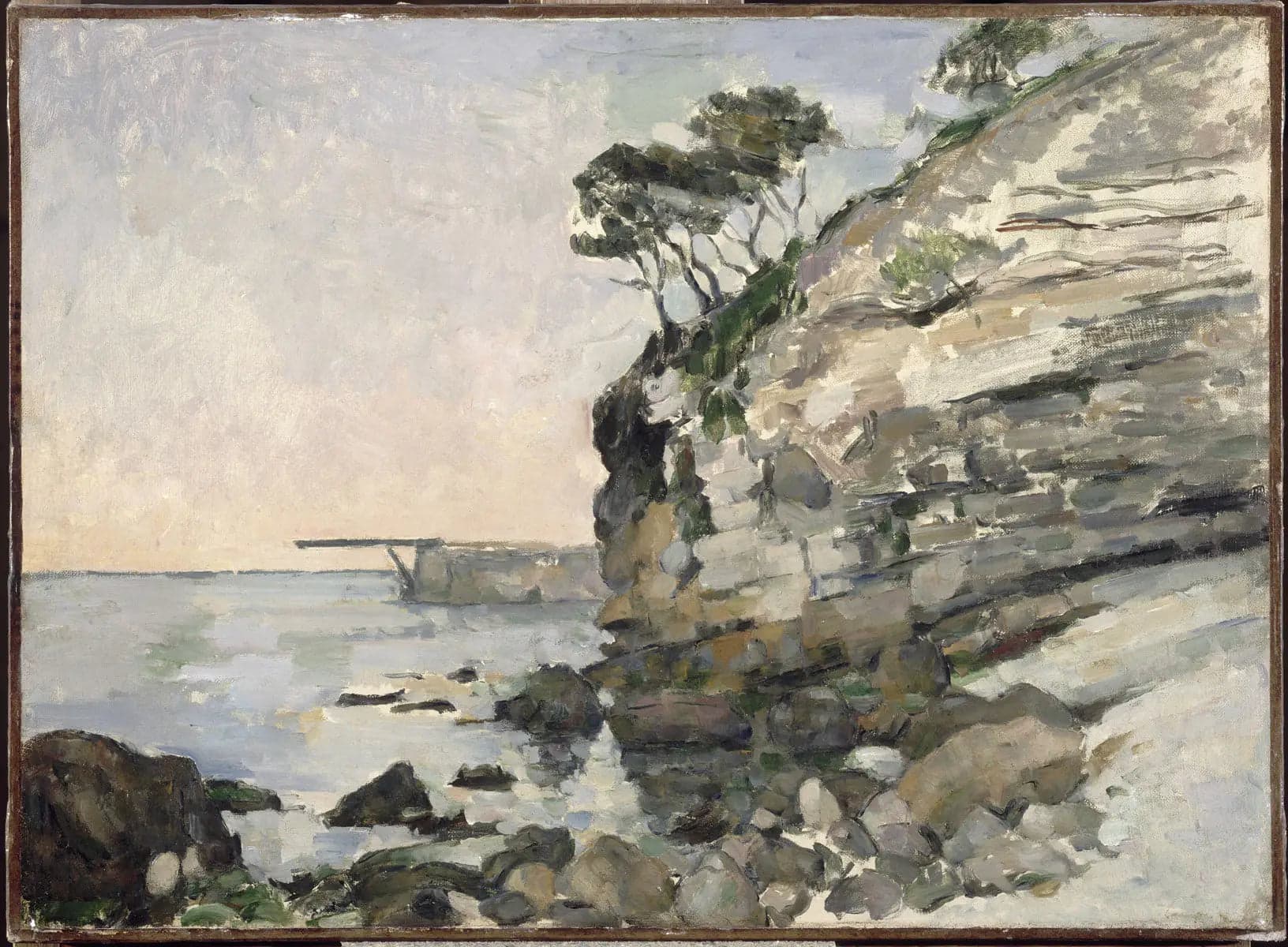
L'Estaque, Evening Effect
- Original dimensions
- 59.5 x 43.5 cm
- Museum
- room 903
- Year
- 1873
Scene depicted
In this canvas , L'Estaque is outlined under a bright sky, where the sun's reflections blend with the vibrant colors of the houses and hills. The painting conveys a contemplative ambiance, inviting the viewer to dive into an atmosphere of calm and serenity, as well as to appreciate the subtle variations of light at dusk.
Historical context
Created in 1873 in L'Estaque, a charming village in the Provence-Alpes-Côte d'Azur region, this painting is part of the post-impressionist movement. Paul Cézanne , in his quest for depth and composition, captures here the delicate atmosphere of an evening. Today, this canvas is displayed in room 903, where visitors can admire the richness of its history and technique.
Place in the artist's career
L'Estaque, Evening Effect marks a turning point in Cézanne's career, a transition from an impressionist approach to a more assertive formal exploration. By comparing it to works like The Card Players and The Montagne Sainte-Victoire, one can measure the technical and emotional evolution that led Cézanne to his distinctive and uncompromising style.
Anecdote
“Nature is a temple, light is its priest.” It is in the heart of this sunny village that Cézanne, on a quiet evening, contemplated the sea, allowing himself to be immersed in the brilliance of colors. This intimate moment was the trigger for a masterpiece that captured not only the light but also the very soul of the landscape.