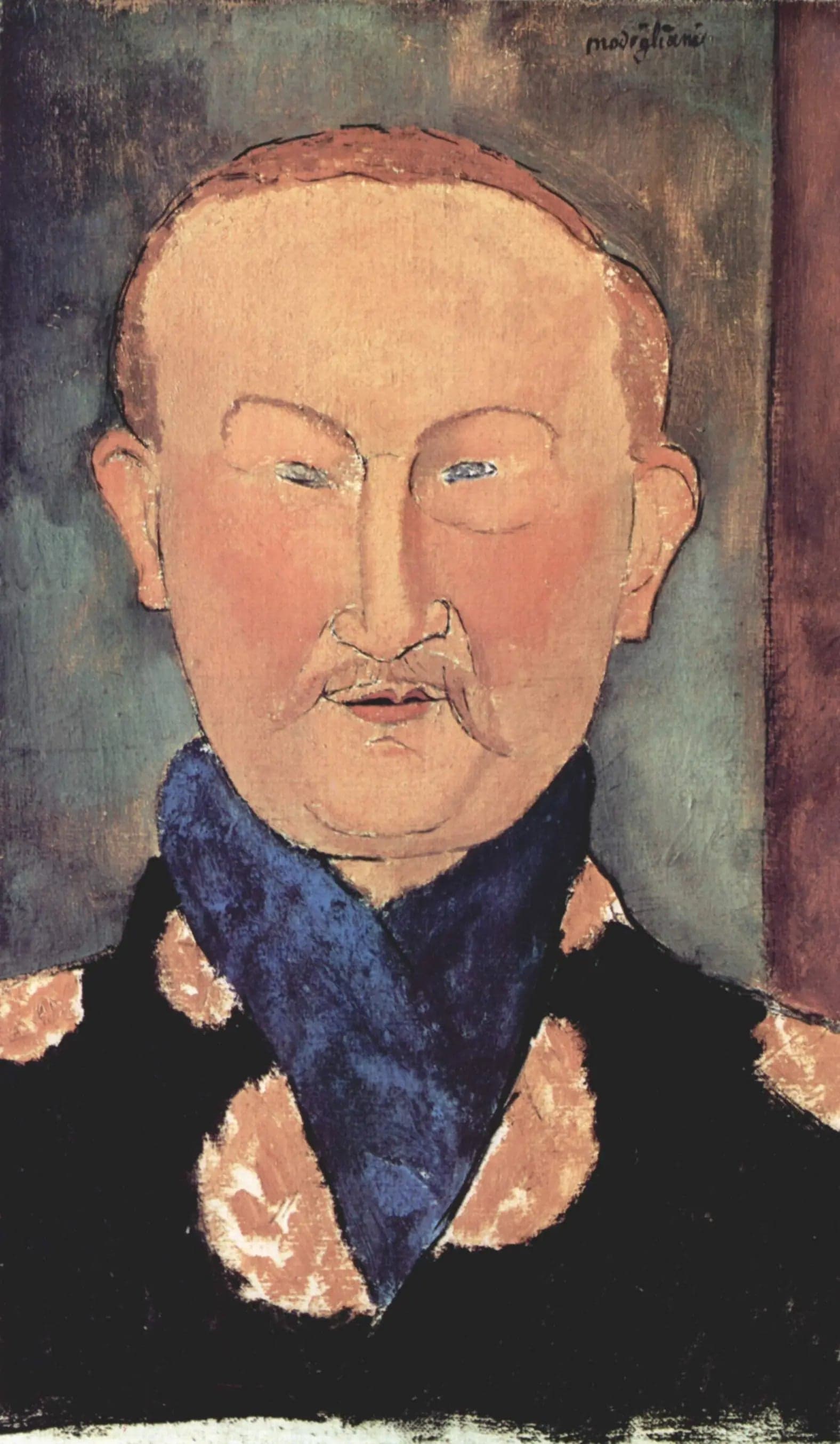
Léon Bakst
- Original dimensions
- 33 x 55.3 cm
- Museum
- National Gallery of Art
- Year
- 1917
Scene depicted
The pictorial work “Léon Bakst - Amedeo Modigliani ” immerses us in a mysterious universe. Modigliani's style, with its elongated forms and expressive faces, meets here with Bakst's theatrical influence, bringing depth to this composition . Each brushstroke tells a story, blending passion and melancholy, emphasizing the fragility of human beauty.
Historical context
Created in 1917, this fascinating painting echoes a tumultuous time. In the heart of the city of Paris, a modest capital of the art world, this canvas is part of the Fauvism movement, a period where color and emotion took precedence over academic traditions. The masterpiece is now preserved at the National Gallery of Art , a haven for art lovers, where visiting this collection offers the opportunity to dive into Modigliani's creative genius.
Place in the artist's career
In the career of Amedeo Modigliani , this painting represents a key period — that of recognition. After modest beginnings and a maturity developed through works such as “Nu Couché” and “Tête”, “Léon Bakst” translates the stylistic peak of the artist, a masterpiece where emotions and techniques blend harmoniously.
Anecdote
Modigliani once said: “Beauty is in the soul, and it is important to capture it while one lives.” Inspired by a tranquil morning, as the sun pierced the sails of boats on the Seine, he captured a face, an essence. Thus was born this painting , vibrant and touching, which becomes one with the soul of its model.