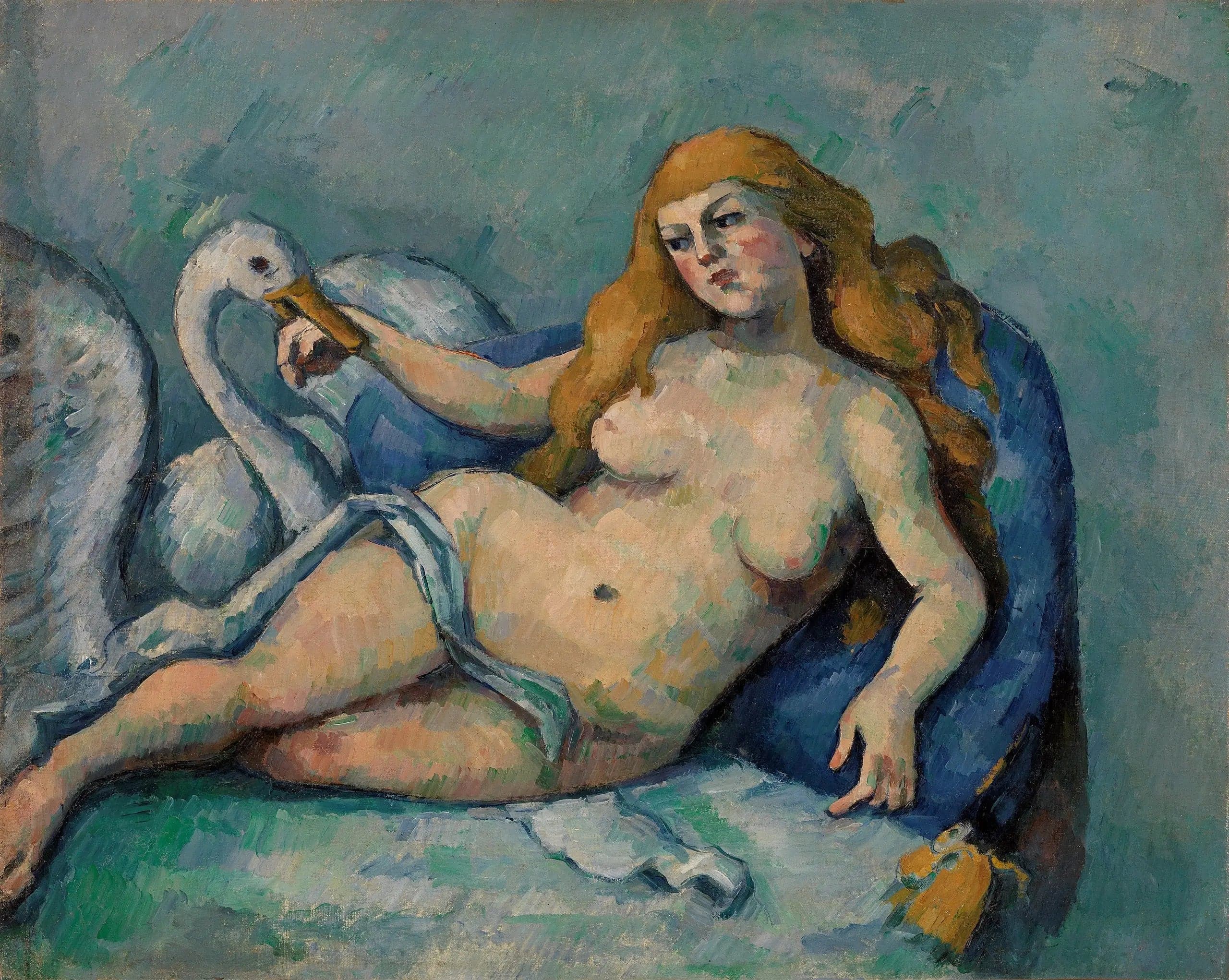
Leda and the Swan
- Original dimensions
- 74.9 x 59.7 cm
- Museum
- Barnes Foundation
- Year
- 1880
Scene depicted
This iconic painting depicts the mythological encounter between Leda and the swan, representing the embodiment of the duality of beauty and the unexpected. The pictorial work unfolds in an enchanting composition, where each element tells a story. Cézanne, with his mastery of light and movement, manages to capture this fleeting moment of troubling sensuality.
Historical context
Created in the heart of the late 19th century in Aix-en-Provence, this painting is part of the Impressionist movement, which emphasizes light and raw sensations. The painting is now located at the Barnes Foundation , one of the epicenters of art where it interacts with other pictorial treasures. With its dimensions that captivate, this painting stands out as a masterwork, resonating through the ages.
Place in the artist's career
Léda au cygne represents a significant step in Cézanne's artistic journey, marking his transition to bolder compositions. In parallel with his works such as Les Grandes Baigneuses and La Maison de Jas de Bouffan , this painting reflects his exploration of forms and space, while embracing the Post-Impressionist influences that were emerging.
Anecdote
“Nature is where I find all my inspiration.” These words, which could be attributed to Cézanne, evoke the creative effervescence of a spring morning, where a soft light danced on the rivers of Provence. It is in this enchanting setting that the expressive force of Léda au cygne was born, a painting that invites us to feel the ephemeral beauty of existence.