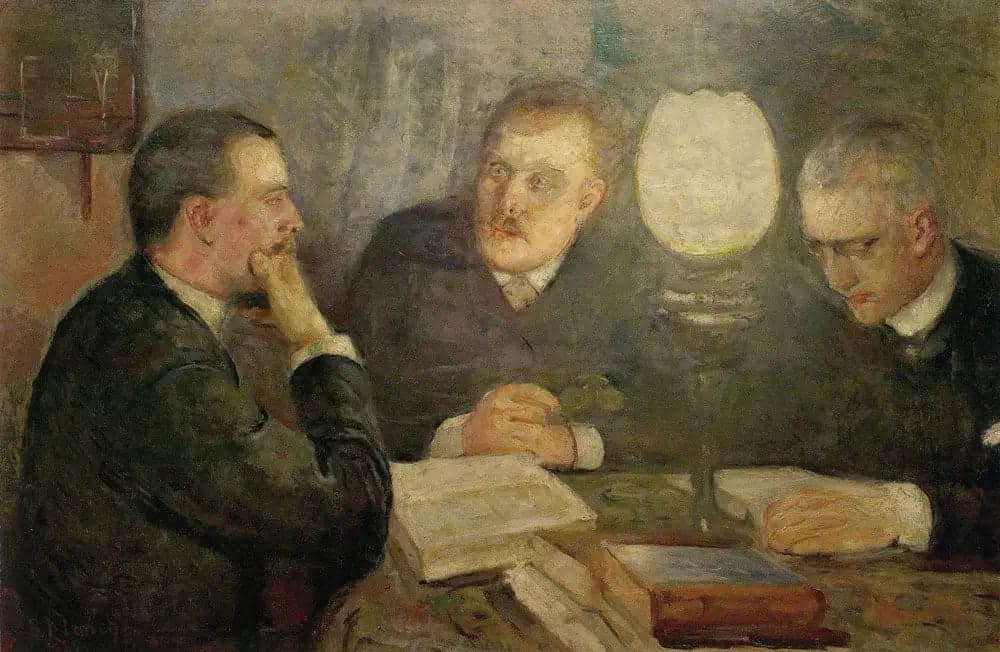
Law
- Original dimensions
- 125 x 82 cm
- Museum
- Not specified
- Year
- 1887
Scene depicted
The painting “Law” resonates with dramatic intensity, exposing the inner struggle of a being against the laws of society. The veiled silhouettes and tormented expressions reveal a palpable tension, a quest for freedom woven with suffering. Munch invites us to dive into the heart of this struggle, where each brushstroke resonates like a cry of despair and aspiration, capturing the viewer in an emotional whirlwind.
Historical context
Created in 1887, this painting is emblematic of a significant period in the career of Norwegian artist Edvard Munch , who is a pioneer of the expressionist movement. This canvas was born in the heart of Oslo, a city that, at the end of the 19th century, buzzes with artistic inspirations and sociocultural upheavals. Although its current location is not specified, this painting is part of Munch's invaluable cultural heritage, often exhibited in galleries and museums around the world.
Place in the artist's career
“Law” fits into a pivotal period of Munch's career, marked by a stylistic rise. This painting contrasts with earlier works like “The Madonna” and later creations like “The Scream,” showing a technical evolution towards a more assertive expressionism . Each painting reveals Munch's quest to express the underlying human sufferings and the nuances of the soul.
Anecdote
“A painting is born from the emotions that one feels deeply.” This famous reflection could illustrate the inspiring moment when Munch slipped into the alleys of Oslo, one April morning, when the first rays of the sun mingle with the scent of spring. This masterpiece embodies that creative spark, merging beauty and anguish in a sublime composition.
Major exhibitions
Edvard Munch : portraits