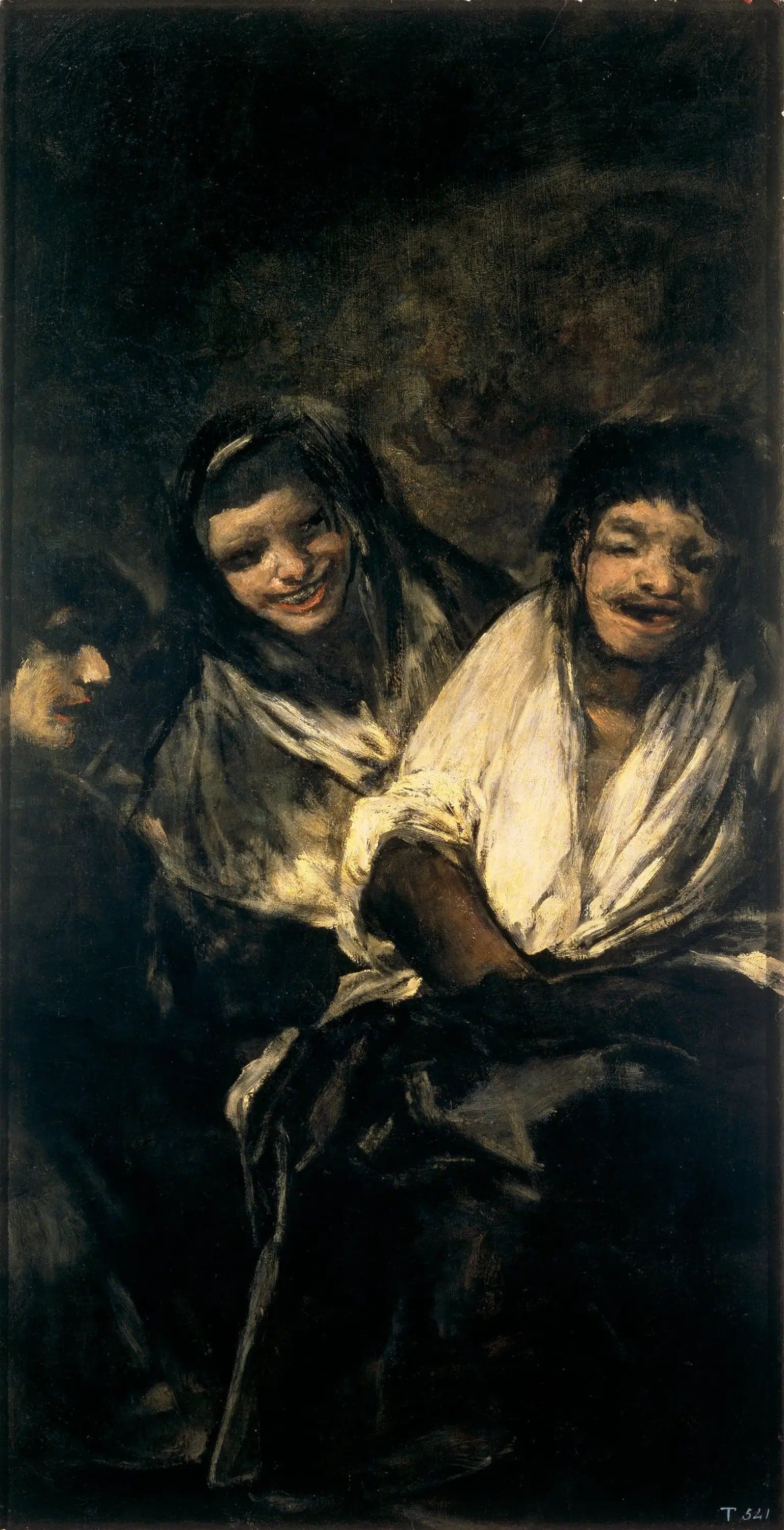
Laughing Women
- Original dimensions
- 66 x 125 cm
- Museum
- Prado Museum
- Year
- 1819
Scene depicted
In this pictorial work, Goya immortalizes a scene where women, enveloped in cheerfulness, engage in a moment of complicity and laughter. The painting depicts a light and joyful atmosphere, capturing a slice of life where the 19th-century aristocracy indulges in simple pleasures. The delicate expressions of the faces and the lightness of the postures reveal a warm intimacy, encouraged by a subtle decor that evokes the beauty of human interactions.
Historical context
Created in 1819, this iconic painting by Francisco de Goya comes to life in the heart of Madrid, Spain. Rooted in the romantic movement, this canvas reflects the vibrant and tumultuous culture of the time, when Spain was undergoing social and political upheaval. Today, this painting is carefully preserved within the famous Prado Museum, where its grandeur continues to move visitors.
Place in the artist's career
Laughing Women occupies an essential place in Goya's career, representing a transition to deeper and more spiritual themes. In parallel with his famous painting Las Meninas and the dark Saturn Devouring His Sons, it illustrates the versatility of the artist, oscillating between light and shadow, thus showing a creative momentum that is both popular and poignant.
Anecdote
“The joy of a moment can capture eternity.” This phrase could resonate with Goya's passion, which inspired his masterpiece in a lively alley in Madrid, one morning when the laughter of women sang like a hymn to life. Thus was born this canvas, vibrant with emotion and authenticity.