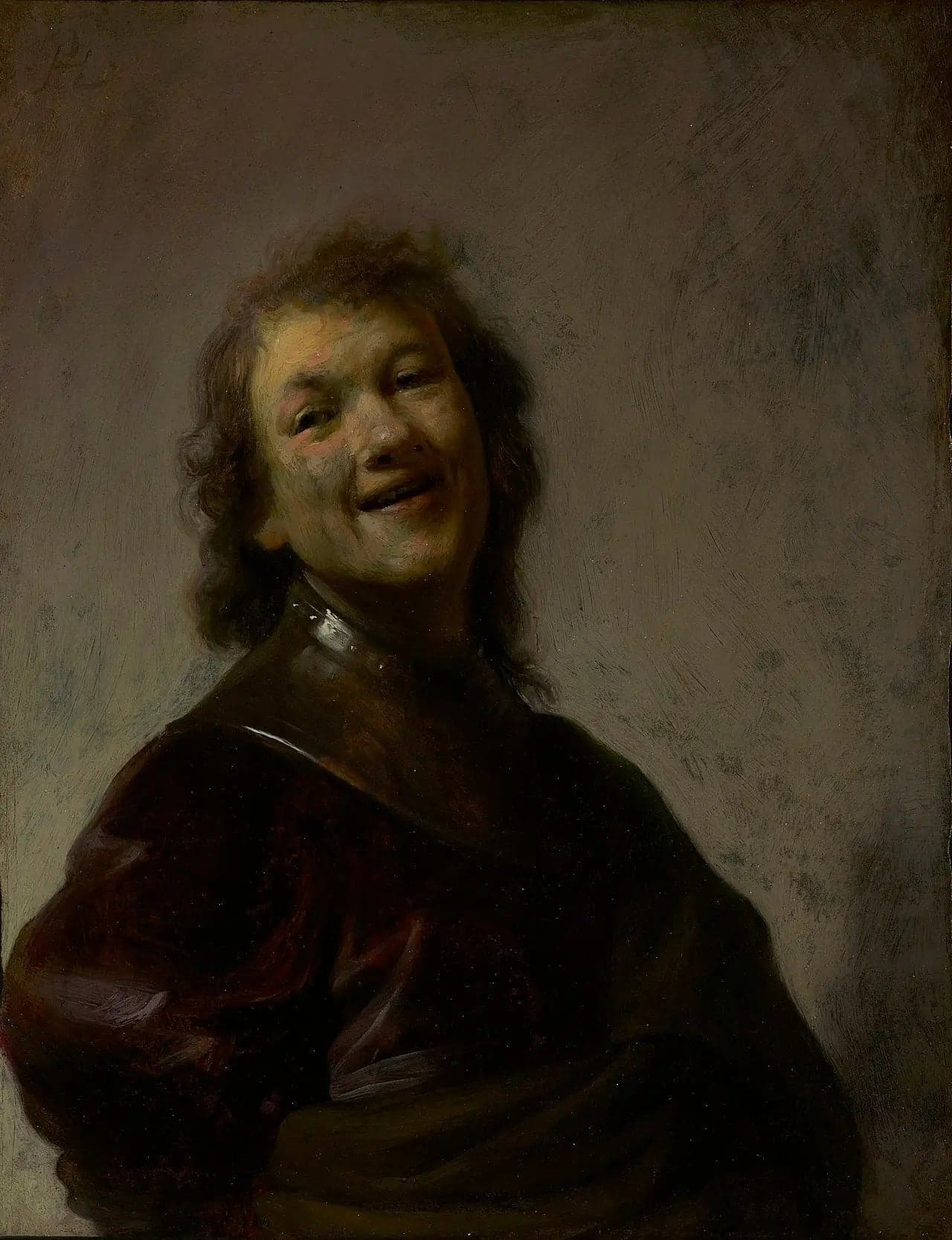
Laughing Rembrandt
- Original dimensions
- 17.1 x 22.2 cm
- Museum
- Getty Center
- Year
- 1628
Scene depicted
This painting highlights a moment of joy, where the subject seems to capture a burst of laughter, revealing a deep humanity. The lively expression of the model, framed by soft shadows, makes this pictorial work a symbol of human vitality, an invitation to share a moment of happiness.
Historical context
Created in 1628, in the bustling city of Amsterdam, this painting illustrates the mastery of the baroque movement. At a time when emotional realism was taking root, Rembrandt was able to capture the essence of human conviviality through this iconic canvas . Currently on display at the Getty Center , this delicate canvas , of modest dimensions, reveals the intimacy and expressiveness of its time.
Place in the artist's career
This canvas represents a turning point in Rembrandt 's career, marking the beginning of his recognition. In parallel with works such as “The Anatomy Lesson” and “The Return of the Prodigal Son,” this composition reflects an evolution in his technique and his ability to express a wide range of emotions.
Anecdote
“The art of painting is to give life to what is silent,” Rembrandt might have said in his reflections. Awakened by a bright morning, as he crossed paths with a laughing face in an alley, the artist found inspiration for this masterpiece . This fleeting moment is inscribed in the evocative power of Rembrandt laughing , a painting that celebrates joy.