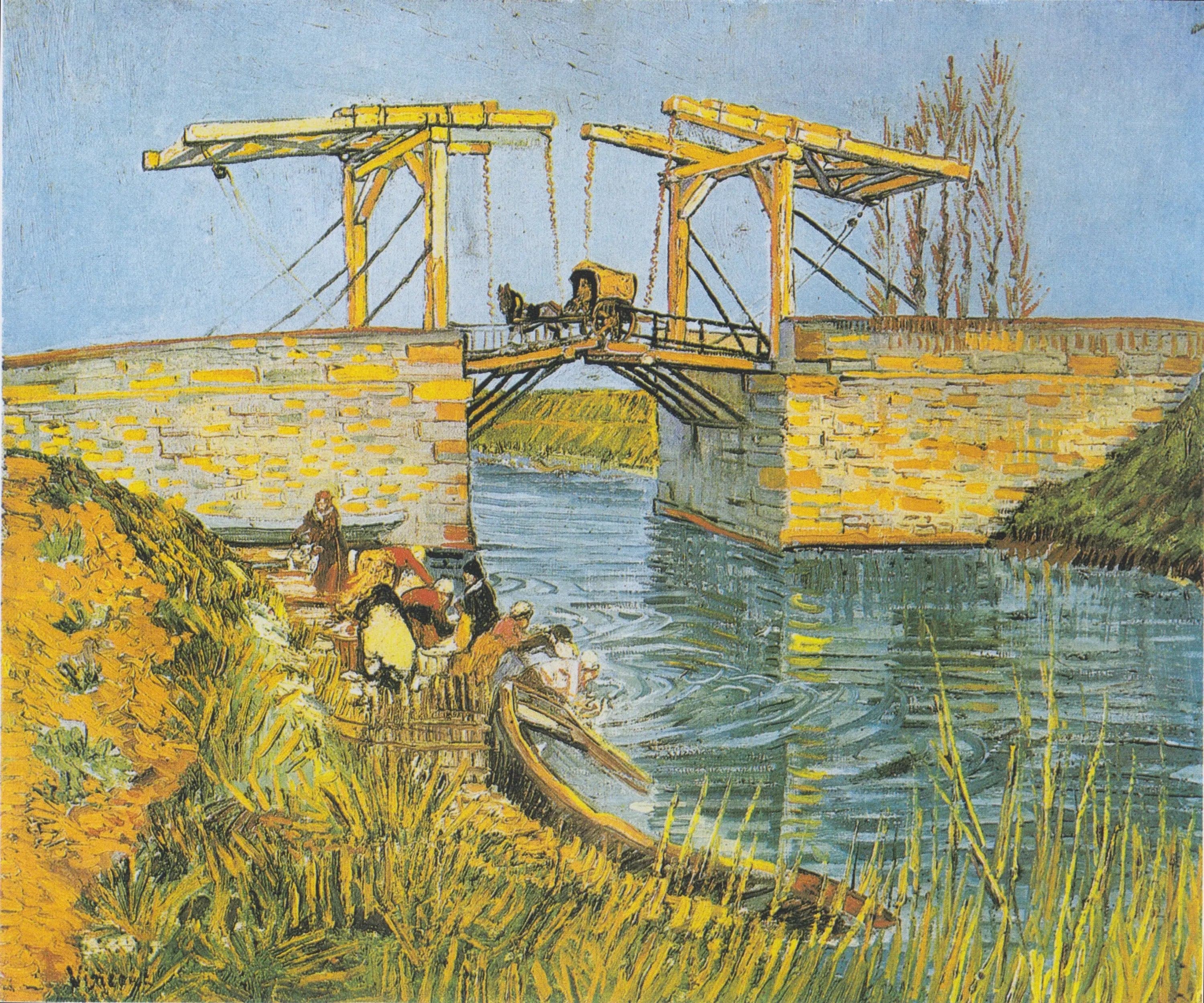
Langlois Bridge
Scene depicted
On this canvas , Vincent van Gogh depicts the famous bridge, emblematic of serenity and natural beauty. The wooden structure, drawn with exceptional vitality, rises gracefully above the sparkling waters. The surrounding fields, imbued with colorful lushness, enhance the appeal of the scene, transporting the observer to the heart of a vibrant nature.
Historical context
Created in 1888, the painting "Langlois Bridge" is located in Arles , not far from the Rhône, and is part of the post-impressionist movement. At that time, Vincent van Gogh transposes a bucolic landscape into a composition that is vibrant, capturing the essence of a region and an era where light and colors communicate with a palpable intensity. Currently, this painting is exhibited at the Kröller-Müller Museum . Its dimensions measure 65 x 54 cm, reflecting its delicate presence.
Place in the artist's career
This painting marks the peak of Van Gogh's exploration of light and color, alongside " The Starry Night " and " The Sunflowers ". These masterpieces reveal a profound stylistic evolution, as the artist rediscovers the intrinsic emotions of each composition , resonating his work with unforgettable emotional impacts.
Anecdote
"I paint what I see, and I feel what I paint," Van Gogh might have said in a moment of revelation by the Rhône. On this canvas, one spring morning, he managed to capture the enchanting harmony of the sounds of flowing water, the scents of the surrounding flowers, and the freedom of the bright skies. This pictorial work is a reflection of this ephemeral inspiration, preserved for eternity.