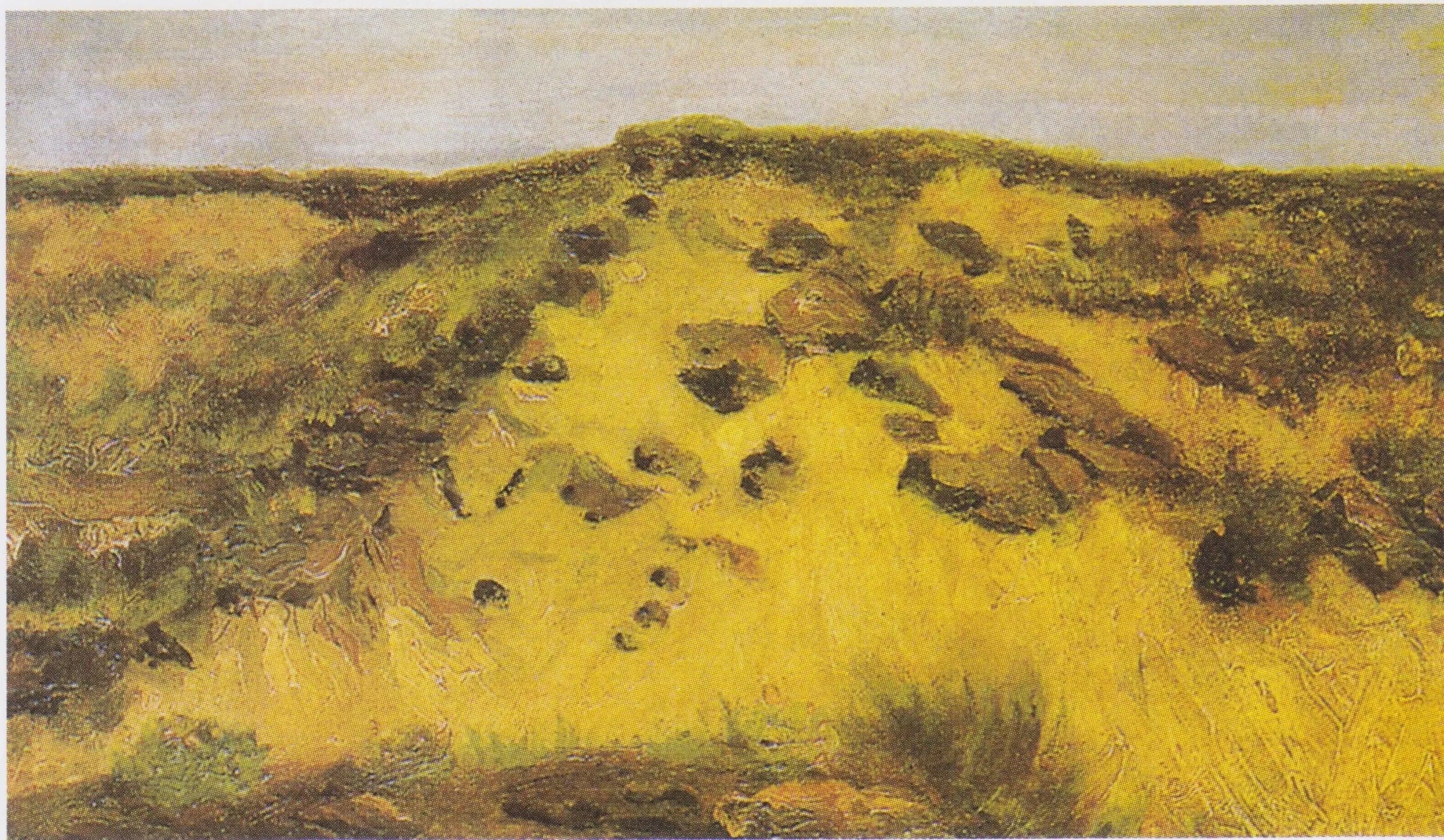
Landscape with Dune
- Original dimensions
- 58.5 x 36 cm
- Movement
- realism
- Museum
- Not specified
- Year
- 1882
Scene depicted
The composition of Landscape with Dune highlights a vast dune, soft and undulating, stretching under a sky that alternates between sunny and cloudy. The shades of earth and sky blend together, while the vegetation is outlined with remarkable delicacy. This painting not only represents a place but a suspended moment, an invitation to contemplation and escape.
Historical context
Created in 1882, this painting was born in The Hague, a vibrant city of culture and inspiration. Integrated into the realism movement, the canvas stands out for its ability to capture the essence of the Dutch landscape , reflecting a world that is both simple and profound. The painting , although not preserved in a specific museum, bears witness to a key moment in Van Gogh's artistic evolution, and its dimensions of 58.5 x 36 cm make it an intimate and accessible work.
Place in the artist's career
This Landscape with Dune occupies a pivotal place in Van Gogh's career, symbolizing his promising beginnings before diving into more intense works like Landscape with Cypresses and The Starry Night . It testifies to his evolution, through an increasingly bold technique and a quest for deeper sensations, placing emotion at the heart of each painting .
Anecdote
“Nature is the most beautiful of muses,” said Van Gogh, evoking his deep love for the landscapes that surrounded him. Inspired by a sunny morning on the dunes of The Hague, this masterpiece was born from a meeting between the artist and his environment. The play of light illuminates the scene, reminiscent of the brilliance of a spring day. Each brushstroke seems to whisper a poem dedicated to the fleeting beauty of nature.