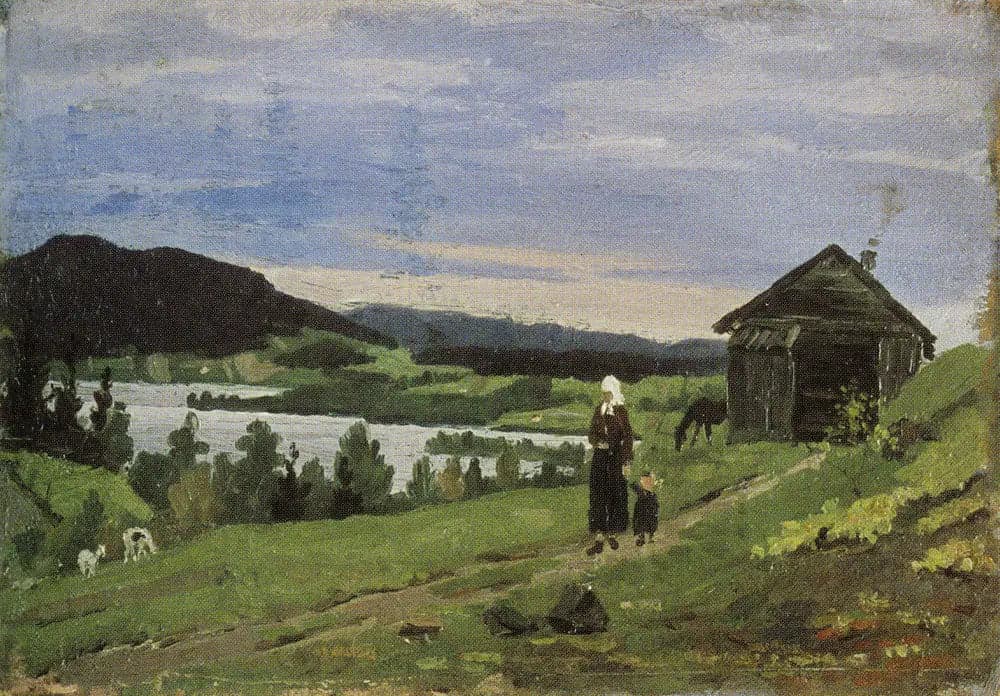
Landscape with a Woman and a Child
- Original dimensions
- 30.5 x 21.5 cm
- Museum
- Not specified
- Year
- 1881
Scene depicted
At the heart of this painting , an emotional scene unfolds: a woman and a child, central figures, move through a lush setting. Their silhouettes blend harmoniously into a gentle, almost dreamlike landscape, where daylight delicately filters through the trees. This composition evokes a peaceful atmosphere while raising questions about the protection and vulnerability of childhood, illustrating the importance of family bonds and fleeting moments of happiness.
Historical context
This painting iconique was created in 1881, in the lush landscape of Norway, a country rich in an intense artistic tradition. Edvard Munch , a key figure of Symbolism, captures through this canvas a contemplative atmosphere, resonating with the existential concerns of his time. At that time, Norwegian art was emerging and drawing from the influences left by Romanticism, while transitioning to more modern forms of expression. Currently, this painting is part of the poorly documented but sought-after collections, reflecting a pivotal period in Scandinavian art.
Place in the artist's career
This painting , created at the dawn of Edvard Munch 's career, marks a phase of artistic promise. It is situated between “The Scream,” a flagship piece that will follow, and “Vampire,” revealing a journey rich in emotions and stylistic evolutions. Each of these pictorial works traces an evolution of his technique, oscillating between raw realism and the poignant expressionism that will characterize him later.
Anecdote
“Every color is an emotion, and every canvas is a silent scream.” It is in the family garden that Munch is said to have drawn his inspiration for this masterpiece , one spring morning when the soft and fresh light welcomed the first buds. This muted daily life, a look at childhood and nature, intertwines the tenderness of a moment with the underlying melancholy of his work.