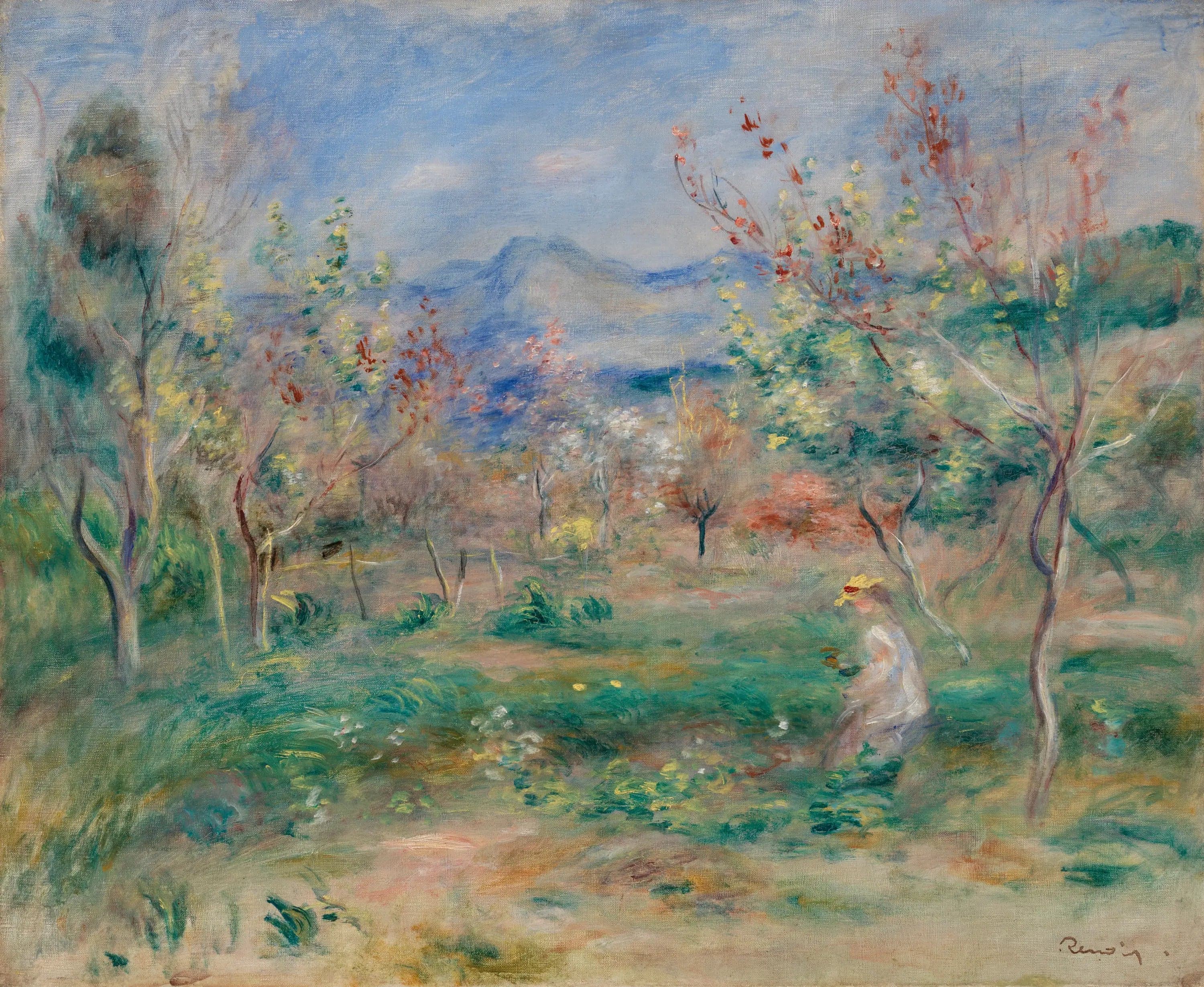
Landscape - Pierre
- Original dimensions
- 39.4 x 28.3 cm
- Museum
- Barnes Foundation
- Year
- 1911
Scene depicted
The painting “Landscape - Pierre- Auguste Renoir ” embodies the wonder at the splendors of nature. With its lyrical representation of natural elements, Renoir manages to convince the viewer of the intensity and magic of a moment, forever frozen on his canvas. From gentle hills to touches of bright light, each detail conjures a serene and soothing atmosphere, a tribute to the beauty of the natural world.
Historical context
Created in 1911, this canvas embodies the heart of the Impressionist movement, a revolutionary movement that brilliantly redefined art at that time. Located in Philadelphia, at the Barnes Foundation , this painting illustrates the fleeting beauty of nature through Renoir's sensitivity, a pioneer of shades and lights. This period is marked by an incessant quest for the purity of visual expression where each brushstroke becomes poetry.
Place in the artist's career
This painting is situated at a significant turning point in Renoir's career, where he seeks to capture not only the visual but also pure emotion. At this time, his other works such as “Luncheon of the Boating Party” and “The Bathers” reveal an evolution towards an increasingly expressive style. “Landscape” is thus a milestone in the search for light and color, embodying the maturity of an artist in full exploration.
Anecdote
“Light is the greatest charm of our art,” said Renoir. Inspired during a gentle spring morning, he stood before a landscape vibrant with colors, where the whisper of leaves in the wind and the insect fragrance of the surrounding flora merged into a melody. It is here that the evocative power of this pictorial work took shape, capturing fleeting emotions that would transcend time.