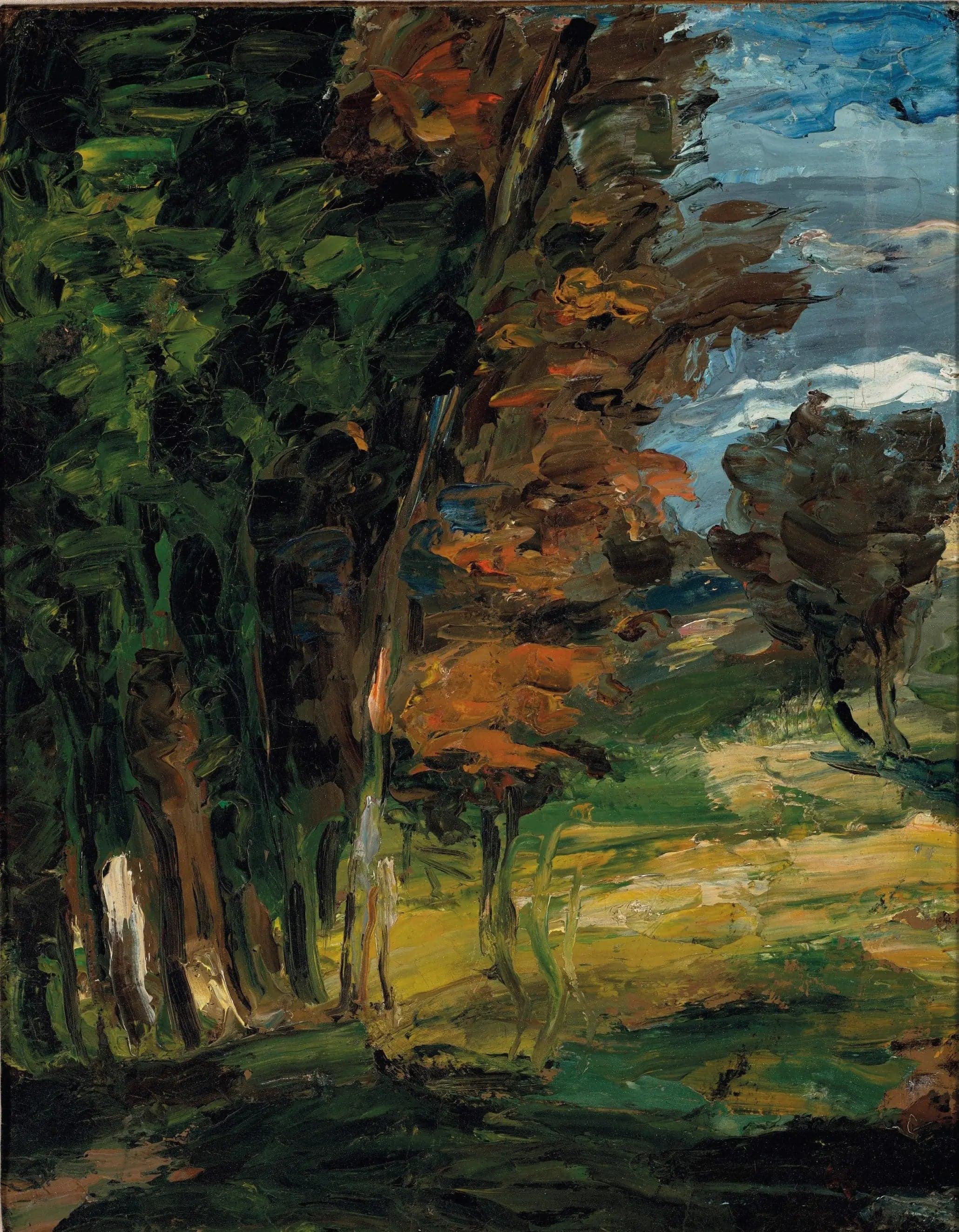
Landscape
- Original dimensions
- 54 x 46 cm
- Museum
- Frances Lehman Loeb Art Center
- Year
- 1865
Scene depicted
The painting "Landscape - Paul Cézanne " depicts a poetic scene shaped by natural ardors. The composition juxtaposes hills and trees, weaving together a bucolic narrative where reality mingles with idealization. Each brushstroke is an invitation to wander through nature, to feel the tranquility and majesty of the Provençal landscapes.
Historical context
Created in 1865, this painting emerges in the charming town of Aix-en-Provence, nestled in the heart of Provence, a shining symbol of the post impressionist movement. The canvas, a master of light and color, is set in a moment when Cézanne explores the textures and rich depths of the surrounding nature. Currently housed at the Frances Lehman Loeb Art Center, this work measures 54 x 46 cm, a size that magnifies every detail of the composition.
Place in the artist's career
This painting is situated at a pivotal time in Cézanne's career, where he begins to cultivate his unique artistic voice. Alongside his flagship paintings such as "The Large Bathers" and "Mont Sainte-Victoire," "Landscape" reveals a nascent maturity, a deep understanding of volumes and light.
Anecdote
"The landscape is a means of capturing the immensity of the world," Cézanne is said to have remarked, inspired by the valleys and hills that surrounded him. Imagine a spring morning, the song of birds floating around a silent path, where light plays hide and seek with the foliage. This moment, charged with emotion, finds its strength in the delicacy of Cézanne's painting , sparkling with harmony.