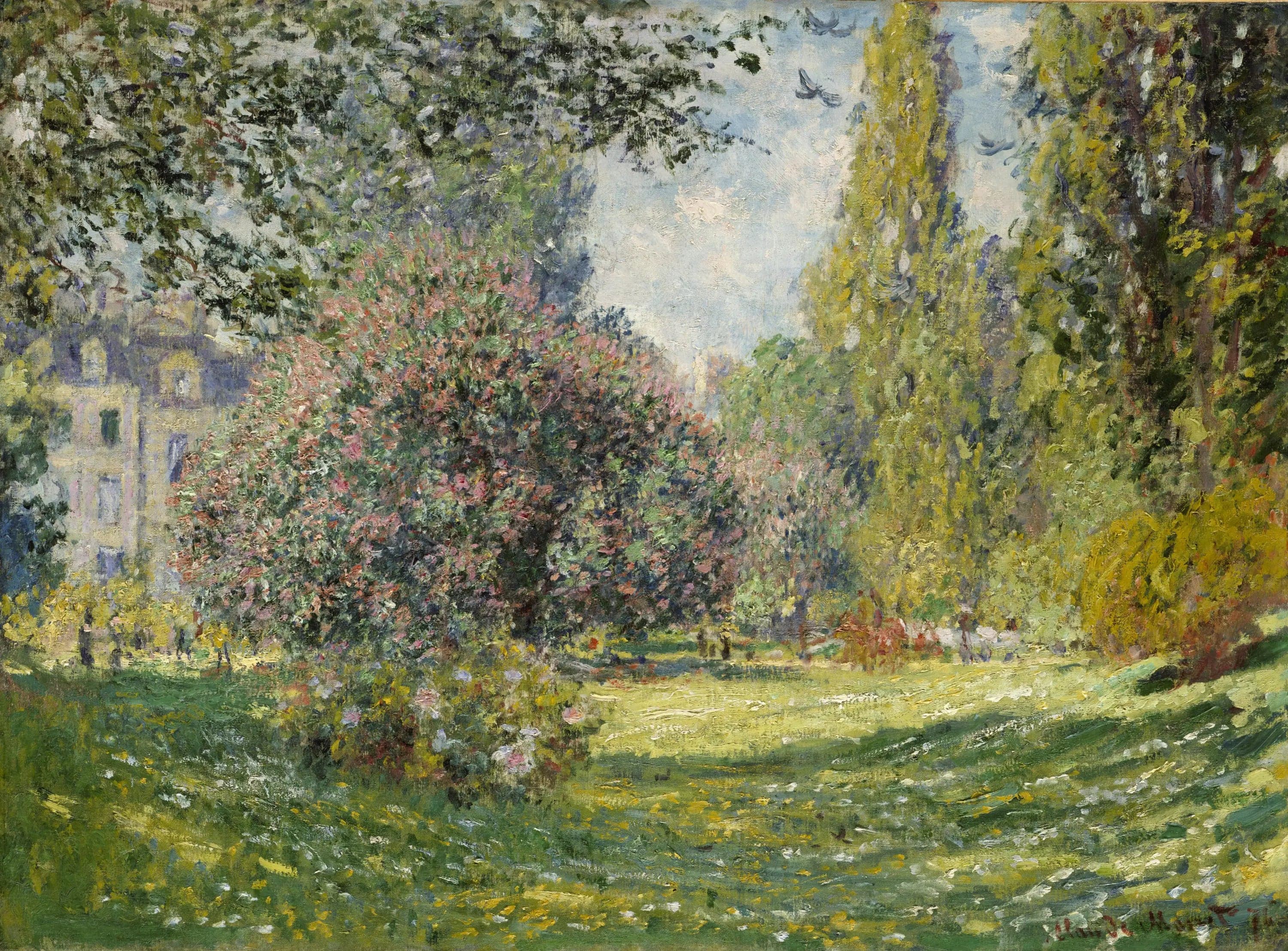
Landscape: Parc Monceau
Scene depicted
This painting evokes moments of serenity through a vibrant scene of life, where the winding path and lush foliage invite a stroll. Monet offers us a vision of a park where light plays with shadow, creating an idyllic atmosphere. The blurred silhouettes of walkers, the wooden benches, and the movement of the foliage instill a gentle melancholy, characteristic of Impressionism.
Historical context
Created in 1876 , this iconic painting by Claude Monet transports us to the heart of Paris, in the charming Parc Monceau, an oasis of greenery in the city. The work is part of the Impressionist movement , marking a time when artists strove to capture the light and fleeting emotions of nature. Today, this precious painting is housed at the Metropolitan Museum of Art in the United States, measuring 82.6 x 59.7 cm .
Place in the artist's career
The painting “Landscape: Parc Monceau” represents a turning point in Monet's career, marking the affirmation of his unique style and mastery of light. At this time, Monet also created “ Impression, Sunrise ” and “ The Frog Pond ”, which demonstrate a similar evolution in the treatment of colors and textures, consolidating his status as a leader of the Impressionist movement.
Anecdote
“Light is everything in painting ,” Monet would say, leaning over his canvas as a gentle spring morning revealed the magic of the park to him. Each brushstroke becomes a reflection of a captured moment, a fleeting encounter between nature and artist. This palpable emotion is at the heart of the painting , and it is part of the timelessness of this artwork .