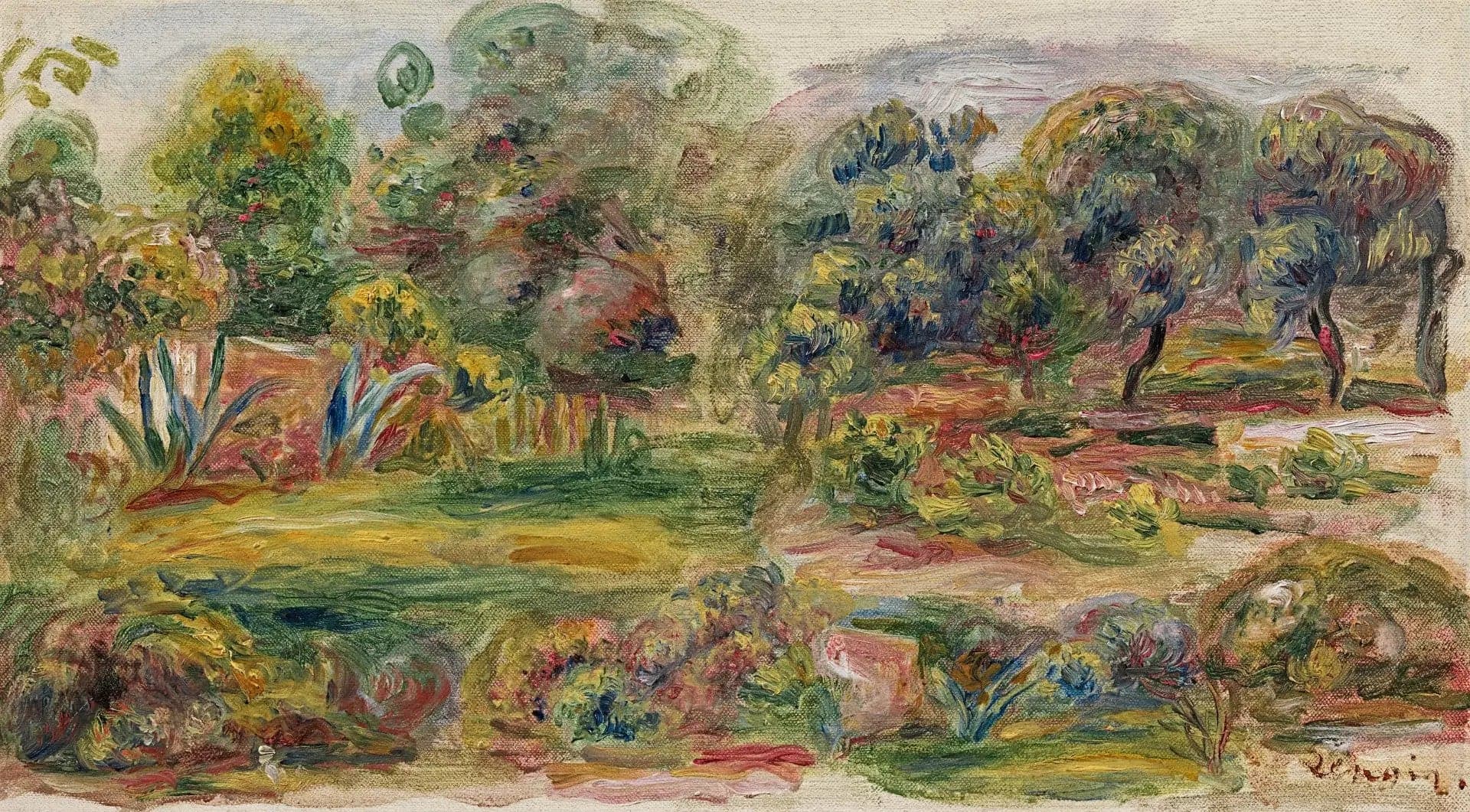
Landscape of the South - Pierre
- Original dimensions
- 27 x 21 cm
- Museum
- Cantonal Museum of Fine Arts of Lausanne
- Year
- 1910
Scene depicted
In this composition , Renoir transports us to the heart of a lush landscape, illuminated by the golden rays of the sun. One can feel a gentle harmony between the forms of nature. The hills stand proudly, nature sings a melody of life through the vibrant colors and radiant light, creating a painting where the viewer can almost hear the peaceful rustling of leaves and the song of birds.
Historical context
Created in the heart of summer 1910, this painting evokes the sunny landscapes of the South of France, a place dear to Renoir, where the brilliant light and vibrant nature come to life. The painting is an integral part of the Impressionist movement, characterized by its celebration of light and color. Currently, this painting is preserved in Lausanne, Switzerland, where it continues to amaze visitors with its timeless beauty.
Place in the artist's career
Landscape of the South represents a major milestone in Renoir's career, illustrating his growing mastery of luminous expression. This painting is a gem that fits into a continuum with other famous works, such as Lunch of the Boaters and The Bathers , which testify to his evolution towards an understanding of the subtle interaction of colors and light.
Anecdote
“I have always wanted to capture the beauty of light, for it brings nature to life.” This simple reflection from Renoir immerses us in the moment when the artist stood before the canvas, savoring the gentle spring breeze, iridescent with the vibrant colors surrounding him. It is through his colorful impulses that the evocative power of Landscape of the South was revealed.