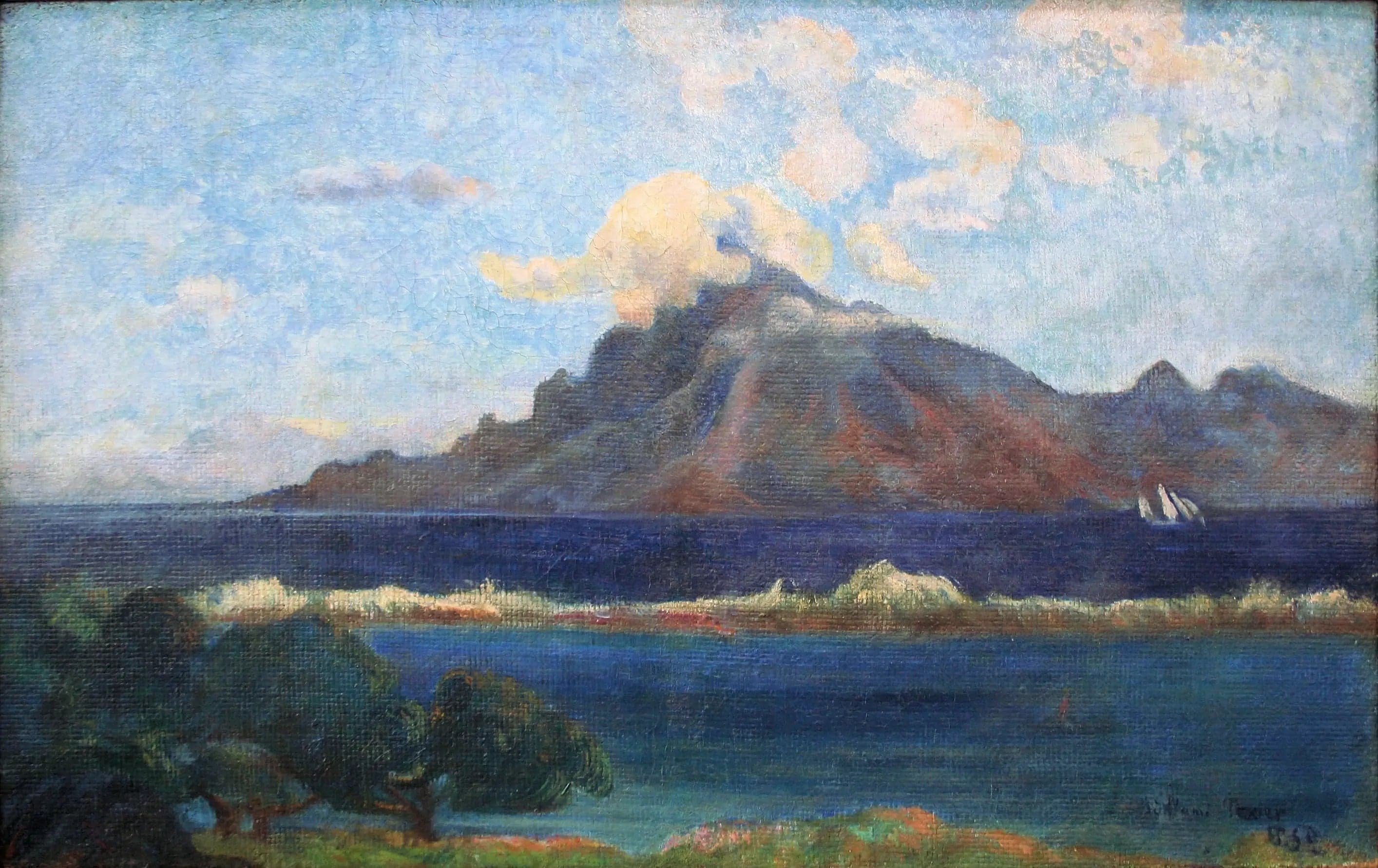
Landscape of Te Vaa
- Original dimensions
- 74 x 46 cm
- Museum
- André-Malraux Museum of Modern Art
- Year
- 1896
Scene depicted
In this painting, Gauguin depicts an idyllic landscape, where vibrant colors blend harmoniously. The stylized shapes of the trees and the majestic sky evoke an intimacy with nature. This painting offers a poetic and spiritually charged vision, a reflection of the colorful visions of the artist, immersed in the spirit of an ancestral culture.
Historical context
Created in 1896, this painting, emblematic of the Nabis movement, immerses us in the enchanting Polynesian atmosphere of the time when Gauguin settled in Tahiti. The work, now exhibited at the André-Malraux Museum of Modern Art , evokes through its dimensions of 74 x 46 cm the fusion between Western culture and local influences. This masterpiece bears witness to a pivotal time in Gauguin's artistic life, marked by a quest for natural and spiritual beauty.
Place in the artist's career
This work, at a crossroads, presents itself as the heart of Gauguin's career. A flagship work, it is positioned after Vision after the Sermon and before The Dreamers , marking stylistic and emotional changes orchestrated by this visionary artist. The painting testifies to a turning point, moving from a realism tinged with impressionism to bold stylization.
Anecdote
Paul Gauguin , on a sunny morning in Tahiti, reportedly declared: “Beauty hides in the golden light of the landscapes I observe.” Thus, inspired by the inhabited charm of nature, he created this painting, capturing pure emotions of wonder at the grandeur of the world. This canvas is an open window to the vibrant soul of its creator.