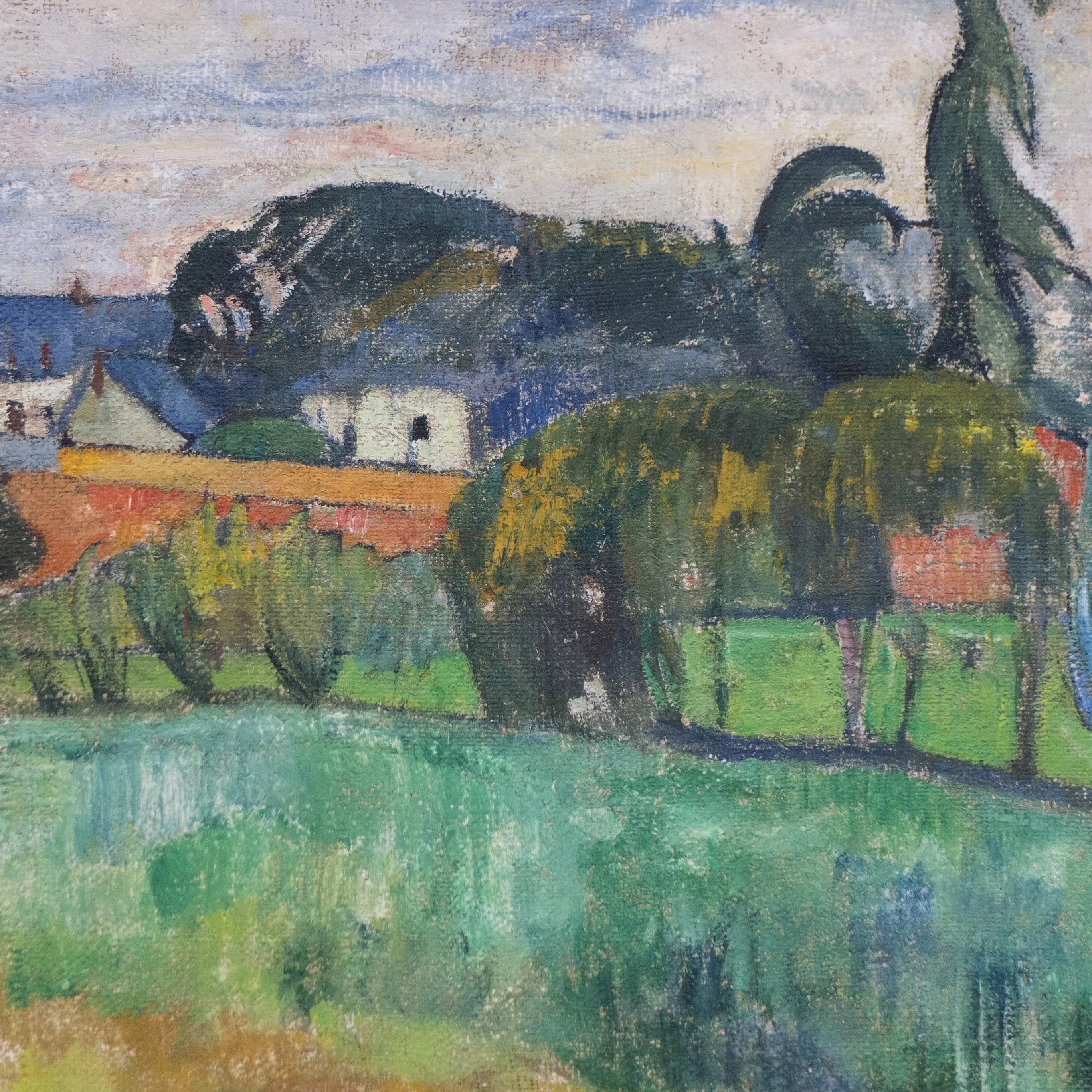
Landscape of Pouldu
- Original dimensions
- 65 x 54 cm
- Museum
- Museum of Fine Arts of La Chaux-de-Fonds
- Year
- 1890
Scene depicted
In this canvas , Gauguin depicts an enchanting nature, where the vibrant strokes evoke the serenity of the Breton shores. The contrast between the sky and the sea, the intertwining of forms, all contribute to transporting the viewer into a peaceful contemplation. Each nuance and each brushstroke tells a story lived at the heart of Brittany, while inviting dreams.
Historical context
Created in 1890, this painting is the result of Gauguin's inspirations during his stay in Pouldu, Brittany. The work is part of the post-impressionist movement, a major turning point where artists sought to capture the soul and colors of nature. A flagship work of the 1890s, this canvas is currently housed in the Museum of Fine Arts of La Chaux-de-Fonds, reflecting the importance of the region for French art.
Place in the artist's career
This canvas represents a pivotal moment in Gauguin's career, where he fully explores color and light. Alongside works like Vision of the Coast and Tahiti , Landscape of Pouldu testifies to an artist in search of authenticity and depth, asserting his unique voice at the heart of the post-impressionist movement.
Anecdote
“With each brushstroke, I capture a moment of reality, transformed by my inner vision.” These words resonate like an echo from the time when Gauguin gazed upon this landscape. Inspired by the soft morning light of Brittany, he sought to immortalize that fleeting moment when the world is adorned with mystery.