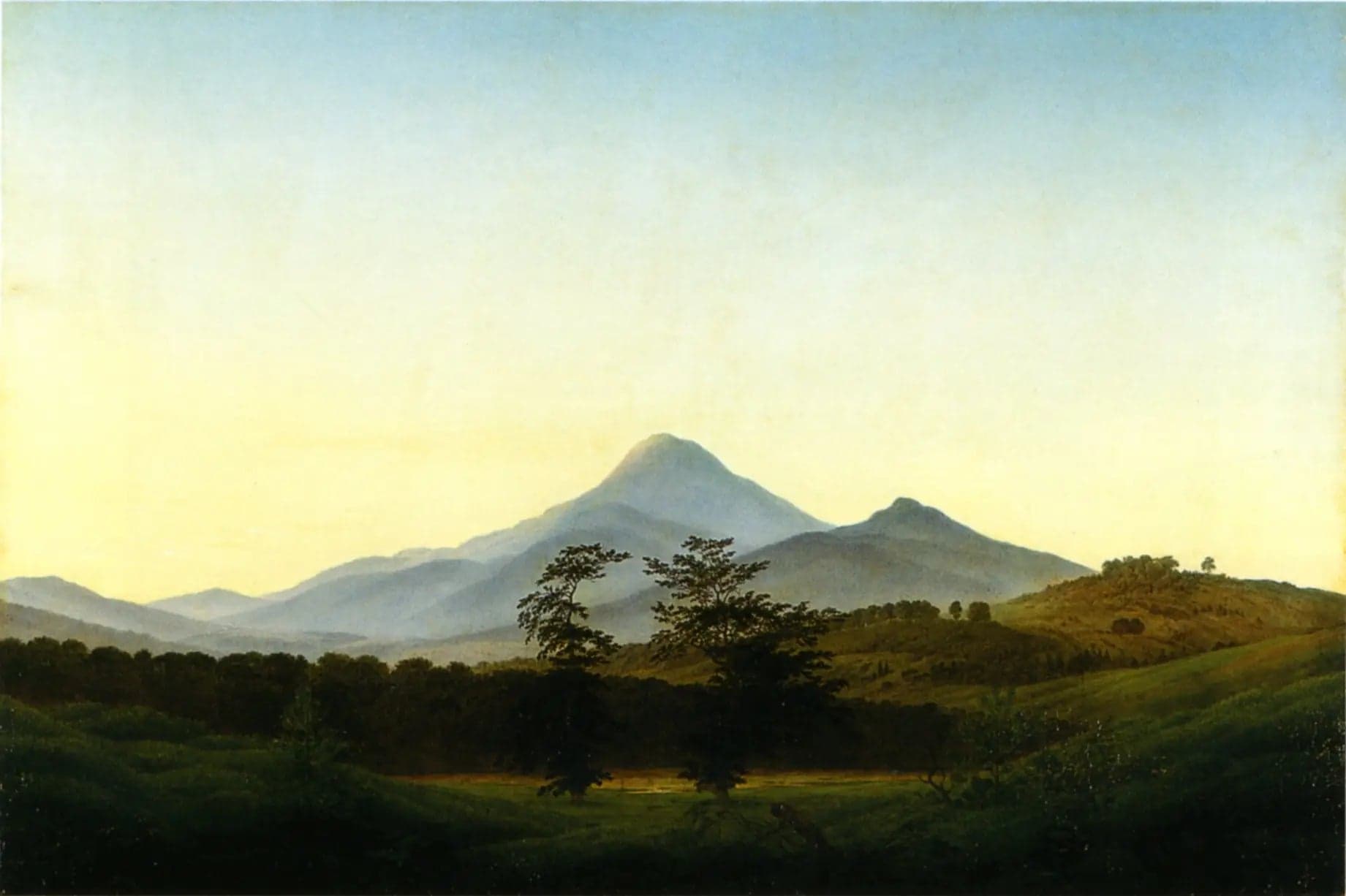
Landscape of Bohemia
- Original dimensions
- 20.5 x 12.7 cm
- Movement
- romanticism
- Museum
- Pomeranian Regional Museum
- Year
- 1828
Scene depicted
The painting represents a symbolic landscape, in other words, a painting where the viewer is welcomed into a peaceful atmosphere, imbued with mystery. The artist depicts the delicate shapes of the verdant hills, rising in perfect harmony with the vaguely illuminated moonlight. The skillfully handled chiaroscuro creates a hypnotic depth, inviting the gaze to get lost in it.
Historical context
Created in 1828, in the heart of the enchanting landscapes of Bohemia, this iconic masterpiece is part of the romantic movement, characterized by the expression of emotions and the celebration of nature. This captivating painting is now preserved in the Pomeranian Regional Museum, offering visitors a dive into the soul of the 19th century. Its dimensions, though modest, 20.5 x 12.7 cm, reveal the evocative power of a rich and refined composition.
Place in the artist's career
Landscape of Bohemia represents a major milestone in the career of Caspar David Friedrich , marking his period of artistic maturity. Alongside other masterpieces like “ The Traveler above the Sea of Fog ” and “ The Sea of Ice ”, it demonstrates the evolution of his style, his explorations of light, as well as his ability to convey deep emotions through landscape.
Anecdote
“Every landscape carries within it the echo of our soul,” said Friedrich while contemplating the misty valleys at dawn. In painting this work, it was a morning filled with emotion where the soft light and the scents of damp earth inspired him, revealing the mystical beauty of nature. This scene, captured in Landscape of Bohemia, thus becomes a metaphor for reflection and tranquility.