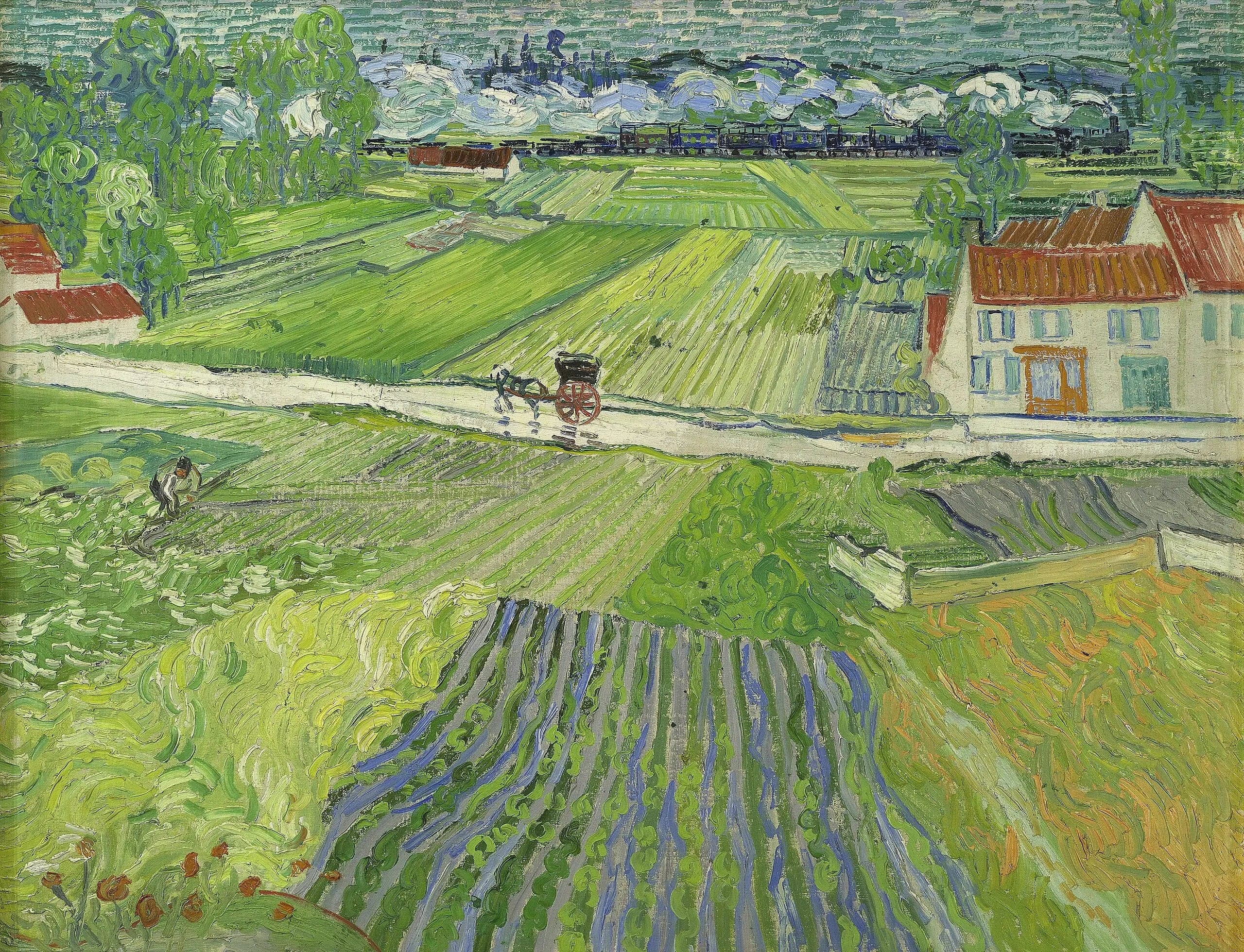
Landscape of Auvers after the rain
- Original dimensions
- 90.5 x 72 cm
- Museum
- Pushkin State Museum of Fine Arts
- Year
- 1890
Scene depicted
In this painting, Van Gogh offers a striking view of nature. The fields stretch as far as the eye can see, covered in a light mist, testament to the passing rain. The vibrant colors and bold brushstrokes highlight the relief that nature seems to feel after the storm. This canvas transposes both the melancholy and joy of a fleeting moment, offering an echo of human emotions in the vast tapestry of nature.
Historical context
Painted in the year 1890, in Auvers-sur-Oise , this painting is emblematic of the post-impressionist period, an artistic movement characterized by a vibrant exploration of colors and emotions. The canvas is currently housed in the Pushkin State Museum of Fine Arts , a sanctuary for world-renowned artworks.
Place in the artist's career
This canvas marks an important milestone in Van Gogh's career, revealing his unique style in full maturity. At this time, other works like "The Irises " or " The Wheat Field with Crows " also show an innovative approach with a bold use of color and textures, reflecting his constantly evolving internal emotions.
Anecdote
"I want to capture the light and transcribe it onto my canvas." It is with this vision that Vincent van Gogh , one morning after a summer rain, was inspired by the landscape before him: lush fields, floating clouds, and the fresh scent of the earth. It is in this poetic setting that the soul of the painting revealed itself, capturing a feeling of wonder and serenity.